Lightly finds the right images, Roboflow labels them in minutes

Lightly AI alternatives? Over 2 million engineers create datasets, train models, and deploy with Roboflow, and every plan, including the Free tier, comes with self-hosted inference, model weights download, and a private workspace.
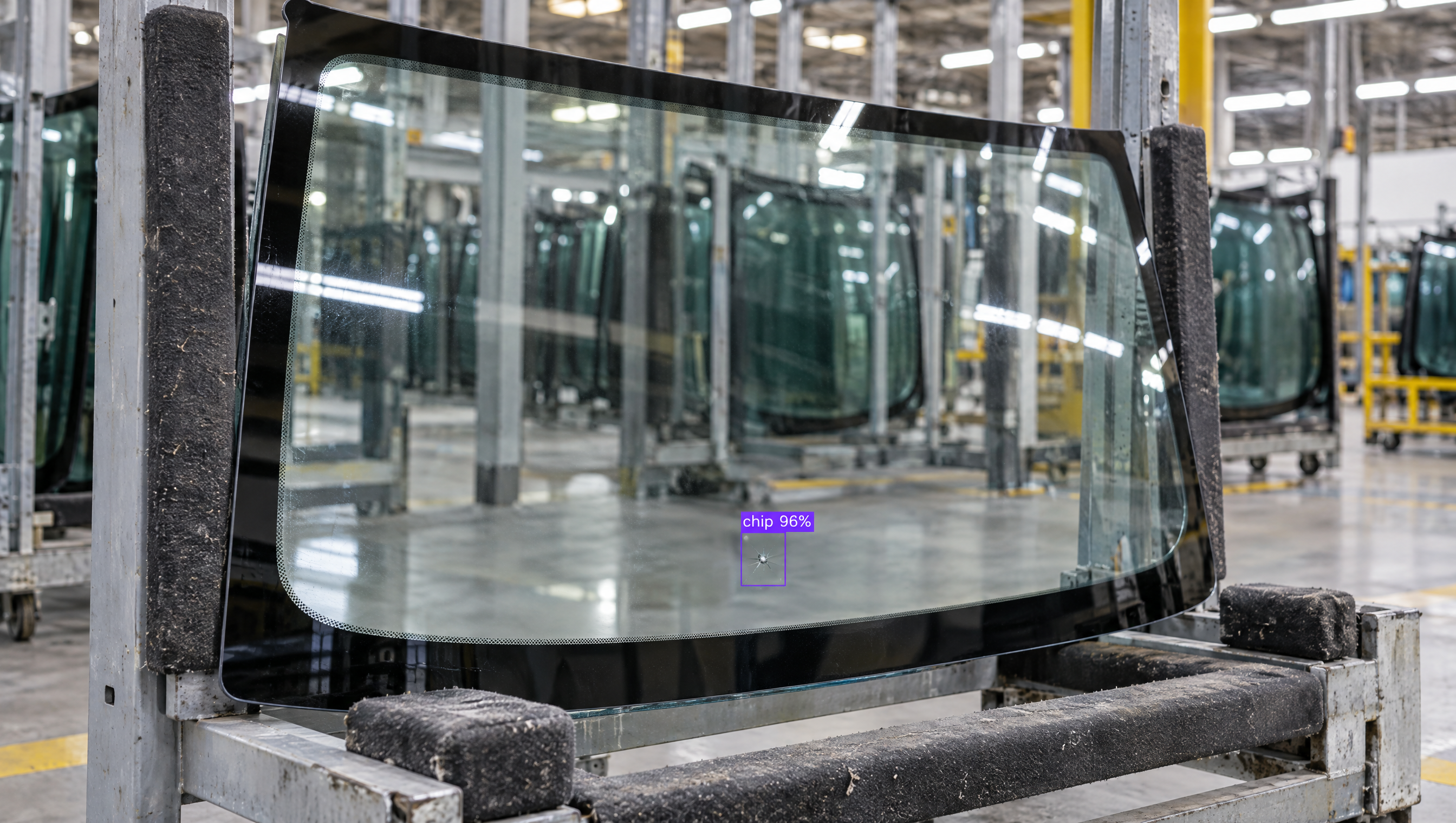
Why are companies choosing Roboflow?

The turnkey solution for vision AI. Create datasets, train models, and deploy to production.

  • End-to-End Vision, One Platform

    From labeling to deployment - build, train, and launch with ease.

  • Built for Builders, Ready for Anything

    Interoperable infrastructure for developers to create custom vision solutions.

  • AI at the Edge, Without Limits

    Deploy seamlessly to any edge device and power real-time vision AI.

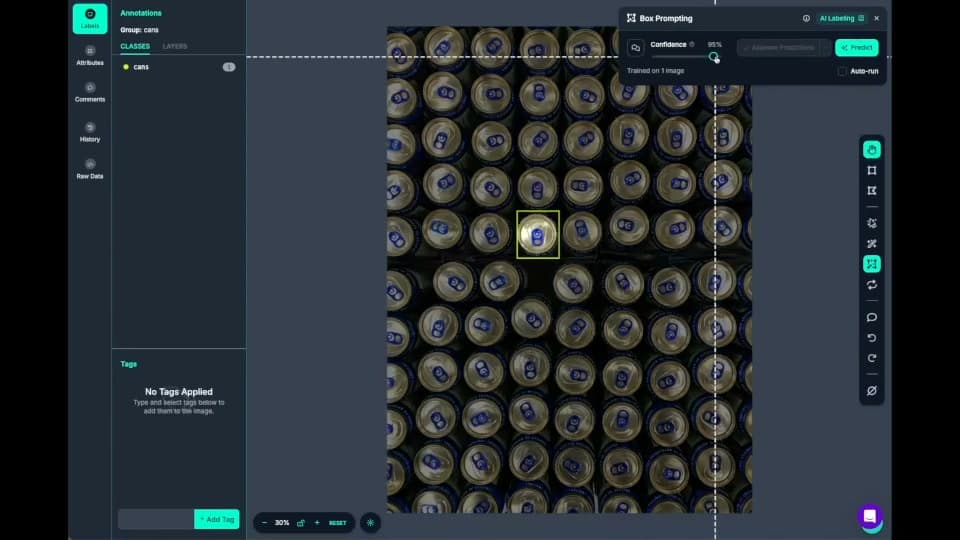
  • Roboflow Annotate labeling cans with AI box prompting

    Fast data labeling

    Label data quickly with a suite of AI-assisted annotation tools to augment human labeling or fully automate your data labeling pipeline.
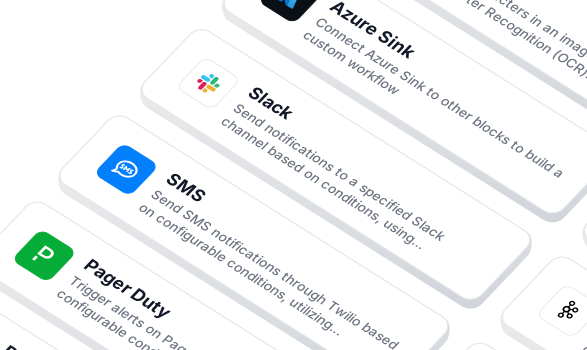
  • Workflow blocks for notifications and integrations

    Build vision AI applications with ease

    Use a low-code open source platform to simplify building and deploying vision AI applications.
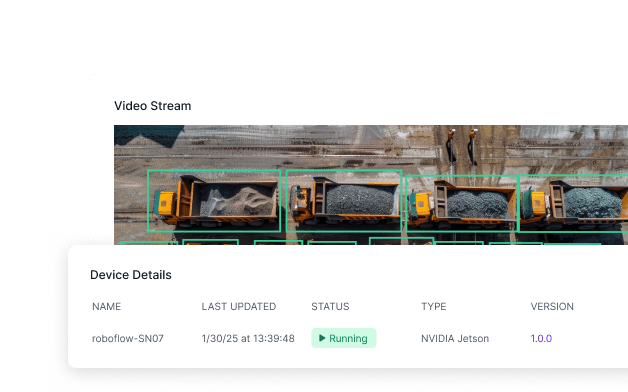
  • A video stream with detections and its NVIDIA Jetson device running

    Edge deployment

    Cloud and edge deployments (NVIDIA Jetson, Raspberry Pi, or mobile devices) for real-time, on-premise inference.
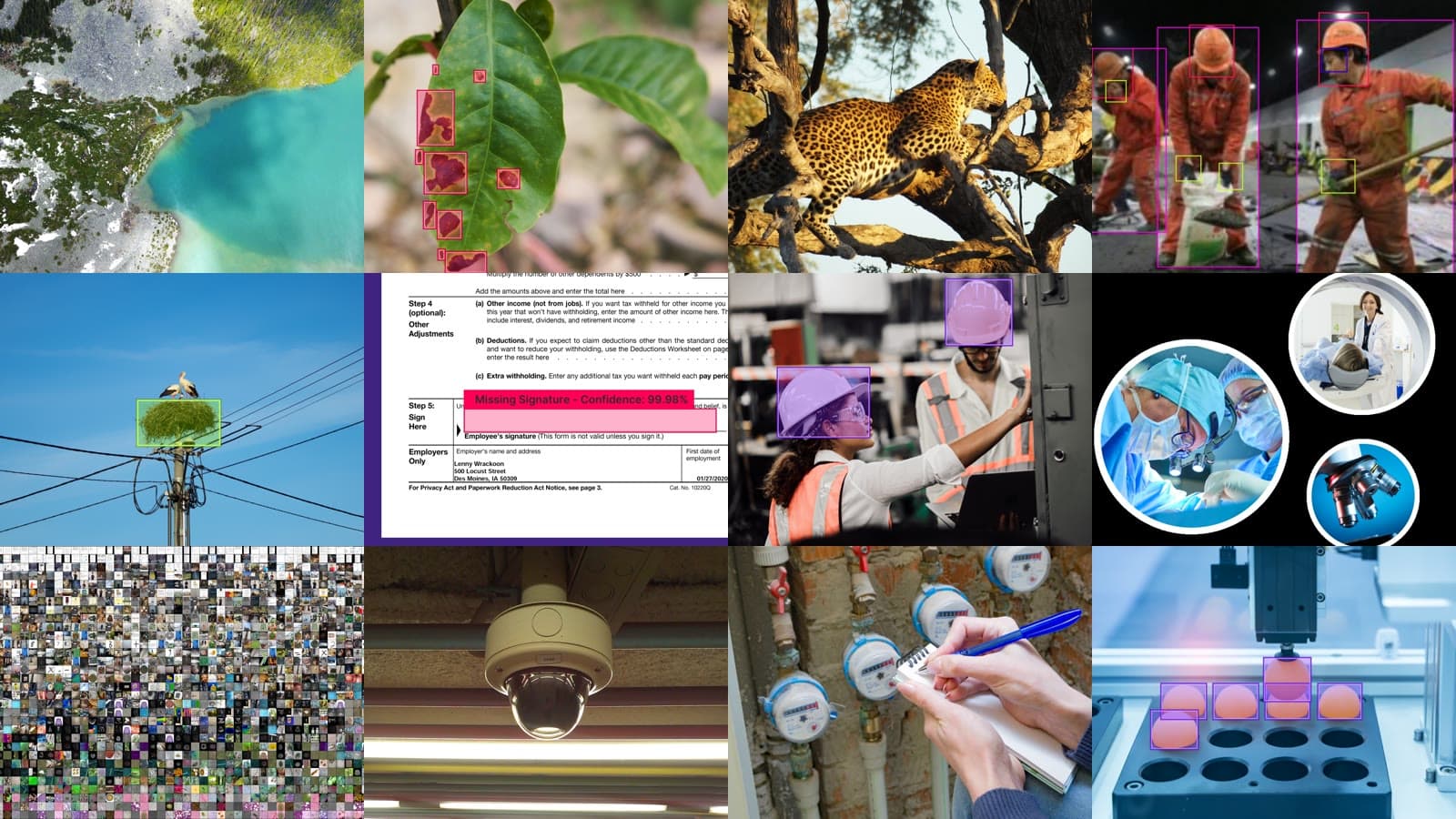
  • Photos from datasets across industries

    Datasets and models for every industry

    Access thousands of datasets and pre-trained models to kickstart your computer vision projects.
  • Logos of OpenAI, Microsoft, Meta, Anthropic, Google and Qwen

    Flexible model licensing

    Choose from a range of licensing options to fit your needs, whether for commercial use, private deployment, or collaboration across teams.

Want to migrate from Lightly to Roboflow?

  • Import images to Roboflow

    Bring COCO, YOLO, or Pascal VOC exports from Lightly straight into Roboflow for labeling and training.

  • Deploy with Roboflow

    No matter where you train your model, use Roboflow's trusted deployment solutions.

  • Automate data labeling

    Use AI labeling in Roboflow to automate 90% of human labeling.

OK I’m ready, how do I use Roboflow?

Roboflow makes it easy to build, train, and deploy custom computer vision models, even if you’re not a machine learning expert.

“The future of automation isn't about retrofitting facilities for robots. It's about building robots that see and adapt to the real world. Vision AI makes that possible and is at the core of everything we do at Peer Robotics. With Roboflow powering our perception pipeline, we're deploying in existing facilities from day one.”

Rishabh Agarwal

CEO, Peer Robotics

Speak with an AI expert

Our team will help you start solving business problems on the first call.

Ask us about:

  • Solution architecting
  • Live demonstration
  • Pricing and specifications
  • Feasibility assessment

Over 80,000 organizations build with Roboflow.

  • Rivian
  • Pella
  • Chobani
  • USG Corporation
  • BNSF Railway
  • American Woodmark
Start where you are
Stay connected

Get the Latest in Computer Vision First

Unsubscribe at any time. Review our Privacy Policy.

Compare Lightly and Roboflow

Lightly builds data-centric tools for computer vision. LightlyStudio is a data hub for curating, searching, sampling, labeling, and evaluating image and video datasets, and LightlyTrain pretrains and distills vision models from DINOv2 and DINOv3 foundation models on your own unlabeled data, then fine-tunes and exports them to ONNX or TensorRT. It is strong at picking the right data to train on and at self-supervised pretraining.

Teams that want the whole loop in one place often choose Roboflow. GPT-6 Astra is the first foundation model that sees well enough to label production data, and Roboflow Annotate puts it to work: Auto Label runs GPT-6 Astra and Gemini over your images from a text prompt, Label Assist pre-annotates with your own model, and Smart Polygon turns one click into a mask. The labeled data trains RF-DETR or YOLO in the same place, and the model deploys to a hosted API, the edge, or your own servers, with Workflows chaining it into a full application.

Every trained model is then exposed over MCP as a specialized vision sub-agent that agents can call. Every plan, including Free, includes self-hosted inference at no cost and model weights download for supported models, and RF-DETR and the inference server are open source for teams that want full control.

Lightly vs Roboflow: feature by feature

Both help teams build better vision datasets. They differ in pretraining, labeling automation, and what happens once a model is trained.

FeatureRoboflowLightly
Lifecycle coveredEnd to end; curation, labeling, training, evaluation, deployment, and production inferenceData to trained model; curation, labeling, QA, pretraining, and fine-tuning, with export for deployment elsewhere
Data curation and searchYes, semantic dataset search, dataset analytics, health checks, and active learning from productionYes, embedding search by text and image, object-level search, and six sampling strategies for subset selection
AI auto labelingYes, Auto Label with GPT-6 Astra and Gemini from a text promptPlugins, SAM 3 and LightlyTrain pseudo-label plugins in LightlyStudio
Label assist with foundation and custom modelsYes, Smart Polygon powered by Meta AI's Segment Anything, and Label Assist with any model trained or uploaded to RoboflowPartial; pseudo-labels from LightlyTrain models
Self-supervised pretrainingNot a focus; train from pretrained RF-DETR and YOLO checkpointsYes, LightlyTrain pretrains and distills from DINOv2 and DINOv3 on unlabeled data
Model trainingYes, hosted training on RF-DETR, YOLO (v8 / v11 / v26), Detectron2, and more, plus open-source RF-DETR for custom trainingYes, LightlyTrain fine-tunes detection, segmentation, and classification models
Model evaluationYes, built-in model evaluation on every trained versionYes, per-sample metrics and a confusion matrix in LightlyStudio
VideoYes, video upload and processing, plus live video and RTSP streams in deploymentYes, native video in LightlyStudio
Model deployment and hosted inferenceYes, serverless hosted API, dedicated deployments, batch processing, and edge deployment to NVIDIA Jetson, Raspberry Pi, or GPU serversExport only; ONNX and TensorRT export, with no hosted inference documented
Self-hosted inference costFree on every plan, with the open-source Roboflow Inference serverRun exported models on your own inference stack
Application builderYes, Roboflow Workflows chains models, logic, and integrations, including PLC outputNo
Sub-agents for frontier models (MCP)Yes, every trained model is exposed over MCP so GPT-6 Astra and Gemini can call it as a specialized vision toolNot documented
Public datasets and modelsYes, 1,000,000+ datasets and 100,000+ models on Roboflow UniverseSample datasets, such as EpicKitchens-100 in LightlyStudio
Open sourceYes, RF-DETR (Apache 2.0), plus the supervision and inference librariesPartial; LightlySSL and LabelFormat are open source, and LightlyTrain is offered under AGPL-3.0, commercial, or research licenses
Free tierYes, with free self-hosted inference, model weights download, and a private workspaceFree trial of LightlyStudio; plan details not published
PricingPublished plans: Free, Core from $39 a month, and EnterpriseNot published; demo first

Roboflow

End-to-end computer vision platform (annotate, train, deploy)

Lightly

Data curation and self-supervised pretraining for computer vision (LightlyStudio, LightlyTrain)

Scale & Ecosystem

Roboflow

  • 2,000,000+ developers on the platform
  • 1,000,000+ public datasets on Roboflow Universe
  • 100,000+ pre-trained models hosted publicly
  • 80,000+ organizations building with the platform, including more than half of the Fortune 100 (publicly cited: Rivian, Chobani, USG, Pella)
  • Self-serve sign-up; teams can begin annotating, training, and deploying without a services contract

Lightly

  • Lightly AG, founded in 2018 in Zurich, Switzerland; part of Y Combinator's Summer 2021 batch
  • Case studies include Kiwibot, Greenwood Engineering, EUROCONTROL, and Harvard Medical School
  • Open-source LightlySSL library for self-supervised learning and the LabelFormat label converter
  • No public catalog of community datasets or pre-trained models comparable to Roboflow Universe

Product Capabilities (Computer Vision)

Roboflow

  • End-to-end platform: dataset management, annotation, model training, evaluation, hosted inference, and deployment
  • Auto Label uses foundation models (GPT-6 Astra, Gemini) to label images for classes you define in a text prompt; label 1,000 images in under ten minutes
  • Label Assist pre-annotates new images with your own trained models, and Smart Polygon creates one-click polygon annotations powered by Meta AI's Segment Anything
  • Semantic dataset search, dataset analytics, health checks, and active learning that feeds production images back into training
  • Every trained model is exposed over MCP as a specialized vision sub-agent that GPT-6 Astra and Gemini can call; Roboflow Workflows chains models and logic into a single pipeline
  • Active model registry covering RF-DETR, YOLO (v8 / v11 / v26), Detectron2, and other current architectures

Lightly

  • LightlyStudio: embedding search by text and image, object-level search, six sampling strategies, labeling, QA, and per-sample evaluation
  • LightlyTrain: self-supervised pretraining and distillation from DINOv2 and DINOv3, with fine-tuning for detection, segmentation, and classification
  • Auto-labeling through SAM 3 and LightlyTrain pseudo-label plugins
  • Images, video, and depth data, with exports to COCO, YOLO, and Pascal VOC
  • Models export to ONNX or TensorRT; no hosted inference or application builder documented

Developer Experience

Roboflow

  • Open-source RF-DETR (Apache 2.0) for teams that want full control of training
  • Open-source supervision library and open-source inference server, self-hostable on hardware you already own
  • Python SDK plus REST/HTTP APIs; standardized I/O lets teams swap model weights without changing application code
  • Trained models are served over MCP so frontier models can call them as tools
  • Native integrations with Hugging Face Transformers, MMDetection, and the broader open-source CV stack

Lightly

  • Python-first tooling with documentation at docs.lightly.ai
  • LightlyTrain supports PyTorch, ONNX, and Ultralytics workflows
  • LightlyTrain licensed under AGPL-3.0, a commercial license, or a research license
  • Cloud, hybrid, and on-premise deployment of the Lightly platform

Enterprise & Security

Roboflow

  • Free plan includes self-hosted inference at no cost, model weights download for supported models, and a workspace and models private to your team
  • SOC 2 Type II compliant
  • HIPAA-compliant infrastructure with BAAs available
  • PCI DSS (SAQ A and AOC) compliance
  • Deployment options: managed cloud, customer VPC, on-premises, and fully air-gapped / offline (Docker-based) for firewalled environments
  • Training and inference can run on customer-owned bare metal or in the customer's own cloud account

Lightly

  • Cloud, hybrid, and on-premise options with one API across them
  • Team roles in LightlyStudio
  • Compliance certifications not published
  • Pricing not published; plans start with a demo

Sources: roboflow.com, docs.roboflow.com, security.roboflow.com, universe.roboflow.com, github.com/roboflow, lightly.ai (home, LightlyStudio, and LightlyTrain pages), docs.lightly.ai, github.com/lightly-ai, ycombinator.com. Figures reflect publicly available information as of October 2026.