LandingAI leads with documents, Roboflow is built for vision

LandingAI's headline product is Agentic Document Extraction, while Roboflow remains the industry standard for end-to-end computer vision. Join 2 million+ developers building the future of vision AI on a platform that’s here to stay.
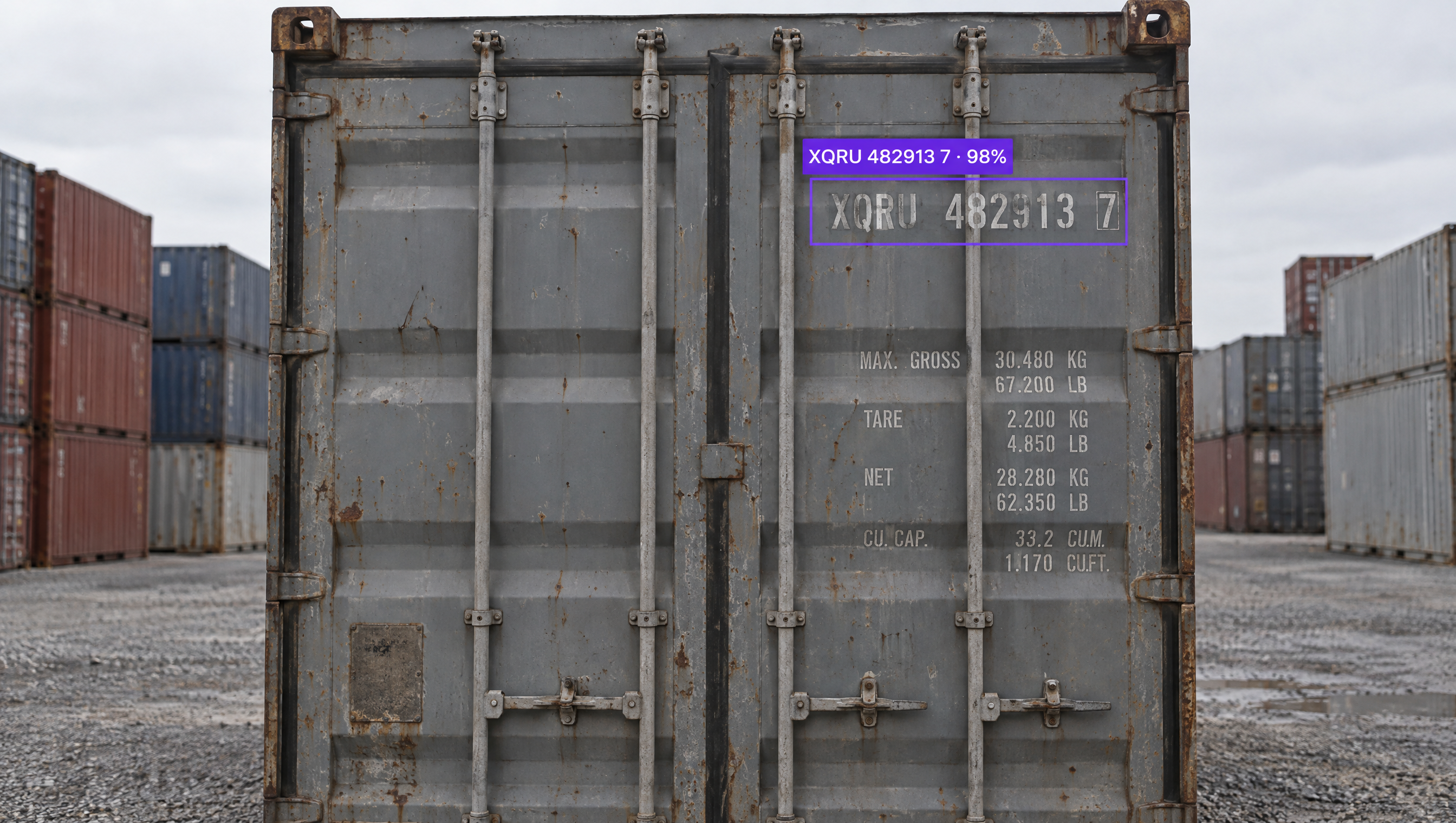
A gray shipping container with a digital overlay identifying the number XQRU 482913 7 with 98% confidence, in a container yard.

Why are companies choosing Roboflow?

LandingAI's headline product is document extraction. Roboflow is the turnkey solution for vision AI. Create datasets, train models, and deploy to production.

  • End-to-End Vision, One Platform

    From labeling to deployment - build, train, and launch with ease.

  • Built for Builders, Ready for Anything

    Interoperable infrastructure for developers to create custom vision solutions.

  • AI at the Edge, Without Limits

    Deploy seamlessly to any edge device and power real-time vision AI.

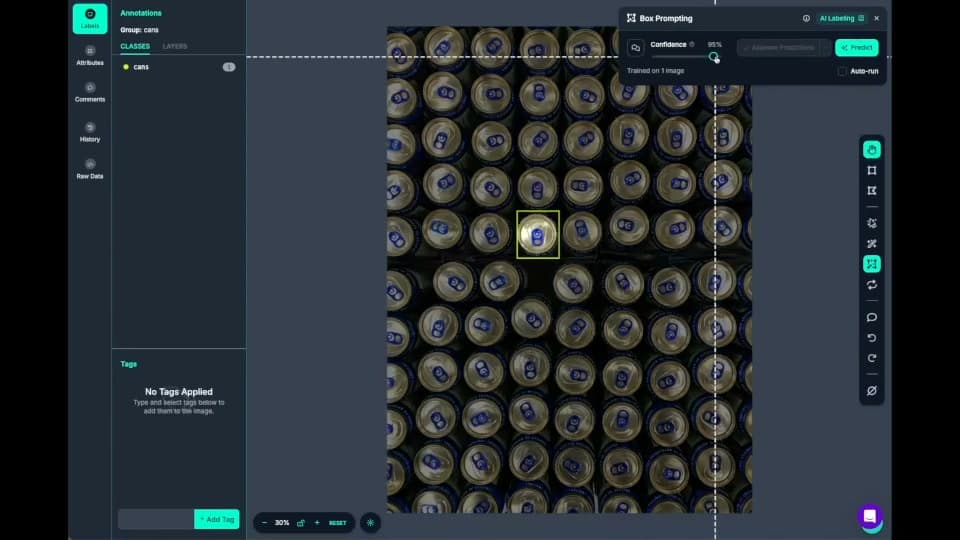
  • Roboflow Annotate labeling cans with AI box prompting

    Fast data labeling

    Label data quickly with a suite of AI-assisted annotation tools to augment human labeling or fully automate your data labeling pipeline.
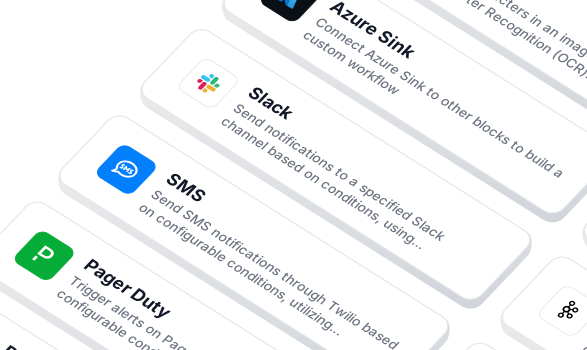
  • Workflow blocks for notifications and integrations

    Build vision AI applications with ease

    Use a low-code open source platform to simplify building and deploying vision AI applications.
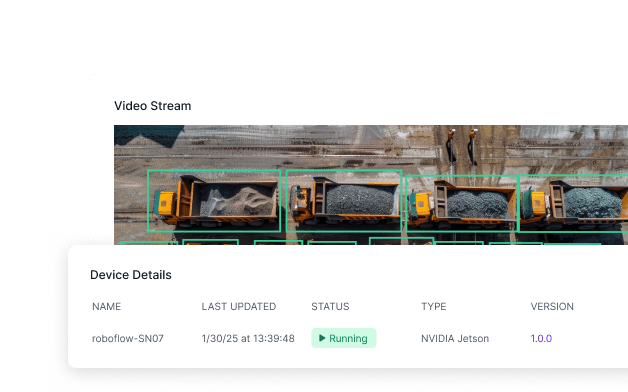
  • A video stream with detections and its NVIDIA Jetson device running

    Edge deployment

    Cloud and edge deployments (NVIDIA Jetson, Raspberry Pi, or mobile devices) for real-time, on-premise inference.
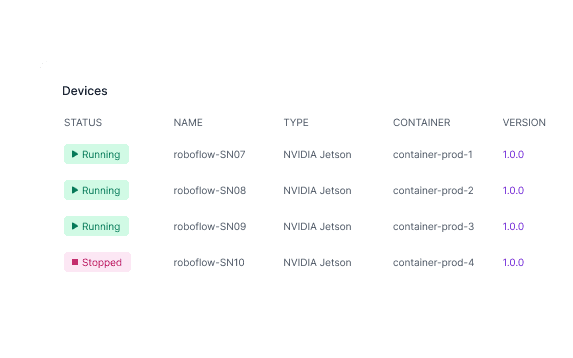
  • A list of NVIDIA Jetson devices and their status

    Devices for every scenario

    Software, compute, cameras: all the tools you need to deploy vision AI.
  • Logos of OpenAI, Microsoft, Meta, Anthropic, Google and Qwen

    Flexible model licensing

    Choose from a range of licensing options to fit your needs, whether for commercial use, private deployment, or collaboration across teams.

Ready to migrate from LandingLens to Roboflow in minutes?

  • Import images to Roboflow

    Bring data from LandingLens to Roboflow for model training.

  • Deploy with Roboflow

    No matter where you train your model, use Roboflow's trusted deployment solutions.

  • Automate data labeling

    Use AI labeling in Roboflow to automate 90% of human labeling.

OK I’m ready, how do I use Roboflow?

Roboflow makes it easy to build, train, and deploy custom computer vision models, even if you’re not a machine learning expert.

Speak with an AI expert

Our team will help you start solving business problems on the first call.

Ask us about:

  • Solution architecting
  • Live demonstration
  • Pricing and specifications
  • Feasibility assessment

Over 80,000 organizations build with Roboflow.

  • Rivian
  • Pella
  • Chobani
  • USG Corporation
  • BNSF Railway
  • American Woodmark
Start where you are
Stay connected

Get the Latest in Computer Vision First

Unsubscribe at any time. Review our Privacy Policy.

Compare Roboflow and Landing AI

When it comes to comparing Roboflow and LandingAI, the primary difference lies in focus. LandingAI centers on Agentic Document Extraction, with LandingLens as its visual inspection product, while Roboflow remains the world’s most comprehensive platform dedicated to real-world computer vision.

Engineering teams choose Roboflow for its long-term stability and unmatched flexibility. With Roboflow, you gain access to an open-source deployment ecosystem and an interoperable infrastructure. Roboflow continues to power the full vision pipeline, from labeling and preprocessing to training and edge deployment, for industries ranging from robotics and manufacturing to healthcare and aerospace.

Ultimately, teams use Roboflow because it provides enterprise-grade stability, the option to deploy on anything from an NVIDIA Jetson at the edge to high-scale cloud clusters via Roboflow Cloud, and the ability to build complex application logic (like model chaining and industrial PLC triggers) through a visual drag-and-drop canvas with Roboflow Workflows. Roboflow is doubling down on the tools engineers need to make machines see.

LandingAI vs Roboflow: feature by feature

Both companies have helped manufacturers train custom vision models, and LandingLens still ships updates for visual inspection. The difference is focus: LandingAI's mission centers on Agentic Document Extraction, while Roboflow's platform is dedicated to computer vision, from labeling and training to edge deployment and PLC integration.

FeatureRoboflowLandingAI
Form factorSoftware platform; runs on the cameras and compute you choose, or the Roboflow AI1 deviceTwo product lines; Agentic Document Extraction APIs are the headline product, with LandingLens for visual inspection
Vision tasksObject detection, instance and semantic segmentation, classification, keypoints, OCR, depth estimation, and multimodal tasksObject detection, classification, segmentation, and anomaly detection; Visual Prompting in beta
Choose your architectureYes, RF-DETR, YOLO (v8 / v11 / v26), Detectron2, and moreFixed menu; RTMDet, RepPoints, FastViT, SegFormer, ConvNeXt, and RD4AD in set sizes
Export model weightsYesONNX after project activation; Free plan downloads are for noncommercial use only
AI-assisted labelingYes, Auto Label (GPT-6 Astra, Gemini) labels the classes you describe in a text prompt; Smart Polygon powered by Meta AI's Segment Anything; Label Assist pre-annotates with your own trained modelsYes; Smart Labeling uses SAM 2 for segmentation, and Label Assist suggests boxes after you train a detection model
Camera supportAny, RTSP, USB, GigE, or industrial cameraIndustrial cameras; GenICam and GigE Vision cameras through LandingEdge
Industrial integrationsPLC Reader, PLC Writer, and OPC UA blocks speak OPC UA, Modbus TCP, and EtherNet/IPYes; Rockwell CompactLogix and ControlLogix controllers, plus OPC UA controllers, through LandingEdge
Edge hardwareYes, NVIDIA Jetson, GPU servers, Raspberry Pi, x86, or Roboflow AI1, online or fully offlineYes, with limits; the LandingEdge app runs on Windows or Ubuntu x64 only (no ARM); Docker runs on x86-64 and ARM64, including Jetson Orin
Offline / air-gappedYes, Docker-based offline install with no cloud dependencyYes; Docker deployment runs inference offline with a manually downloaded model
Cloud inferenceHosted APIs with autoscalingRate limited; 40 inferences per minute per endpoint, with higher limits through sales
Uptime SLAYes, on Enterprise, with a public status pageNot published for LandingLens; SLAs and uptime guarantees are listed for Agentic Document Extraction Enterprise
ComplianceSOC 2 Type II, HIPAA with BAAs, PCI DSSSOC 2 Type II, HIPAA, and GDPR
PricingPublished plans; Enterprise adds volume pricing and an uptime SLALandingLens: Free (1,000 credits a month, up to 3 users) and Enterprise (contact sales); document extraction plans from $250 a month

Roboflow

End-to-end computer vision platform

LandingAI

LandingLens (manufacturing CV) + Agentic Document Extraction

Scale & Ecosystem

Roboflow

  • 2,000,000+ developers on the platform
  • 1,000,000+ public datasets on Roboflow Universe
  • 100,000+ pre-trained models hosted publicly
  • 80,000+ organizations building with the platform, including more than half of the Fortune 100 (publicly cited: Rivian, Pella, Amgen, Chobani)

LandingAI

  • No publicly disclosed developer or organization count for LandingLens
  • No public catalog of community-contributed datasets or pre-trained models
  • LandingLens Free plan includes 1,000 credits a month and up to 3 users; Enterprise is priced through sales
  • LandingLens is also available on Snowflake (LandingLens on Snowflake)

Product Capabilities (Computer Vision)

Roboflow

  • Native support for object detection, instance and semantic segmentation, image classification, keypoint detection, OCR, depth estimation, and multimodal tasks
  • Auto Label uses foundation models (GPT-6 Astra, Gemini) to label images for classes you define in a text prompt; Smart Polygon creates one-click polygon annotations powered by Meta AI's Segment Anything
  • Roboflow Workflows for chaining detection, classification, OCR, and business logic into a single pipeline
  • Active model registry covering RF-DETR, YOLO (v8 / v11 / v26), Detectron2, and other current architectures

LandingAI

  • LandingLens supports object detection, classification, segmentation, and anomaly detection, with Visual Prompting in beta
  • Keypoint detection, instance segmentation, depth estimation, and multimodal tasks are not among LandingLens project types
  • LandingAI's homepage centers on its Agentic Document Extraction (ADE) APIs
  • Custom Training offers a fixed menu of architectures per project type (RtmDet, RepPoints, FastViT, SegFormer, ConvNeXt, RD4AD) in set sizes

Developer Experience

Roboflow

  • Open-source supervision library, model-agnostic utilities for detections, tracking, annotation, and evaluation
  • Open-source inference server, self-hostable HTTP inference for custom and foundation models
  • Native integrations with Hugging Face Transformers, MMDetection, and the broader open-source CV stack
  • Python SDK plus REST/HTTP APIs; standardized I/O lets teams swap model weights without changing application code

LandingAI

  • Official Python libraries for LandingLens inference and for Agentic Document Extraction, plus a JavaScript library
  • REST API; MCP server published for ADE
  • Self-hosted LandingLens inference through a Docker container on x86-64, ARM64, and Jetson Orin
  • Cloud endpoints are limited to 40 inferences per minute per endpoint

Enterprise & Security

Roboflow

  • SOC 2 Type II compliant
  • HIPAA-compliant infrastructure with BAAs available
  • PCI DSS (SAQ A and AOC) compliance
  • Deployment options: managed cloud, customer VPC, on-premises, and fully air-gapped / offline (Docker-based) for firewalled environments
  • Training and inference can run on customer-owned bare metal or in the customer's own cloud account

LandingAI

  • SOC 2 Type II compliant
  • HIPAA support with a signed BAA and Zero Data Retention on ADE Team and Enterprise plans
  • EU hosting and GDPR listed on all ADE plans; PCI DSS compliance not publicly documented
  • LandingLens deploys to cloud endpoints, LandingEdge, and Docker containers that can run inference offline with a manually downloaded model; ADE Enterprise offers SaaS, VPC, and on-prem deployments

Sources: roboflow.com, docs.roboflow.com, security.roboflow.com, universe.roboflow.com, github.com/roboflow, landing.ai, landing.ai/pricing, landinglens.docs.landing.ai (project types, custom training, plans, cloud deployment, Docker deployment, release notes, credit management), docs.landing.ai. Figures reflect publicly available information as of October 2026.