AMETEK Surface Vision and Roboflow

AMETEK Surface Vision is a web inspection system, Roboflow is surface inspection AI on the cameras you choose

AMETEK Surface Vision alternatives? Manufacturers like USG, Pella, and Rivian run production vision AI on Roboflow, with an Enterprise uptime SLA, inference that keeps running offline, and engineers who help deploy it.
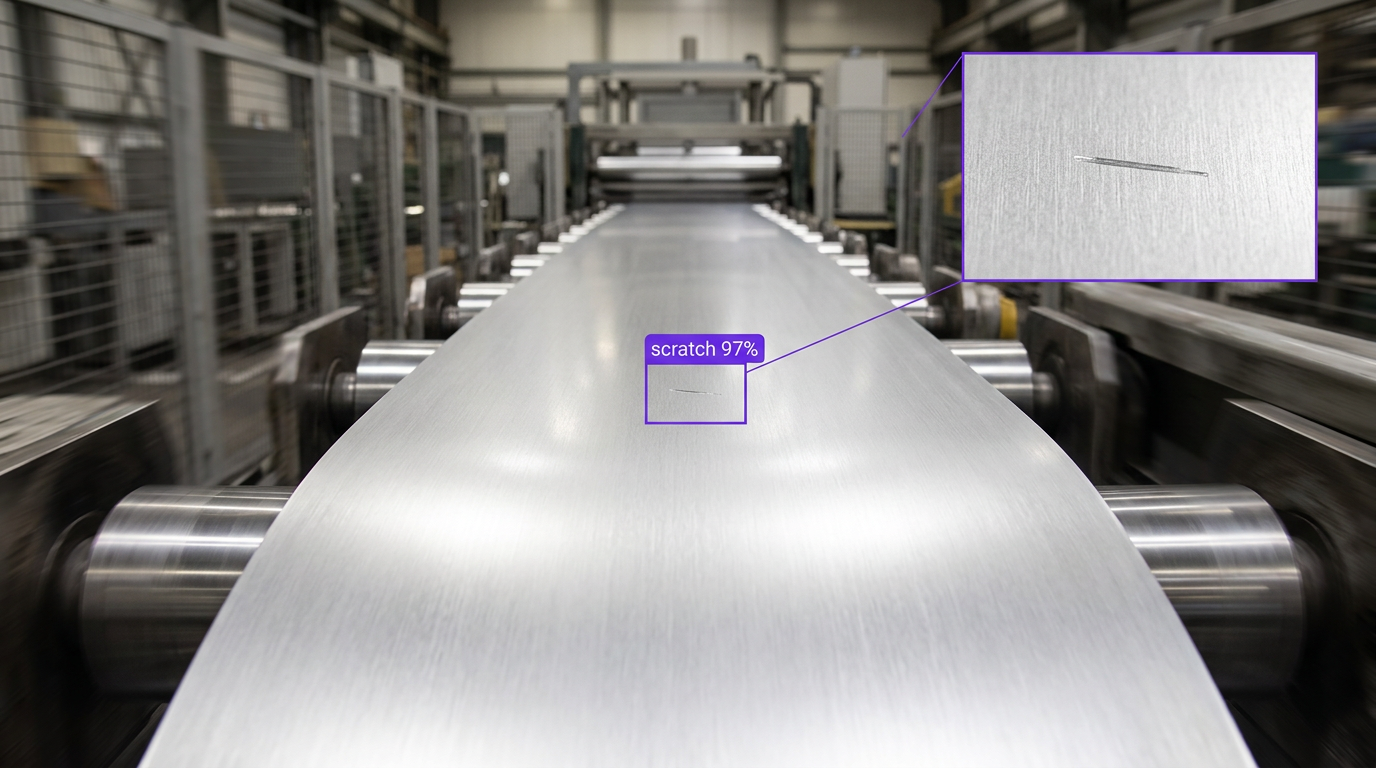
A metal sheet in a factory, showing an AI-detected scratch with a magnified inset.

Why are manufacturers choosing Roboflow?

Roboflow is enterprise vision AI infrastructure, used by more than half of the Fortune 100, with SOC 2 Type II, HIPAA, and air-gapped deployment. Create datasets, train models, and deploy to production.

  • Built to stay up

    Inference runs on your own hardware, fully offline if needed, so the line keeps running without a cloud connection. Enterprise adds an uptime SLA.

  • Models that stay accurate

    Active learning and operator feedback send flagged images back into training, so models keep up as materials, lighting, and defects change.

  • Experts from day one

    Professional Services cover cloud deploy consulting and benchmarking, onboarding and enablement, hardware procurement, on-premise installation, project and workflow review, and forward deployed engineering.

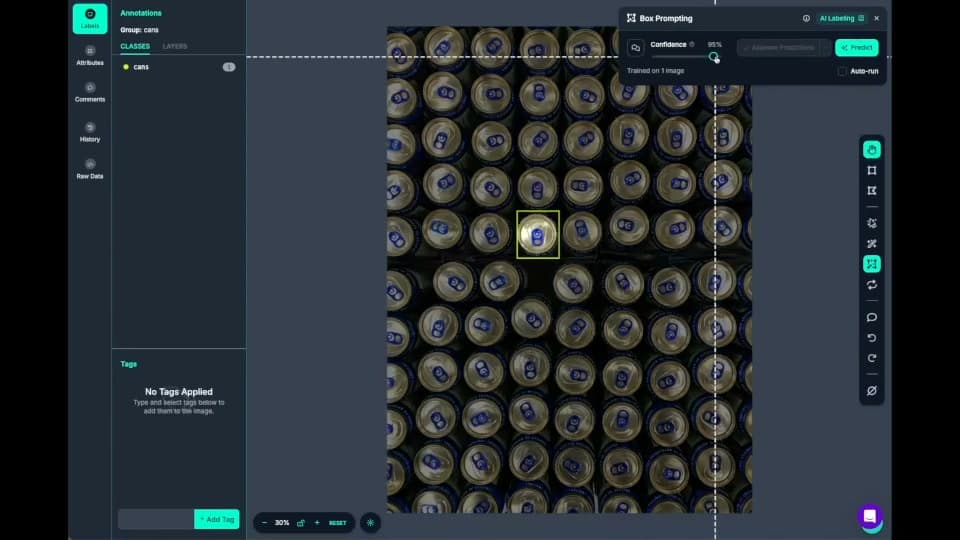
  • Roboflow Annotate labeling cans with AI box prompting

    Fast data labeling

    Label data quickly with a suite of AI-assisted annotation tools to augment human labeling or fully automate your data labeling pipeline.
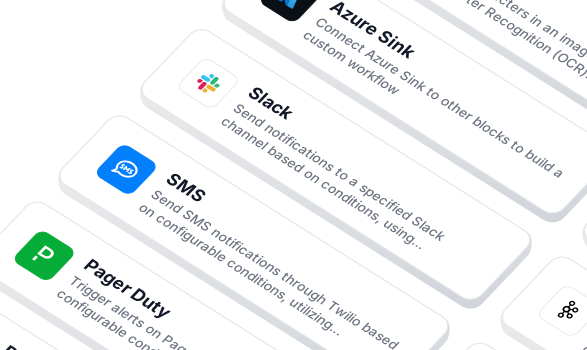
  • Workflow blocks for notifications and integrations

    Build vision AI applications with ease

    Use a low-code open source platform to simplify building and deploying vision AI applications.
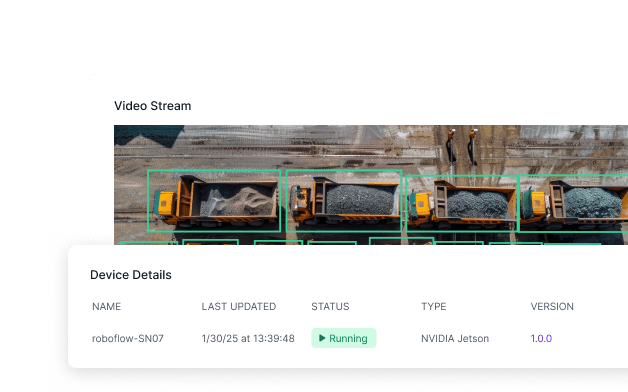
  • A video stream with detections and its NVIDIA Jetson device running

    Edge deployment

    Cloud and edge deployments (NVIDIA Jetson, Raspberry Pi, or mobile devices) for real-time, on-premise inference.
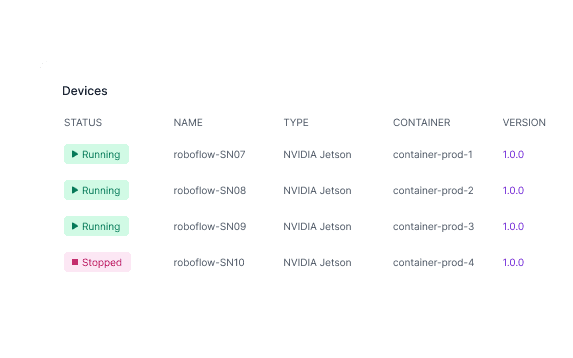
  • A list of NVIDIA Jetson devices and their status

    Devices for every scenario

    Software, compute, cameras: all the tools you need to deploy vision AI.
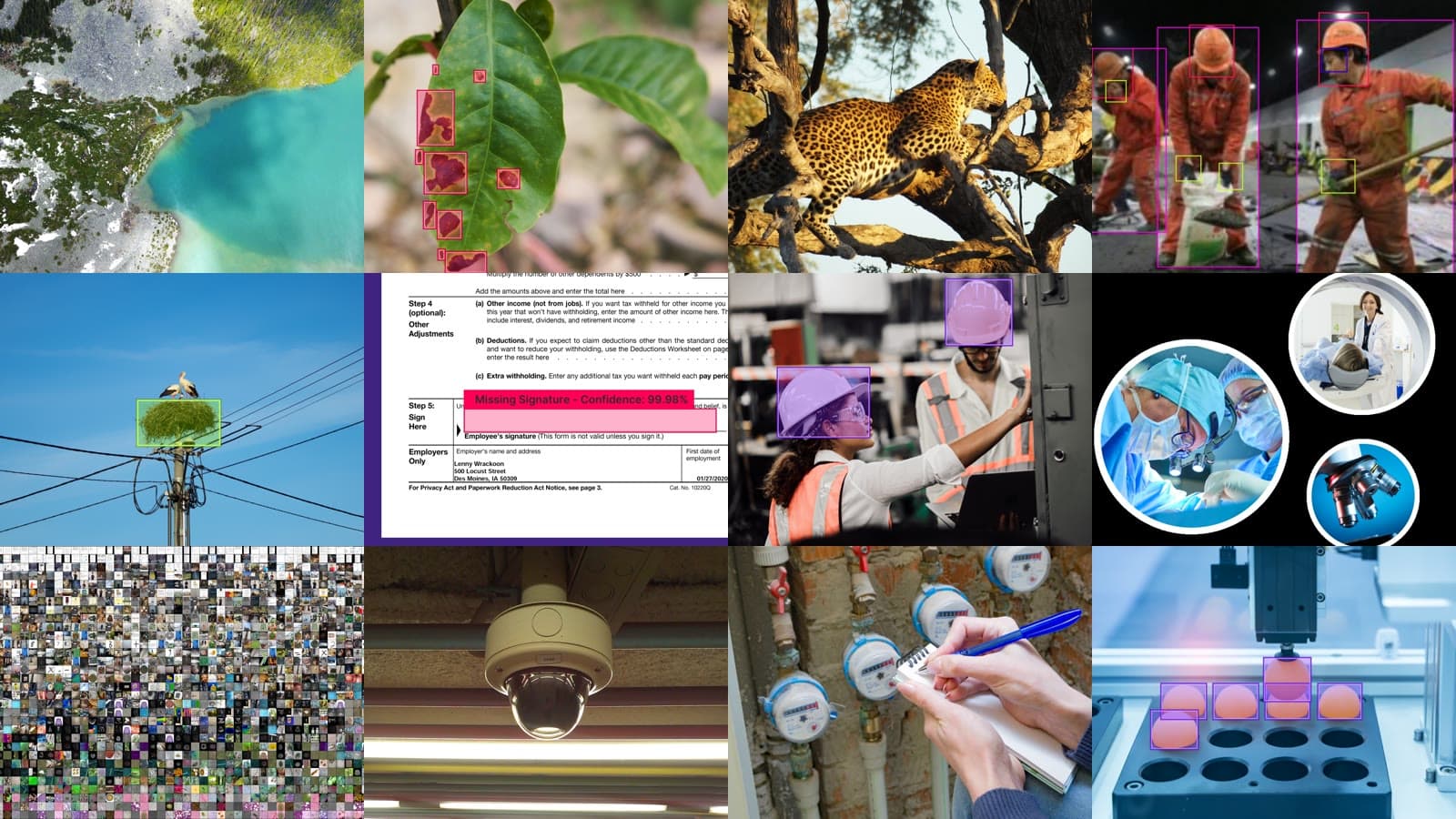
  • Photos from datasets across industries

    Datasets and models for every industry

    Access thousands of datasets and pre-trained models to kickstart your computer vision projects.
  • Logos of OpenAI, Microsoft, Meta, Anthropic, Google and Qwen

    Flexible model licensing

    Choose from a range of licensing options to fit your needs, whether for commercial use, private deployment, or collaboration across teams.

Ready to move your surface inspection to Roboflow?

  • Start with your own cameras and images

    Bring images from the area-scan or line-scan cameras already on your line into Roboflow and label them with AI assistance.

  • Deploy with Roboflow

    Run on an NVIDIA Jetson, an air-gapped server, or the Roboflow AI1 device, and trigger PLCs from Workflows.

  • Automate data labeling

    Use AI labeling in Roboflow to automate 90% of human labeling.

OK I’m ready, how do I use Roboflow?

Roboflow makes it easy to build, train, and deploy custom computer vision models, even if you’re not a machine learning expert.

“The vision AI solutions we developed with Roboflow have been a core component of connecting our teams and unlocking their ability to collaborate.”

Lou Stocco

Director of Manufacturing Advanced Analytics, USG

Talk to a Vision AI engineer about surface inspection

Bring us your toughest web or surface defect problem and we'll map a working solution.

Ask us about:

  • Solution architecture for your line-scan or area cameras, lighting, and line speed
  • A live demo on your own defect images
  • Deployment options: edge, on-prem, or air-gapped, next to the line
  • ROI modeling against scrap, customer claims, and manual inspection time

Over 80,000 organizations build with Roboflow.

  • Rivian
  • Pella
  • Chobani
  • USG Corporation
  • BNSF Railway
  • American Woodmark
Start where you are

Compare AMETEK Surface Vision and Roboflow

AMETEK Surface Vision provides inspection and monitoring systems for continuous materials such as metals, paper, plastics, and nonwovens. Its SmartView and SmartAdvisor products combine surface inspection with process monitoring, while AMECare services cover installation, calibration, maintenance, and support, including an optional 24/7 tier.

Roboflow gives manufacturers control over the cameras, models, and hardware that run their inspection systems. Bring images from your area-scan or line-scan cameras and train models on your materials and defects. For long inspection images, Roboflow Workflows can divide strips into overlapping tiles, detect defects, and map the results back to the original image, preserving detail that resizing could lose. Deploy on local hardware, with fully offline and air-gapped deployment available through Enterprise edge offerings.

Roboflow Agent helps turn your inspection requirements into models, Workflows, and connections to business systems. Test Auto Label (opens in a new tab) to draft annotations from a text prompt that your team can review and correct. The Roboflow MCP server and ChatGPT plugin (opens in a new tab) also let engineers manage datasets, train models, and test predictions through their existing AI tools.

When defect examples are scarce, Roboflow’s new anomaly detection support lets you train PatchCore or FoundAD on images of acceptable products and flag visual deviations. As materials and conditions change, active learning can collect production images for retraining. Vision Events stores inspection results, images, and production metadata so teams can investigate quality issues across lines and plants and send useful examples back into their datasets.

USG uses Roboflow to inspect drywall and identify misaligned boards before they cause production jams, with models running on local hardware even during internet outages. Enterprise plans include an uptime SLA for Roboflow-hosted services. Optional support and professional services provide a named Customer Support Engineer, 24/7 support with a support SLA, hardware procurement, on-premise installation, and hands-on deployment engineering.

Start for free with private projects, unlimited seats, model weight downloads, and 10 credits each month. Self-hosted inference is free on every plan, with no Roboflow credits consumed by local inference. Bring images from one inspection station, test against your quality requirements, and build from there.

AMETEK Surface Vision vs Roboflow: Feature by Feature

FeatureRoboflowAMETEK Surface Vision
Form factorSoftware platform; runs on the cameras and compute you choose, or the Roboflow AI1 deviceDedicated inspection systems; SmartView and SmartAdvisor for continuous webs
Use cases coveredWeb and film, metal surface, pulp and paper, and textile defects, plus assembly verification, counting, OCR, safety, and any custom vision taskSurface inspection and web monitoring for metals, paper, plastics, nonwovens, and glass, plus slit inspection
Camera supportAny RTSP, USB, GigE, or industrial camera, including line-scan strips tiled and stitched in WorkflowsAMETEK systems; third-party camera support not documented
Uptime SLAYes, on Enterprise, with a public status pageNot published
Offline and air-gapped inferenceYes, Docker-based offline install on NVIDIA Jetson, x86 servers, or Roboflow AI1, with no cloud dependencyInspection runs on the line; offline and air-gapped specifics not published
Support coverage24/7, with a support SLA and a named Customer Support Engineer on Enterprise SupportTiered; business-hours support or a Global 24/7 emergency tier, chosen at purchase
Professional servicesYes, Roboflow Cloud deploy consulting and benchmarking, dedicated onboarding and enablement sessions, hardware procurement, on-premise installation and activation, project and workflow review, and forward deployed engineeringYes, AMECare installation, calibration, recipe tuning, operator training, preventive maintenance, and service contracts
Keeping models accurate over timeBuilt in; active learning and operator feedback send flagged images back into training, with model monitoring on EnterpriseThrough AMETEK engineers; on-site engineers tailor recipes, with preventive maintenance under AMECare
Vision tasksObject detection, instance and semantic segmentation, classification, keypoints, OCR, depth estimation, and multimodal tasksSurface inspection and web monitoring for continuous materials; classification methods not documented
Train your own modelYes, RF-DETR, YOLO (v8 / v11 / v26), Detectron2, and more; retrain as materials, lighting, and defects changeNot documented
Export and own model weightsYesNot documented
Sub-agents for frontier models (MCP)Yes, every trained model is exposed over MCP so frontier models can call it as a specialized vision toolNot documented
API and SDKYes, Python SDK, REST API, MCP server, public docsNone documented publicly
ComplianceSOC 2 Type II, HIPAA with BAAs, PCI DSSNot published for Surface Vision
No-code application logicYes, a line-side HMI built on Workflows chains detection, OCR, counting, and PLC output on a drag-and-drop canvas, without codeThrough AMETEK engineers; inspection recipes and plant communications are configured on site during setup
Open-source librariesYes, open-source supervision library and inference server, self-hostable on hardware you already ownNone found; no public API, SDK, or developer documentation
PricingPublished plans; Enterprise adds volume pricing and an uptime SLANot published; systems and support tiers by quote

Best AMETEK Surface Vision Alternatives

Roboflow is the top AMETEK Surface Vision alternative for manufacturers that want inspection models they own, on the cameras already on the line. Teams comparing AMETEK Surface Vision also look at:

Explore Roboflow for Surface Inspection

Related Roboflow solutions for teams evaluating AMETEK Surface Vision: