Elementary and Roboflow

Elementary sells inspection hardware, Roboflow turns any camera into vision AI you own

Elementary alternatives? Elementary's self-training models run on its own cameras and controller, with no documented architecture choice, weights export, or air-gapped deployment. Roboflow trains models you own on the cameras you choose and runs fully offline. Manufacturers like USG, Pella, and Rivian build production vision AI with Roboflow.
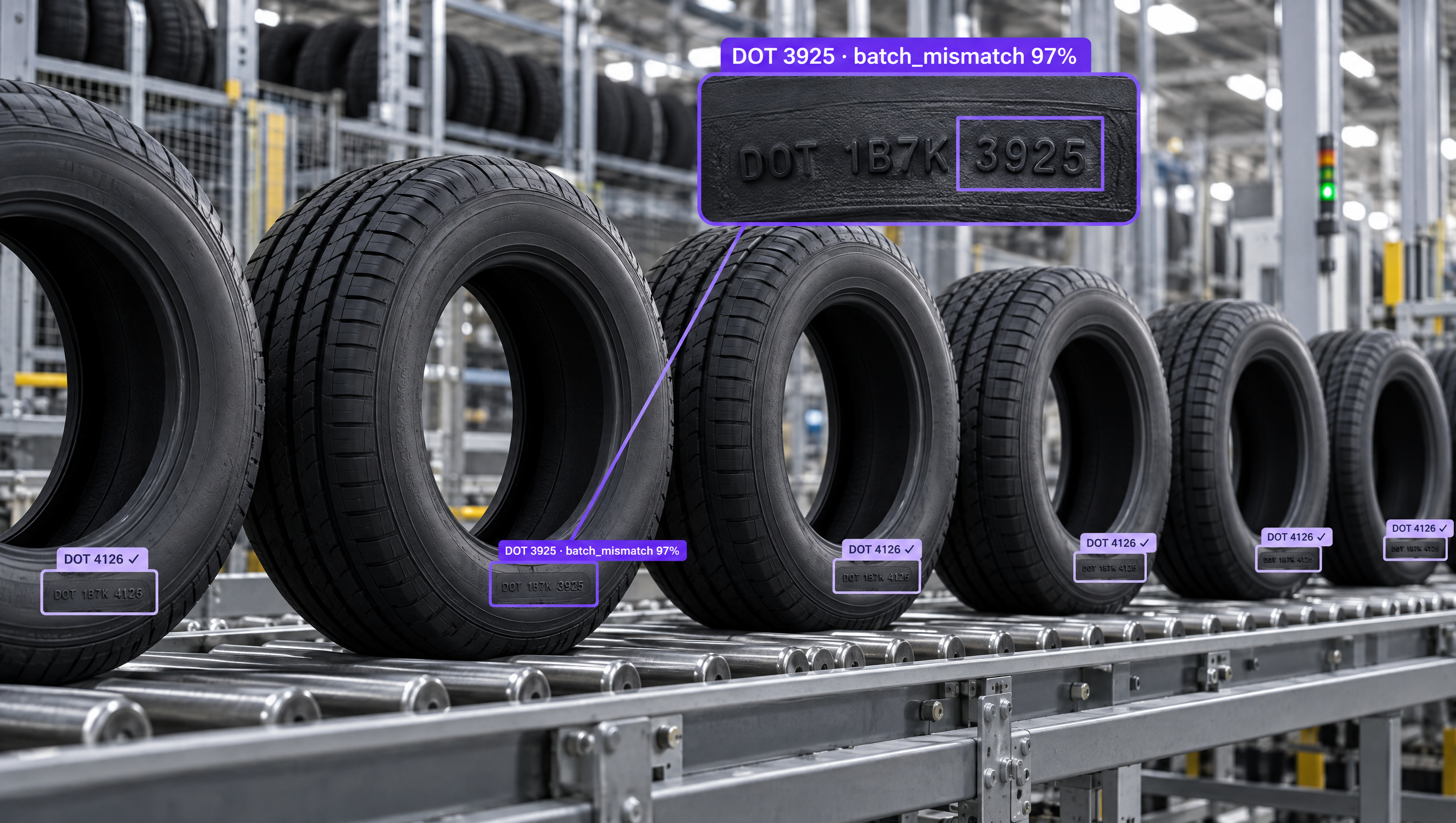
AI inspecting DOT codes on tires on a factory conveyor, highlighting a batch mismatch.

Why are manufacturers choosing Roboflow?

Roboflow is enterprise vision AI infrastructure, used by more than half of the Fortune 100, with SOC 2 Type II, HIPAA, and air-gapped deployment. Create datasets, train models, and deploy to production.

  • Any camera, any task

    Use the industrial, GigE, or RTSP cameras already on your line for defect detection, assembly verification, counting, OCR, and safety.

  • Models you own

    Label your own images with AI assistance, train RF-DETR or YOLO26, and export the weights.

  • AI at the Edge, Without Limits

    Deploy to NVIDIA Jetson, x86, or the Roboflow AI1 device, and trigger PLCs over OPC UA, Modbus TCP, or EtherNet/IP from Workflows.

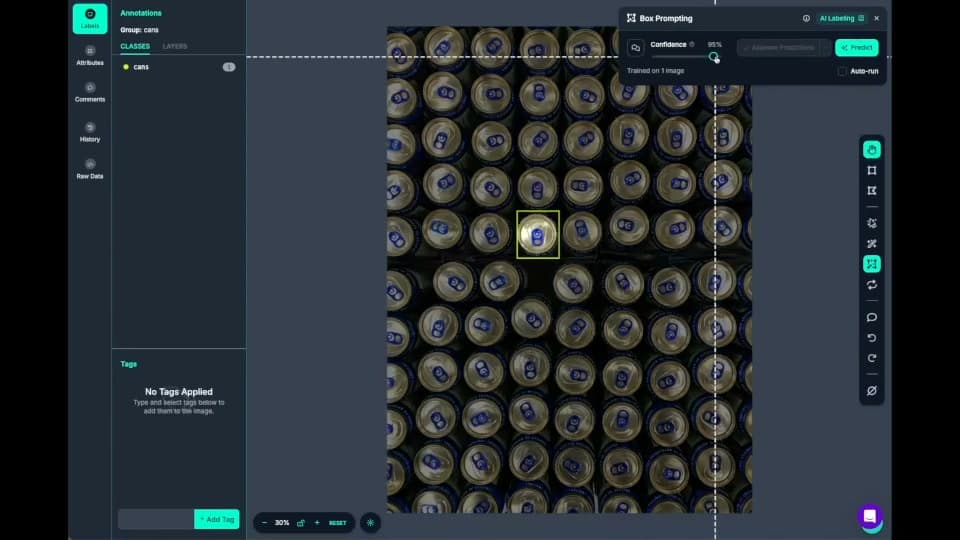
  • Roboflow Annotate labeling cans with AI box prompting

    Fast data labeling

    Label data quickly with a suite of AI-assisted annotation tools to augment human labeling or fully automate your data labeling pipeline.
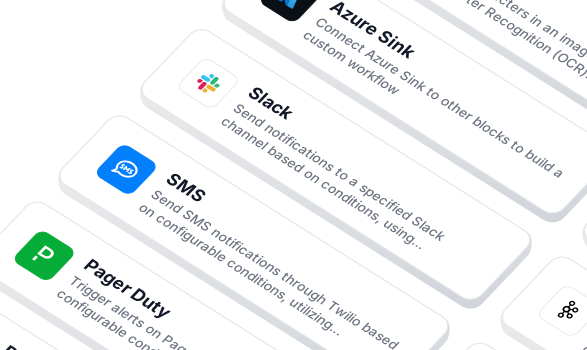
  • Workflow blocks for notifications and integrations

    Build vision AI applications with ease

    Use a low-code open source platform to simplify building and deploying vision AI applications.
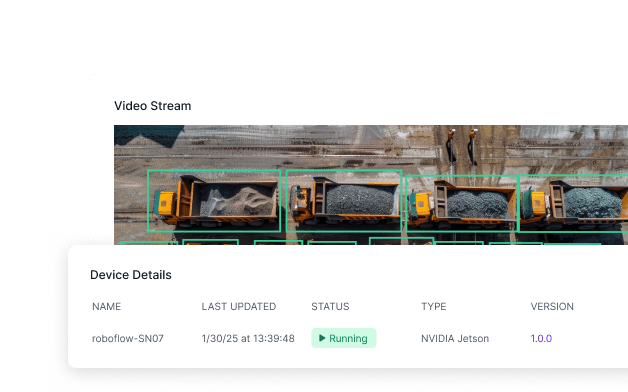
  • A video stream with detections and its NVIDIA Jetson device running

    Edge deployment

    Cloud and edge deployments (NVIDIA Jetson, Raspberry Pi, or mobile devices) for real-time, on-premise inference.
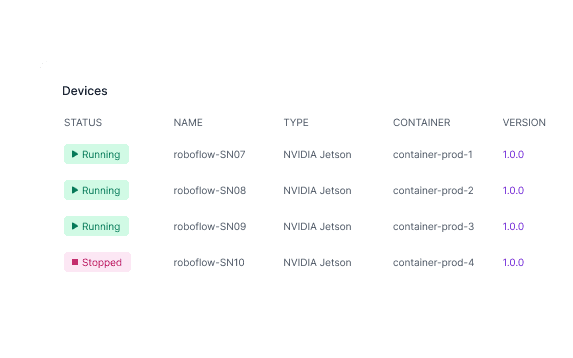
  • A list of NVIDIA Jetson devices and their status

    Devices for every scenario

    Software, compute, cameras: all the tools you need to deploy vision AI.
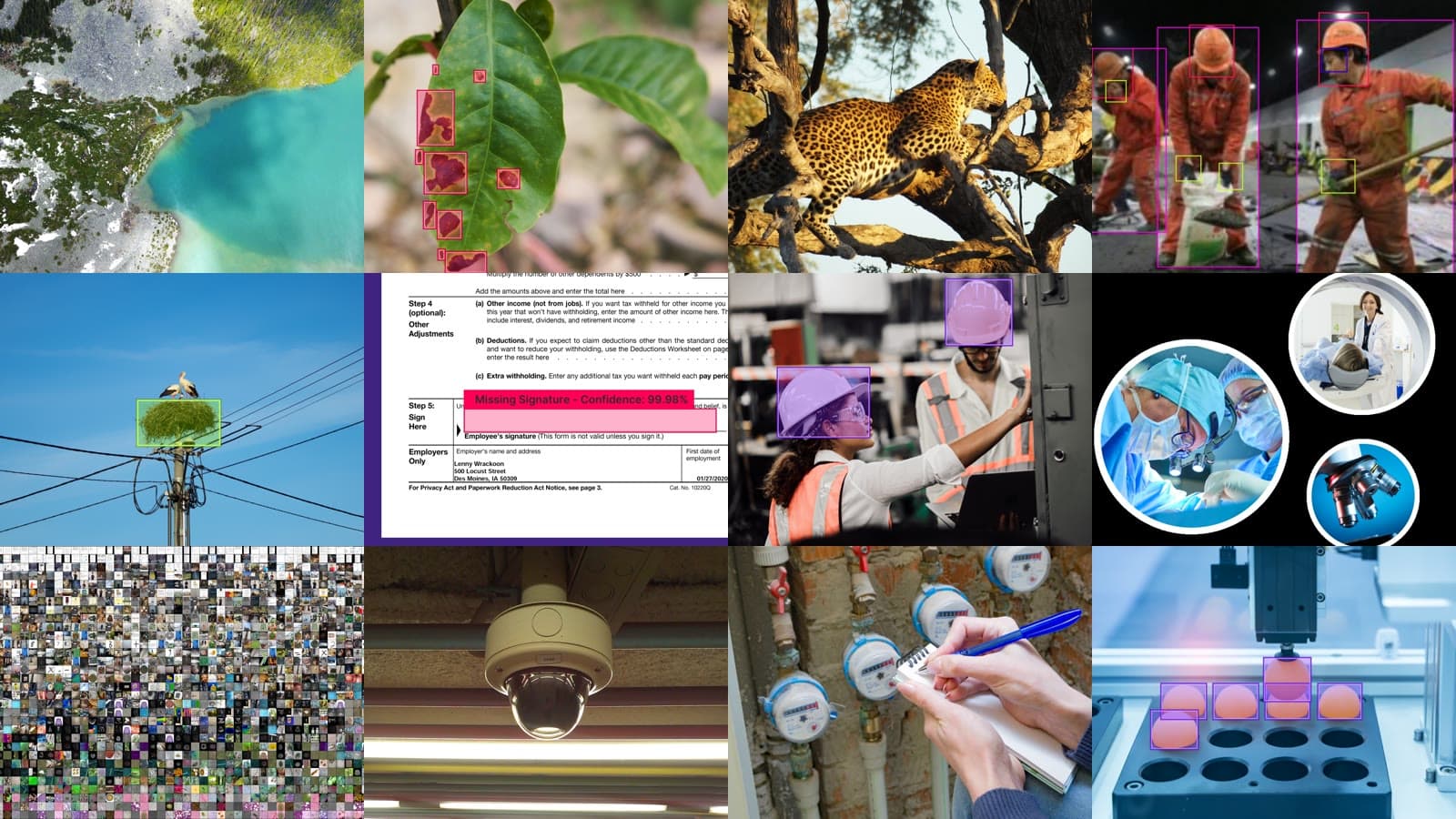
  • Photos from datasets across industries

    Datasets and models for every industry

    Access thousands of datasets and pre-trained models to kickstart your computer vision projects.
  • Logos of OpenAI, Microsoft, Meta, Anthropic, Google and Qwen

    Flexible model licensing

    Choose from a range of licensing options to fit your needs, whether for commercial use, private deployment, or collaboration across teams.

Ready to build your own inspection AI with Roboflow?

  • Start with your own cameras and images

    Bring footage from the industrial cameras already on your line into Roboflow and label it with AI assistance.

  • Deploy with Roboflow

    Run on an NVIDIA Jetson, an air-gapped server, or the Roboflow AI1 device, and trigger PLCs from Workflows.

  • Automate data labeling

    Use AI labeling in Roboflow to automate 90% of human labeling.

OK I’m ready, how do I use Roboflow?

Roboflow makes it easy to build, train, and deploy custom computer vision models, even if you’re not a machine learning expert.

“The vision AI solutions we developed with Roboflow have been a core component of connecting our teams and unlocking their ability to collaborate.”

Lou Stocco

Director of Manufacturing Advanced Analytics, USG

Talk to a Vision AI engineer about line inspection on any camera

Bring us your toughest inspection problem and we'll map a solution on the cameras you choose.

Ask us about:

  • Solution architecture on your existing cameras, PLCs, and MES
  • A live demo on your own line footage
  • Deployment options: edge, on-prem, or air-gapped
  • ROI modeling against scrap, rework, and manual inspection time

Over 80,000 organizations build with Roboflow.

  • Rivian
  • Pella
  • Chobani
  • USG Corporation
  • BNSF Railway
  • American Woodmark
Start where you are

Compare Elementary and Roboflow

Elementary combines AI visual inspection, edge hardware, and its QualityOS cloud platform to help manufacturers detect defects and track quality across production lines. Its VisionStream models learn from production examples, and VisionLink connects compatible existing cameras and factory systems.

Roboflow gives manufacturers control over the models, hardware, and application logic behind their vision systems. Verify fasteners during assembly, read serial numbers at packout, and count pallets at the loading dock using the same platform. Train specialized models on your own production images, download supported model weights, and adapt your applications as products and processes change. Your investment in one inspection becomes a foundation for the next.

Getting started doesn’t require building every component yourself. Roboflow Agent helps turn a description of the task into a working vision application. Auto Label can draft annotations from a text prompt for your team to review. Engineers can also use Roboflow’s MCP integration to manage datasets, train models, and test predictions from ChatGPT (opens in a new tab) or their coding assistant. The resulting models and Workflows remain available for your team to inspect and modify.

On the factory floor, use compatible industrial cameras and deploy to a Jetson or local GPU server. Roboflow Enterprise adds options for PLC integration, offline operation, and engineering support for installation and deployment. For connected sites, Deployment Manager helps teams configure streams, deploy Workflows, and monitor supported devices centrally. That gives manufacturers a way to standardize how they build and operate vision applications while accommodating different equipment across plants.

A pilot can begin on Roboflow’s free plan with private projects and 10 monthly credits. Running models locally through Roboflow Inference no longer consumes credits, so teams can evaluate their application on production hardware and continue running it without metered Roboflow inference charges.

Elementary vs Roboflow: Feature by Feature

FeatureRoboflowElementary
Form factorSoftware platform; runs on the cameras and compute you choose, or the Roboflow AI1 device with integrated camera and lightingHardware plus cloud platform; Radian cameras or Shroud stations, a Vertex controller for up to 8 cameras, and the QualityOS cloud
Use cases coveredDefect detection, assembly verification, counting, OCR, PPE and safety compliance, logistics, and any custom vision taskInspection on the line: defect detection, label verification, presence and absence, sorting and classification, OCR, and barcode reading
Camera supportAny RTSP, USB, GigE, or industrial camera, plus the Roboflow AI1 deviceElementary cameras or FTP cameras; VisionLink works with FTP-enabled Cognex, Keyence, SICK, Zebra, and Omron cameras
Who builds the modelYou do, on your own images, with AI-assisted labelingElementary's AI does; VisionStream learns what good looks like from live production, and operators review edge cases
Label your own dataYes, Auto Label from a text prompt plus Smart Polygon powered by Segment AnythingNot needed; no manual labeling, and no class-level labeling documented
Vision tasksObject detection, instance and semantic segmentation, classification, keypoints, OCR, depth estimation, and multimodal tasksAnomaly, graded anomaly, classification, presence-absence, OCR, and barcode tools on the Vertex controller
Train your own modelYes, RF-DETR, YOLO (v8 / v11 / v26), Detectron2, and more; retrain as parts, lighting, and defects changeNo; self-training models with no architecture choice documented
Export and own model weightsYesNot documented
Edge deploymentYes, NVIDIA Jetson, x86 servers, Roboflow AI1, fully offlineYes, inference on the Vertex controller
Air-gapped deploymentYes, Docker-based offline installNot documented; the edge device sends data to the QualityOS cloud on AWS, and image storage is cloud-based
PLC and line integrationYes, PLC Reader, PLC Writer, and OPC UA blocks in Workflows (OPC UA, Modbus TCP, EtherNet/IP)Yes, EtherNet/IP, Rockwell AOP, Modbus TCP/IP, and digital I/O on the Vertex controller
Dashboards and analyticsYes, Vision Events aggregates predictions, images, and metadata from every camera and site into one dashboard, filterable by shift, line, lot, or serial rangeYes, QualityOS cloud platform for traceability and analytics
Sub-agents for frontier models (MCP)Yes, every trained model is exposed over MCP so frontier models can call it as a specialized vision toolNot documented
API and SDKYes, Python SDK, REST API, MCP server, public docsPartial; API access and MES/BI integrations mentioned, with no public documentation
ComplianceSOC 2 Type II, HIPAA with BAAs, PCI DSSSOC 2 Type II; CSA STAR Level 1 self-assessments
Professional servicesYes, dedicated onboarding, on-premise installation, and forward deployed engineeringYes, installation, monitoring, and optimization through certified partners
PricingPublished plans; Enterprise adds volume pricing and an uptime SLANot published; buyers start with a demo or discovery call

Best Elementary Alternatives

Roboflow is the top Elementary alternative for manufacturers that want inspection models they own, on the cameras already on the line. Teams comparing Elementary also look at:

Explore Roboflow for Manufacturing Inspection

Related Roboflow solutions for teams evaluating Elementary: