Matroid and Roboflow

Matroid hands you a detector, Roboflow lets you own the model

Matroid alternatives? Matroid labels by hand, trains detectors with no documented architecture choice, and doesn't document weights export. Over 2 million engineers use Roboflow to auto-label from a text prompt, train on architectures like RF-DETR, and keep the model weights.
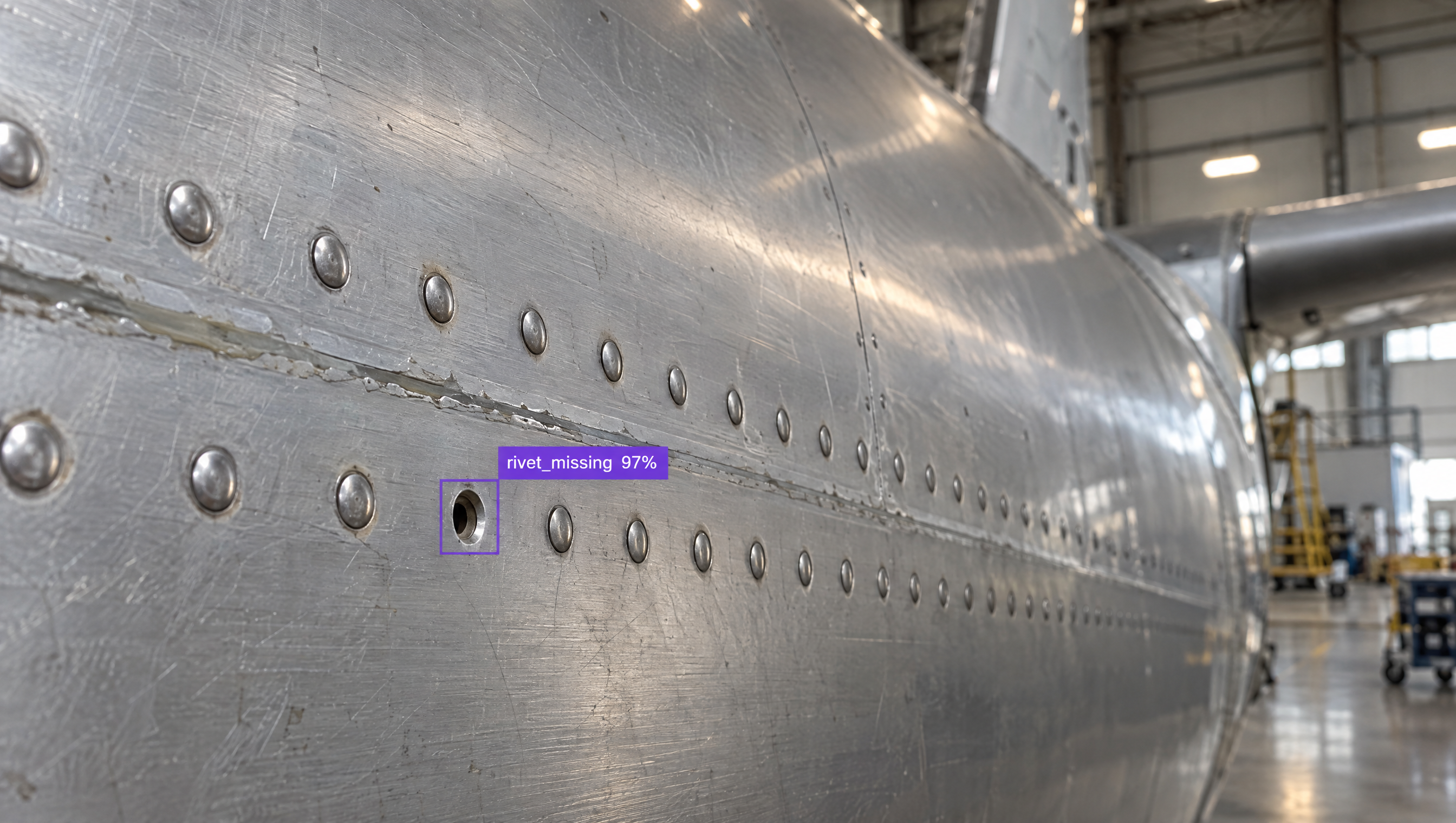
AI software highlights a missing rivet on the metallic skin of an aircraft fuselage.

Why are companies choosing Roboflow?

Roboflow is enterprise vision AI infrastructure, used by more than half of the Fortune 100, with SOC 2 Type II, HIPAA, and air-gapped deployment. Create datasets, train models, and deploy to production.

  • End-to-End Vision, One Platform

    From labeling to deployment - build, train, and launch with ease.

  • Built for Builders, Ready for Anything

    Interoperable infrastructure for developers to create custom vision solutions.

  • AI at the Edge, Without Limits

    Deploy seamlessly to any edge device and power real-time vision AI.

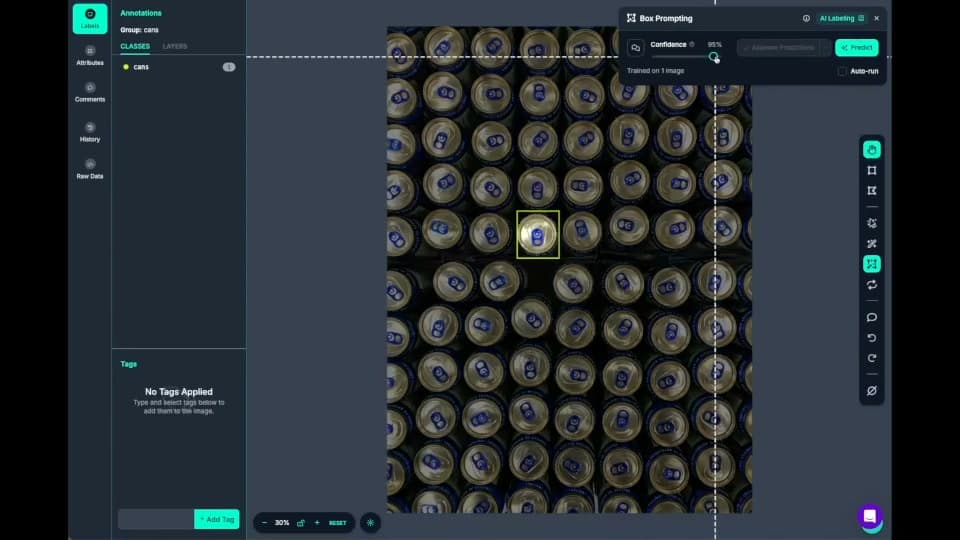
  • Roboflow Annotate labeling cans with AI box prompting

    Fast data labeling

    Label data quickly with a suite of AI-assisted annotation tools to augment human labeling or fully automate your data labeling pipeline.
  • Workflow blocks for notifications and integrations

    Build vision AI applications with ease

    Use a low-code open source platform to simplify building and deploying vision AI applications.
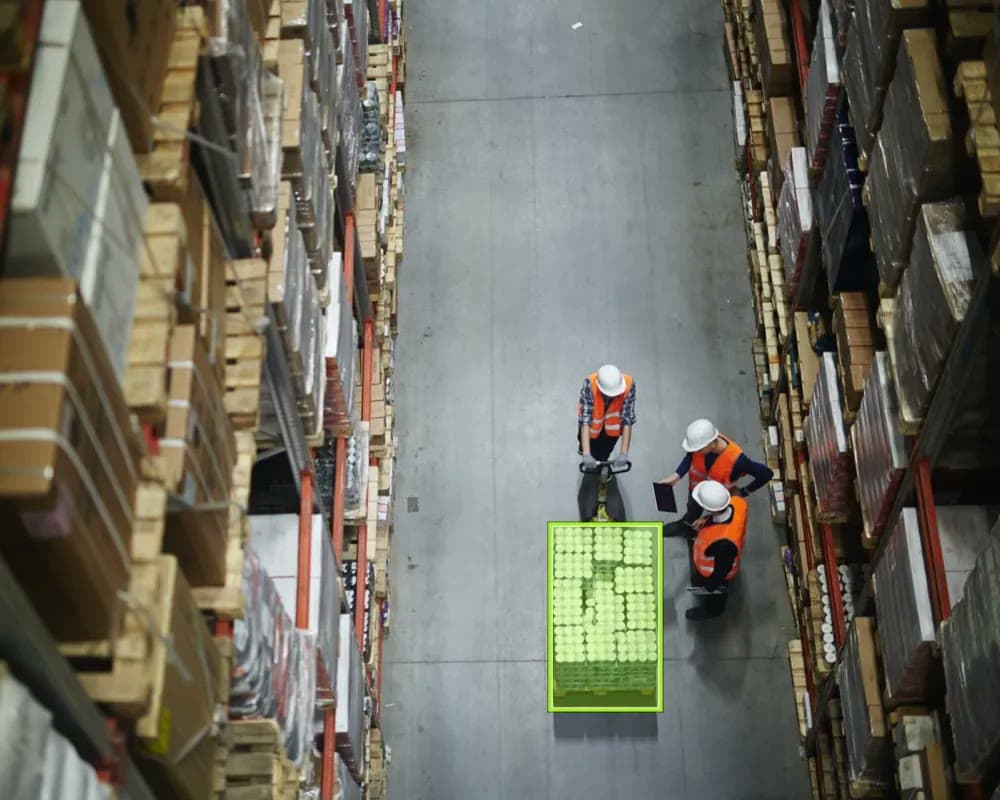
  • A team reviewing a detected pallet in a warehouse aisle

    Machine learning expertise, always

    Work with account-dedicated AI specialists and Field Engineers to accelerate development and optimize performance.
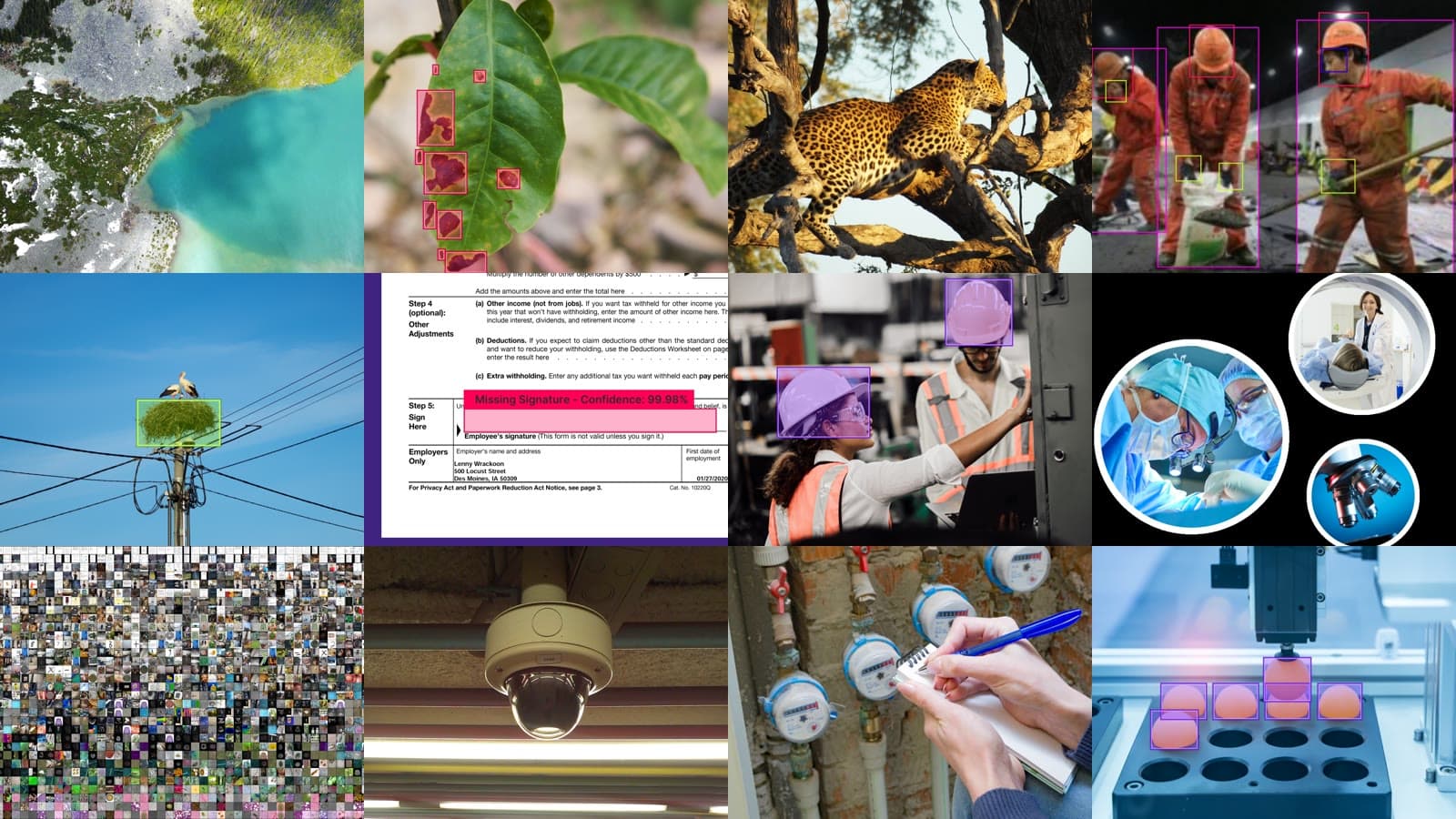
  • Photos from datasets across industries

    Datasets and models for every industry

    Access thousands of datasets and pre-trained models to kickstart your computer vision projects.
  • Logos of OpenAI, Microsoft, Meta, Anthropic, Google and Qwen

    Flexible model licensing

    Choose from a range of licensing options to fit your needs, whether for commercial use, private deployment, or collaboration across teams.

Want to use Matroid and Roboflow?

  • Import images to Roboflow

    Bring data from Matroid to Roboflow for model training.

  • Deploy with Roboflow

    No matter where you train your model, use Roboflow's trusted deployment solutions.

  • Automate data labeling

    Use AI labeling in Roboflow to automate 90% of human labeling.

OK I’m ready, how do I use Roboflow?

Roboflow makes it easy to build, train, and deploy custom computer vision models, even if you’re not a machine learning expert.

Talk to a Vision AI engineer about models you own

Bring us your detection problem and we'll map a model your team trains and owns on the first call.

Ask us about:

  • Training on current architectures, including RF-DETR
  • Model weights you can export
  • A live demo of Auto Label on your own images
  • Deployment options: cloud, VPC, on-prem, edge, or air-gapped

Over 80,000 organizations build with Roboflow.

  • Rivian
  • Pella
  • Chobani
  • USG Corporation
  • BNSF Railway
  • American Woodmark
Start where you are

Compare Roboflow and Matroid

Matroid offers no-code detector training, visual inspection, and video monitoring, along with APIs for programmatic integration. Roboflow is built for engineering teams that want direct control over how vision fits into their software: which models run, how predictions become application results, and where the system is deployed.

That control starts with the model and extends to the application. Train RF-DETR or supported YOLO models on your dataset, evaluate their predictions, and download supported model weights. Use Workflows to combine detection, tracking, OCR, and business logic into an endpoint your application can call. Roboflow’s open-source Inference server gives engineers deployment code they can inspect and run on their own hardware, alongside managed cloud options.

Roboflow Agent helps assemble that system from a description of the outcome you need, recommending models and building Workflows your team can inspect and modify. Auto Label (opens in a new tab) generates draft annotations from a text prompt for review. Through the MCP integration and ChatGPT plugin (opens in a new tab), engineers can also prepare datasets, launch training, test predictions, and create Workflows from their coding agent or a conversation.

Roboflow makes this accessible before an enterprise purchase. The free tier provides a private workspace, unlimited seats, and 10 credits each month. Running local models and Workflows through self-hosted Inference does not consume Roboflow credits. For production requirements, Enterprise options add SSO, scoped API keys, audit logs, and governance over Agent and Workflow capabilities, plus engineering support for deployment. Your team can move from experimentation to a governed production application while retaining visibility into the components it depends on.

Matroid vs Roboflow: Feature by Feature

FeatureRoboflowMatroid
Camera supportAny RTSP, USB, GigE, or industrial cameraAny camera, resolution, or spectrum, plus drones and smart devices
Vision tasksObject detection, instance and semantic segmentation, classification, keypoints, OCR, depth estimation, and multimodal tasksCustom detectors for objects in live and archived video; keypoints, depth estimation, OCR, and multimodal tasks not documented as native
Train your own modelYes, RF-DETR, YOLO (v8 / v11 / v26), Detectron2, and moreYes, no code; upload, label, and train through guided steps in Matroid Studio; architecture choice not documented
Export and own model weightsYesNot documented
Labeling toolsYes, Auto Label labels the classes you describe in a text prompt; Smart Polygon powered by Meta AI's Segment Anything; Label Assist pre-annotates with your own trained modelsManual; bounding boxes, polygons, and brush, with shared team workspaces; AI-assisted labeling not documented
Public datasets and modelsYes, 1,000,000+ datasets and 100,000+ pre-trained models on Roboflow UniversePre-made detectors for vehicles, people, emotions, poses, and other everyday categories
Application logicVisual Workflows; chain detection, classification, OCR, counting, and PLC output without codeVideo monitoring; live stream alerts, archive search, and an AI-native VMS
Industrial integrationsYes, PLC Reader, PLC Writer, and OPC UA blocks speak OPC UA, Modbus TCP, and EtherNet/IPNot documented; alerts to machines, systems, or operators, with no PLC protocols named
Deployment optionsManaged cloud, customer VPC, on-premises, and fully air-gapped / offlineCloud, on-premises with no internet required, or edge devices
Keeping models accurateBuilt in; active learning and operator feedback send flagged images back into training; Vision Events logs every prediction and image; model monitoring on EnterpriseManual feedback; add missing detections and retrain with new images
Sub-agents for frontier models (MCP)Yes, every trained model is exposed over MCP so frontier models can call it as a specialized vision toolNot documented
API and SDKYes, Python SDK, REST API, MCP server, public docs; open-source inference server and supervision libraryYes, REST API with Python, Ruby, and Node.js clients
ComplianceSOC 2 Type II, HIPAA with BAAs, PCI DSSNot published
Open-source CV integrationsYes, native integrations with Hugging Face Transformers, MMDetection, and the broader open-source CV stackPartial; its GitHub hosts the API clients plus forks of OpenMMLab's mmdetection and mmcv
PricingPublished plans; Enterprise adds volume pricing and an uptime SLANot published; by demo request

Best Matroid Alternatives

Roboflow is the top Matroid alternative for teams that want custom models trained on their own data. Teams comparing Matroid also look at: