Azure Computer Vision and Roboflow

Custom vision models Azure can't give you

Azure Computer Vision alternatives? Custom Vision trains only classification and detection, caps projects at 100,000 images, and retires on September 25, 2028. Over 2 million engineers use Roboflow to train models for every vision task on their own data and deploy them in the cloud, on the edge, or air-gapped.

Why are companies choosing Roboflow?

Roboflow is enterprise vision AI infrastructure, used by more than half of the Fortune 100, with SOC 2 Type II, HIPAA, and air-gapped deployment. Over 2 million engineers use it to create datasets, train models, and deploy to production.

  • Seamless AI, Zero Lock-In

    Seamless integration with any tool, any workflow - no platform lock-in, ever.

  • One Platform, Full Adoption

    Easy tools for every team: domain experts, ML engineers, developers, and business users.

  • Your Vision, Our Commitment

    We help you tackle business challenges and fill any gaps in skills or resources.

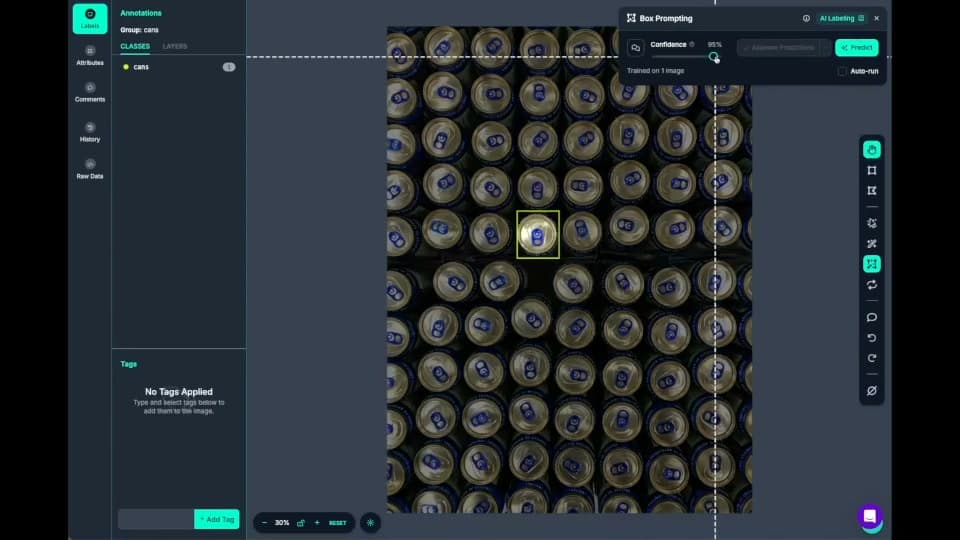
  • Roboflow Annotate labeling cans with AI box prompting

    Fast data labeling

    Label data quickly with a suite of AI-assisted annotation tools to augment human labeling or fully automate your data labeling pipeline.
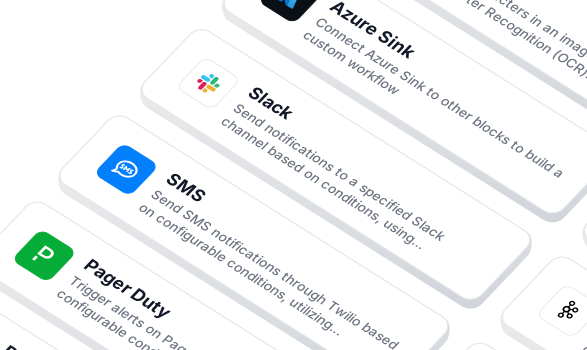
  • Workflow blocks for notifications and integrations

    Build vision AI applications with ease

    Use a low-code open source platform to simplify building and deploying vision AI applications.
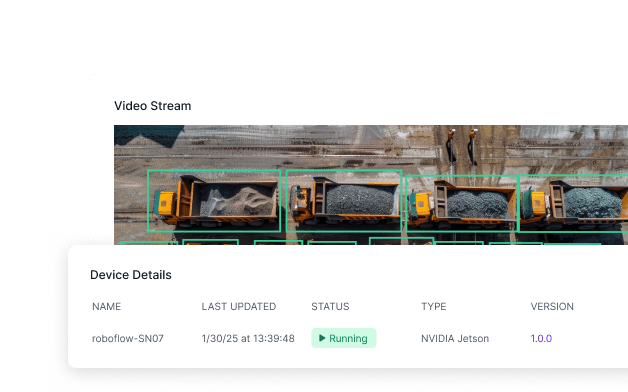
  • A video stream with detections and its NVIDIA Jetson device running

    Edge deployment

    Cloud and edge deployments (NVIDIA Jetson, Raspberry Pi, or mobile devices) for real-time, on-premise inference.
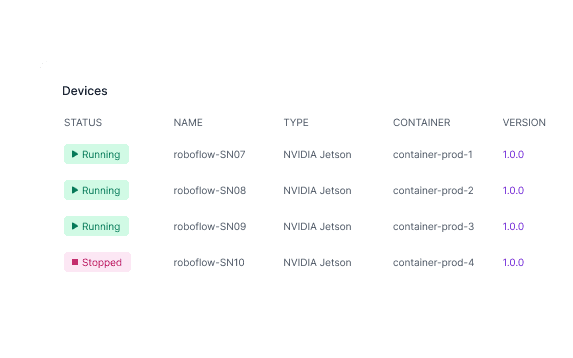
  • A list of NVIDIA Jetson devices and their status

    Devices for every scenario

    Software, compute, cameras: all the tools you need to deploy vision AI.
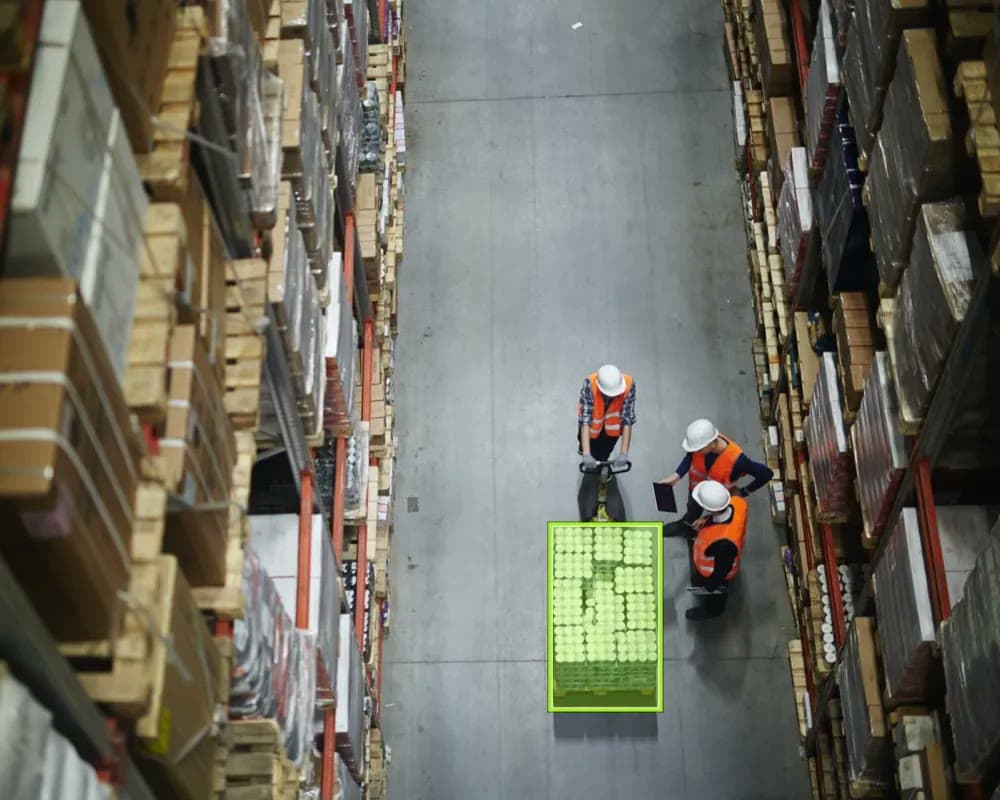
  • A team reviewing a detected pallet in a warehouse aisle

    Machine learning expertise, always

    Work with account-dedicated AI specialists and Field Engineers to accelerate development and optimize performance.
  • Logos of OpenAI, Microsoft, Meta, Anthropic, Google and Qwen

    Flexible model licensing

    Choose from a range of licensing options to fit your needs, whether for commercial use, private deployment, or collaboration across teams.

Power your vision with Roboflow and Azure - customized, scalable, seamless

  • Refine Your Dataset

    Easily import labeled data from Azure Computer Vision into Roboflow.

  • Train Anywhere, Deploy Anywhere

    Bring your Azure-trained models into Roboflow for more flexibility.

  • Improve Performance

    Close the loop by sending data from your running models back to Roboflow.

OK I’m ready, how do I use Roboflow?

Roboflow makes it easy to build, train, and deploy custom computer vision models, even if you’re not a machine learning expert.

Talk to a Vision AI engineer about custom vision beyond Azure

Bring us the problem Azure's pre-built models can't solve and we'll map a working solution.

Ask us about:

  • Solution architecture for custom models trained on your own images
  • A live demo of Auto Label on your own images
  • Deployment options: cloud, VPC, on-prem, edge, or air-gapped
  • Pricing compared against your current prediction and training costs

Over 80,000 organizations build with Roboflow.

  • Rivian
  • Pella
  • Chobani
  • USG Corporation
  • BNSF Railway
  • American Woodmark
Start where you are

Compare Roboflow and Azure AI Vision

Azure AI Vision provides pre-built APIs for image analysis, object detection, and OCR. Microsoft offers custom classification and object detection through its separate Custom Vision service. Both Image Analysis 4.0 (opens in a new tab) and Custom Vision (opens in a new tab) are scheduled to retire on September 25, 2028, giving teams another reason to evaluate how they build and maintain vision applications.

Roboflow is built for teams that need models tailored to their own products, processes, and camera views. Bring your images, define what matters, and train models to detect defects, segment individual objects, or classify products. Auto Label (opens in a new tab) drafts annotations from a text prompt that your team can review and correct before training.

Roboflow Agent helps turn those requirements into a working application, from selecting models to building Workflows and connecting predictions to alerts and business systems. With the Roboflow MCP server and ChatGPT plugin (opens in a new tab), engineers and domain experts can also manage datasets, train models, and test results through a conversation or coding agent.

You choose where the application runs: Roboflow’s managed cloud, your own Azure infrastructure (opens in a new tab), or local hardware. Export your datasets and download supported model weights to retain control as your requirements change. Active learning and Vision Events help bring useful production images back into training, so your team can improve performance on the conditions it encounters in practice.

Enterprise teams get controls for putting that flexibility into production, including SSO, role-based permissions, US or EU data residency, and an uptime SLA for hosted services. Optional services add hands-on engineering support, on-premise installation, and edge device management. Manufacturers such as USG already use Roboflow to run custom inspection models on local hardware and connect results to production equipment.

Start for free with private projects, unlimited seats, model weight downloads, and 10 credits each month. Self-hosted inference is free on every plan, with no Roboflow credits consumed by local inference. Upload a representative set of your own images and test a model against the objects and conditions your application needs to handle.

Azure AI Vision vs Roboflow: Feature by Feature

FeatureRoboflowAzure AI Vision
Ready-made models1,000,000+ datasets and 100,000+ pre-trained models on Roboflow UniverseYes, Image Analysis 4.0 for captions, tags, object detection, people detection, smart crop, and OCR; retiring September 25, 2028
Vision tasks you can trainObject detection, instance and semantic segmentation, classification, keypoints, OCR, depth estimation, and multimodal tasksClassification and object detection only, in Custom Vision
Train your own modelYes, RF-DETR, YOLO (v8 / v11 / v26), Detectron2, and moreCustom Vision, retiring September 25, 2028; Microsoft points to Azure Machine Learning AutoML, Foundry Models, or Content Understanding
Export model weightsYesCompact domains only; TensorFlow, TensorFlow.js, CoreML, ONNX, or a Docker container for Windows, Linux, or ARM
AI-assisted labelingYes, Auto Label labels the classes you describe in a text prompt; Smart Polygon powered by Meta AI's Segment Anything; Label Assist pre-annotates with your own trained modelsSmart Labeler, suggests tags from your latest trained iteration; object detection suggestions are confirmed one image at a time
Data formats and limits40+ formats, including COCO, YOLO, and Pascal VOC; dataset versioning, preprocessing, and augmentation built inCapped; 100,000 training images, 500 tags, and 20 iterations per project on Standard; jpg, png, bmp, and gif
Keeping models accurate over timeBuilt in; active learning and operator feedback send flagged images back into training; Vision Events logs every prediction and image; model monitoring on EnterpriseManual; prediction images are kept 30 days and ranked so you can tag them, add them to training, and retrain
Edge and offline deploymentYes, NVIDIA Jetson, GPU servers, Raspberry Pi, x86, or Roboflow AI1, online or fully offlineThrough export, exported compact models and containers; Image Analysis disconnected containers retire with the API on September 25, 2028
Sub-agents for frontier models (MCP)Yes, every trained model is exposed over MCP so frontier models can call it as a specialized vision toolNot documented
ComplianceSOC 2 Type II, HIPAA with BAAs, PCI DSSComputer Vision and Custom Vision are in Azure's FedRAMP High and DoD IL2 audit scope
Self-hosted inferenceYes, open-source inference server for custom and foundation modelsLimited to Microsoft's prebuilt Image Analysis containers, which retire with the API on September 25, 2028
Open-source CV libraryYes, supervision, with model-agnostic utilities for detections, tracking, annotation, and evaluationNone comparable to supervision
SDKs and APIsYes, Python SDK plus REST/HTTP APIsYes, Python, .NET, JavaScript, and Java SDKs through the Azure SDK; the older Python package is no longer maintained after November 1, 2024
PricingPublished plans; Enterprise adds volume pricing and an uptime SLAFree tier (2 Custom Vision projects, 10,000 predictions a month); Standard bills per 1,000 predictions, per training compute hour, and per 1,000 stored images

Best Azure Computer Vision Alternatives

Roboflow is the top Azure Computer Vision alternative for teams that want custom models trained on their own data. Teams comparing Azure Computer Vision also look at: