Google Vision AI and Roboflow

Train vision on your data, not Google's

Google Vision AI alternatives? The Cloud Vision API returns Google's fixed labels, custom training is limited to classification and detection, and the API can't be self-hosted. Over 2 million engineers use Roboflow to auto-label their own classes, train models on their own data, and deploy in the cloud, on the edge, or air-gapped.
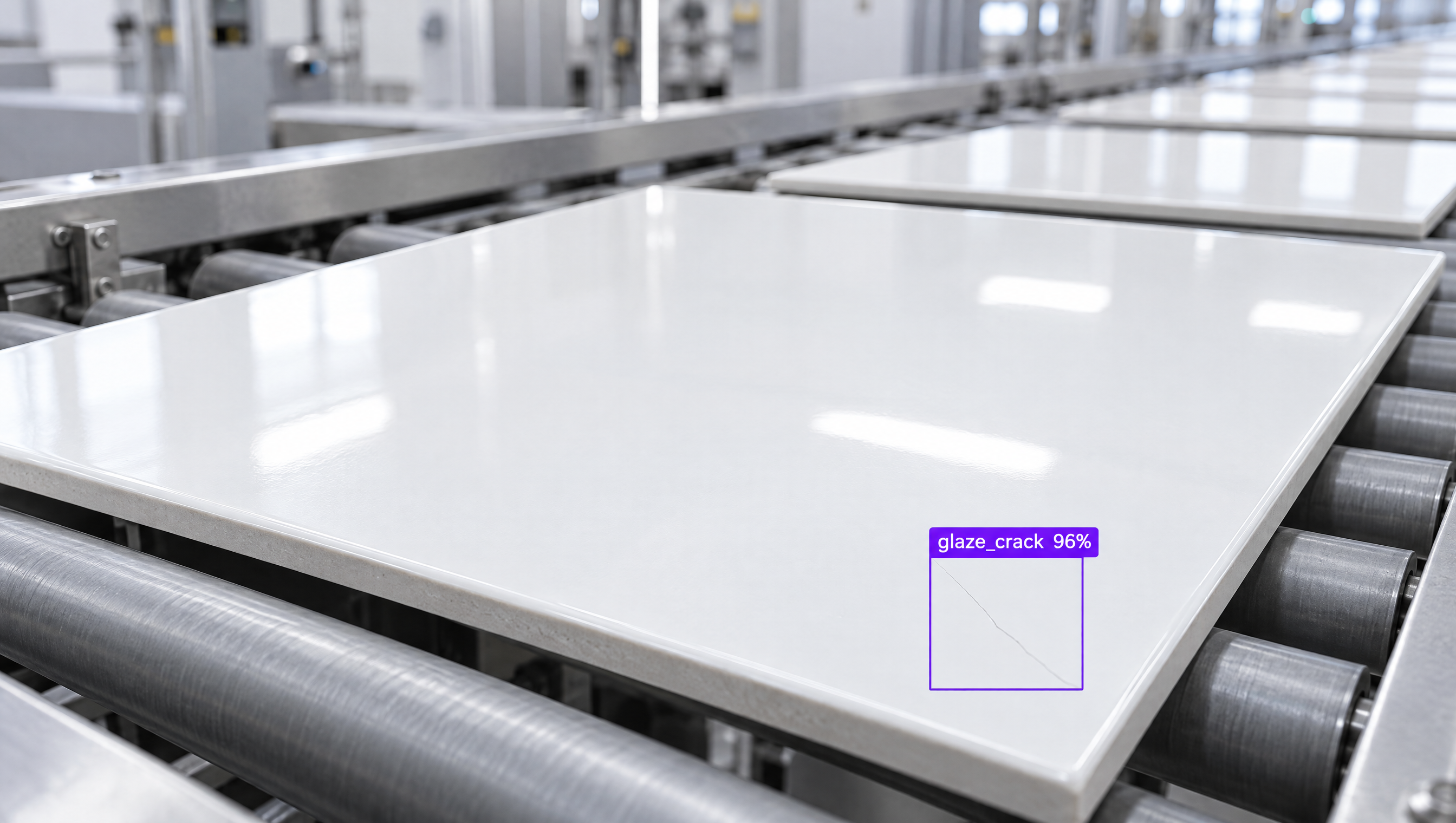
Why are companies choosing Roboflow?

Roboflow is enterprise vision AI infrastructure, used by more than half of the Fortune 100, with SOC 2 Type II, HIPAA, and air-gapped deployment. Over 2 million engineers use it to create datasets, train models, and deploy to production.

  • Seamless AI, Zero Lock-In

    Seamless integration with any tool, any workflow, no platform lock-in, ever.

  • One Platform, Full Adoption

    Easy tools for every team: domain experts, ML engineers, developers, and business users.

  • Your Vision, Our Commitment

    We help you tackle business challenges and fill any gaps in skills or resources.

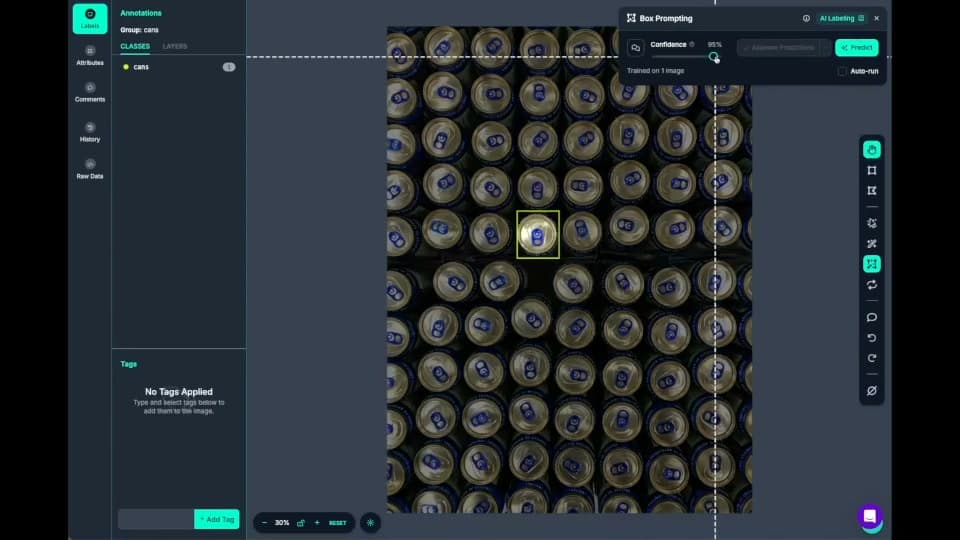
  • Roboflow Annotate labeling cans with AI box prompting

    Fast data labeling

    Label data quickly with a suite of AI-assisted annotation tools to augment human labeling or fully automate your data labeling pipeline.
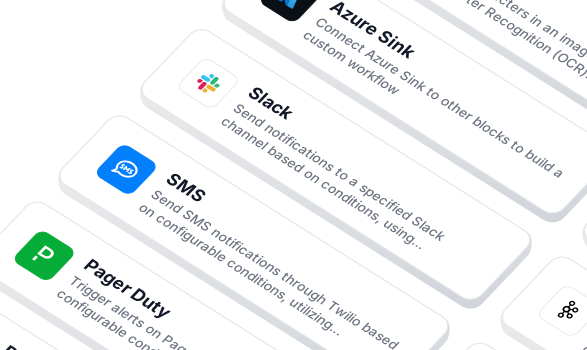
  • Workflow blocks for notifications and integrations

    Build vision AI applications with ease

    Use a low-code open source platform to simplify building and deploying vision AI applications.
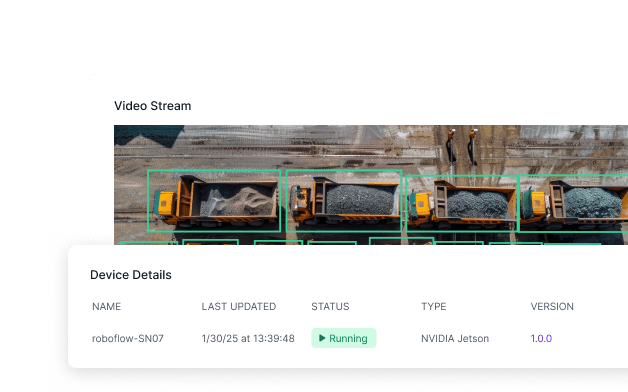
  • A video stream with detections and its NVIDIA Jetson device running

    Edge deployment

    Cloud and edge deployments (NVIDIA Jetson, Raspberry Pi, or mobile devices) for real-time, on-premise inference.
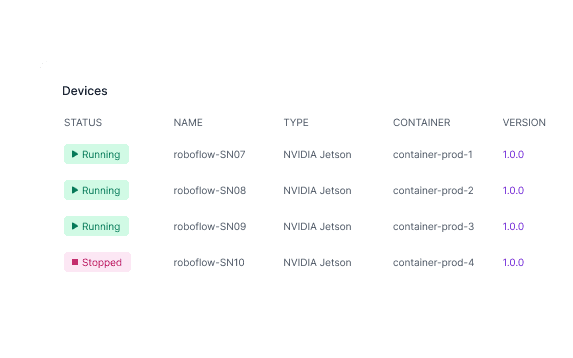
  • A list of NVIDIA Jetson devices and their status

    Devices for every scenario

    Software, compute, cameras: all the tools you need to deploy vision AI.

Smarter vision AI with Roboflow and Google Vision AI

  • Refine Your Dataset

    Easily import labeled data from Google Vision AI into Roboflow.

  • Train Anywhere, Deploy Anywhere

    Bring your Google Vision AI-trained models into Roboflow for more flexibility.

  • Improve Performance

    Close the loop by sending data from your running models back to Roboflow.

OK I’m ready, how do I use Roboflow?

Roboflow makes it easy to build, train, and deploy custom computer vision models, even if you’re not a machine learning expert.

Talk to a Vision AI engineer about models trained on your data

Bring us the problem Google's pre-built models can't solve and we'll map a working solution.

Ask us about:

  • Solution architecture for custom models trained on your own images
  • A live demo of Auto Label on your own images
  • Deployment options: cloud, VPC, on-prem, edge, or air-gapped
  • Pricing compared against your current per-image costs

Over 80,000 organizations build with Roboflow.

  • Rivian
  • Pella
  • Chobani
  • USG Corporation
  • BNSF Railway
  • American Woodmark
Start where you are

Compare Roboflow and Google Vision AI

Google’s Cloud Vision API provides pre-trained tools for image labeling, object detection, and OCR. Google also offers AutoML for custom image models. Roboflow brings data preparation, custom training, application logic, and deployment together for teams whose requirements go beyond a standard API response.

With Roboflow, you can train a model to distinguish your product variants, locate damage on your equipment, or verify that an assembly contains the required components. Auto Label (opens in a new tab) drafts annotations from a text prompt for review. Those labels become training data for a specialized model such as RF-DETR or YOLO. You can use a large foundation model to help prepare the dataset, then deploy a smaller model suited to your application’s latency and hardware requirements.

Roboflow Agent helps build the application around that model, from selecting models to connecting predictions with alerts, databases, and other systems. Roboflow’s MCP integration also makes dataset management, labeling, training, and inference available through ChatGPT (opens in a new tab) and coding assistants. Engineers can inspect and change the resulting Workflows as requirements evolve.

Deployment follows your operating constraints. Use a hosted API, run in your own cloud infrastructure, or process images locally on compatible edge hardware. Enterprise options include offline operation, device management, and engineering support for production deployments. Supported model weights are downloadable, giving your team control over how its trained models run.

That control starts with the free plan, which includes private projects, model weight downloads, and 10 monthly credits. Self-hosted inference does not consume Roboflow credits. Teams can develop with private data, test on their intended hardware, and keep improving the model as new products, environments, and edge cases appear.

Google Vision AI vs Roboflow: Feature by Feature

FeatureRoboflowGoogle Vision AI
Pre-trained image analysisYes, 100,000+ pre-trained models and 1,000,000+ datasets on Roboflow UniverseYes, Cloud Vision API labels, objects, text, faces, logos, landmarks, explicit content, and web entities
Custom model trainingYes, RF-DETR, YOLO (v8 / v11 / v26), Detectron2, and moreAutoML in Gemini Enterprise Agent Platform (formerly Vertex AI); legacy AutoML Vision shut down July 31, 2024
Custom vision tasksObject detection, instance and semantic segmentation, classification, keypoints, OCR, depth estimation, and multimodal tasksTwo image objectives; AutoML image training covers classification and object detection
AI-assisted labelingYes, Auto Label labels the classes you describe in a text prompt; Smart Polygon powered by Meta AI's Segment Anything; Label Assist pre-annotates with your own trained modelsManual; labels are added in the Google Cloud console, and the Data Labeling Service shut down October 3, 2024
Export and own model weightsYesAutoML Edge only; image AutoML Edge models export to Cloud Storage; not documented for Cloud Vision API models
Edge and offlineYes, NVIDIA Jetson, GPU servers, Raspberry Pi, x86, or Roboflow AI1, online or fully offlinePartial; exported AutoML Edge models only; Cloud Vision API is a cloud REST and RPC API
Deployment optionsManaged cloud, customer VPC, on-premises, and fully air-gapped / offlineGoogle Cloud; OCR can be pinned to us or eu endpoints
Frontier model accessYes, every trained model is exposed over MCP so frontier models can call it as a specialized vision toolYes, Gemini multimodal models are offered in Gemini Enterprise Agent Platform
Uptime SLAYes, on Enterprise, with a public status pageYes, 99.9% monthly uptime for Cloud Vision, with financial credits
ComplianceSOC 2 Type II, HIPAA with BAAs, PCI DSSCloud Vision in scope for ISO 27001 / 27017 / 27018, SOC 1 / 2 / 3, and PCI DSS; HIPAA-covered under Google's BAA
Self-hosted inferenceYes, open-source inference server for custom and foundation modelsNo; the Cloud Vision API is not self-hostable
Open-source CV libraryYes, supervision, with model-agnostic utilities for detections, tracking, annotation, and evaluationNone comparable in mainstream community use
SDKs and APIsYes, Python SDK plus REST/HTTP APIsYes, Google Cloud client libraries for Python, Node.js, Go, Java, Ruby, PHP, and C#, plus REST and gRPC APIs
PricingPublished plans; Enterprise adds volume pricing and an uptime SLACloud Vision API billed per image per feature; first 1,000 units per feature free each month, then $1.50 per 1,000 for most features

Best Google Vision AI Alternatives

Roboflow is the top Google Vision AI alternative for teams that want custom models trained on their own data. Teams comparing Google Vision AI also look at: