Visual Intelligence Summit: Oct 22 in San Francisco Get your ticket

Google Vision API Alternative: Vision Models Trained on Your Data with Roboflow

Google Vision API vs Roboflow API? Over 1 million engineers create datasets, train models, and deploy to production with Roboflow.
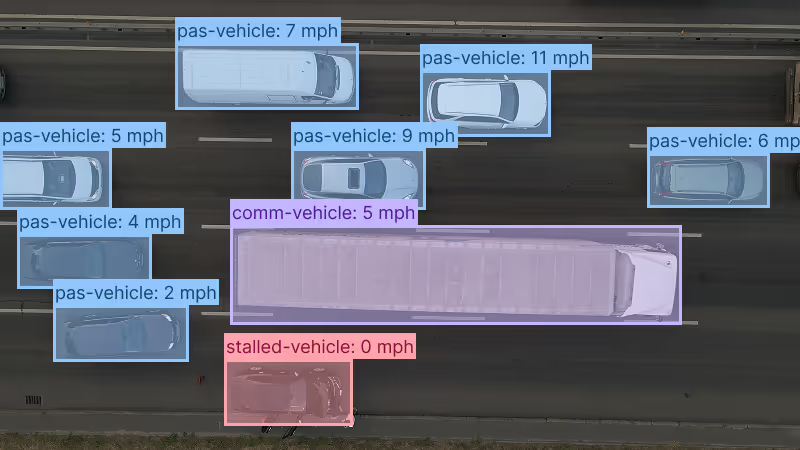
Why are companies choosing Roboflow?

The turnkey solution for vision AI. Create datasets, train models, and deploy to production.

  • End-to-End Vision, One Platform

    From labeling to deployment - build, train, and launch with ease.

  • Built for Builders, Ready for Anything

    Interoperable infrastructure for developers to create custom vision solutions.

  • AI at the Edge, Without Limits

    Deploy seamlessly to any edge device and power real-time vision AI.

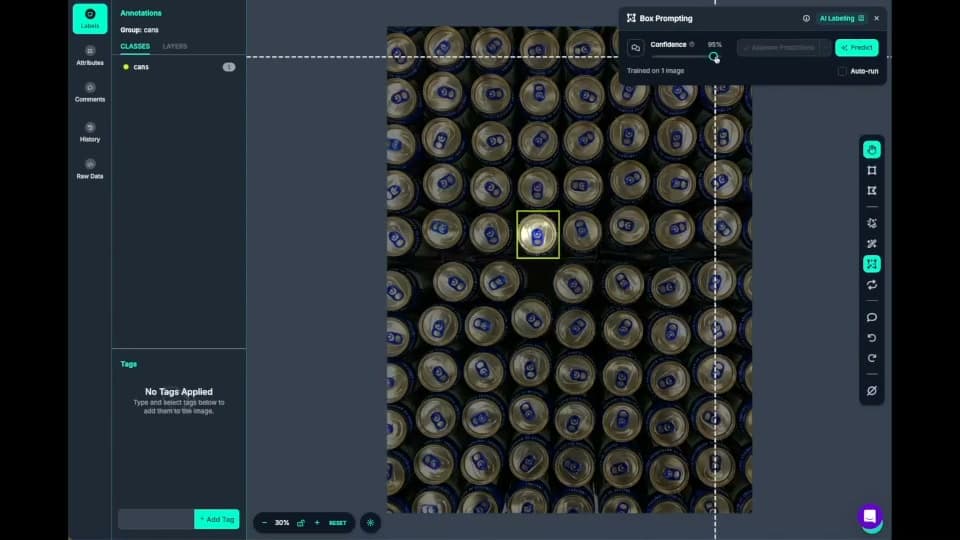
  • Roboflow Annotate labeling cans with AI box prompting

    Fast data labeling

    Label data quickly with a suite of AI-assisted annotation tools to augment human labeling or fully automate your data labeling pipeline.
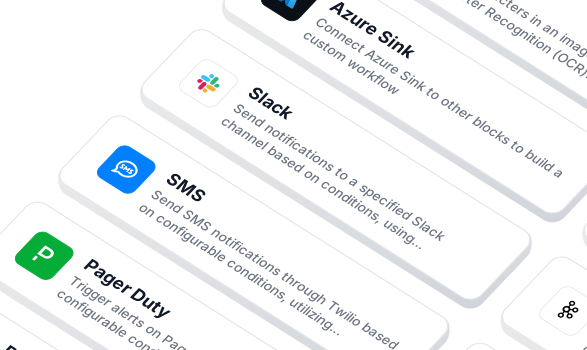
  • Workflow blocks for notifications and integrations

    Build vision AI applications with ease

    Use a low-code open source platform to simplify building and deploying vision AI applications.
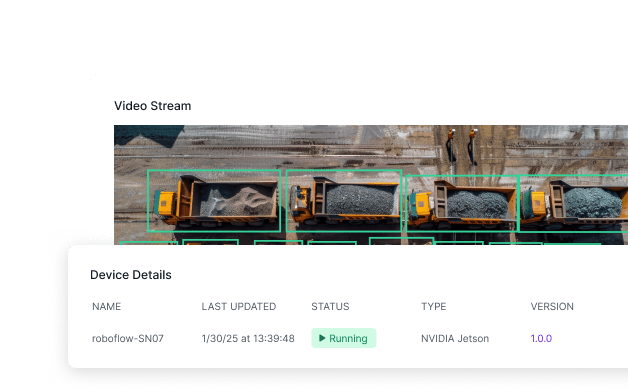
  • A video stream with detections and its NVIDIA Jetson device running

    Edge deployment

    Cloud and edge deployments (NVIDIA Jetson, Raspberry Pi, or mobile devices) for real-time, on-premise inference.
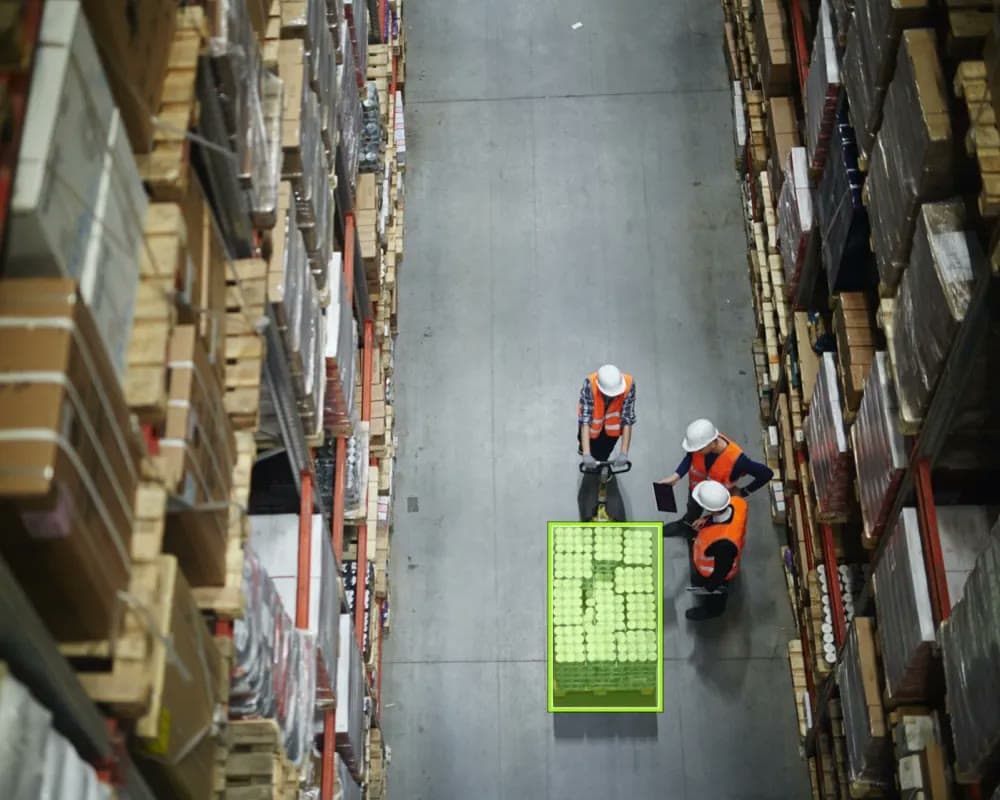
  • A team reviewing a detected pallet in a warehouse aisle

    Machine learning expertise, always

    Work with account-dedicated AI specialists and Field Engineers to accelerate development and optimize performance.
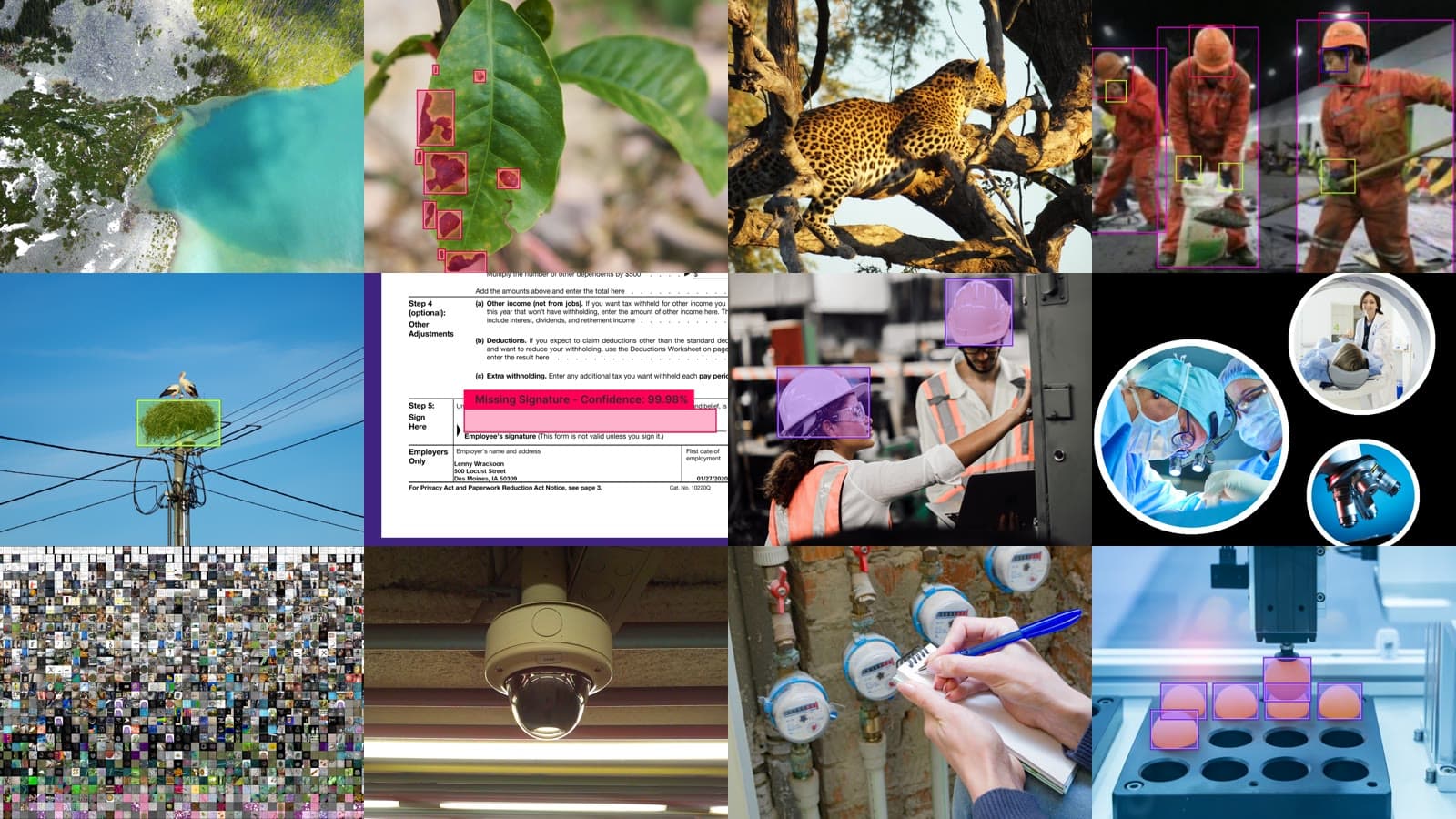
  • Photos from datasets across industries

    Datasets and models for every industry

    Access thousands of datasets and pre-trained models to kickstart your computer vision projects.
  • Logos of OpenAI, Microsoft, Meta, Anthropic, Google and Qwen

    Flexible model licensing

    Choose from a range of licensing options to fit your needs, whether for commercial use, private deployment, or collaboration across teams.

Want to migrate from Google Vision API to Roboflow API?

  • Import images to Roboflow

    Bring image datasets from Google Cloud Storage to Roboflow for labeling and model training.

  • Deploy with Roboflow

    No matter where you train your model, use Roboflow's trusted deployment solutions.

  • Automate data labeling

    Use AI labeling in Roboflow to automate 90% of human labeling.

OK I’m ready, how do I use Roboflow?

Roboflow makes it easy to build, train, and deploy custom computer vision models, even if you’re not a machine learning expert.

Speak with an AI expert

Our team will help you start solving business problems on the first call.

Ask us about:

  • Solution architecting
  • Live demonstration
  • Pricing and specifications
  • Feasibility assessment

Over 16,000 organizations build with Roboflow.

  • Rivian
  • Pella
  • Chobani
  • USG Corporation
  • BNSF Railway
  • American Woodmark
Start where you are
Stay connected

Get the Latest in Computer Vision First

Unsubscribe at any time. Review our Privacy Policy.

Compare Google Vision API and Roboflow API

The Google Cloud Vision API answers one kind of question well: what generic things are in this image? Its pre-trained models return labels, objects, text, faces, and logos over a fixed taxonomy, priced per call. It cannot learn the classes your business cares about; ask it for a hairline crack or a missing fastener and it returns generic labels, and Google's documented path for custom classes is Vertex AI, where every bounding box is drawn by hand in the console. Roboflow is built for that custom work: auto label your images with foundation models like Grounding DINO and SAM 3, train a model on your own classes, and deploy it as a hosted API or on your own hardware at the edge, where a per-call cloud API cannot run. Teams switch to Roboflow when generic tags stop being enough and the model needs to speak the language of their product line.

Roboflow

End-to-end computer vision platform (annotate, train, deploy)

Google Cloud Vision API

Pre-trained image analysis API, priced per call

Scale & Ecosystem

Roboflow

  • 1,000,000+ developers on the platform
  • 1,000,000+ public datasets on Roboflow Universe
  • 100,000+ pre-trained models hosted publicly
  • 25,000+ organizations building with the platform, including more than half of the Fortune 100 (publicly cited: Rivian, Chobani, USG, Pella)
  • Self-serve sign-up; teams can begin annotating, training, and deploying without a cloud contract

Google Cloud Vision API

  • Part of Google Cloud, alongside Vertex AI and the Gemini Enterprise Agent Platform
  • Built for generic tagging, OCR, and content moderation rather than building custom vision models
  • Requires a Google Cloud project and billing account; priced per 1,000 images per feature after a free monthly tier, so costs scale with every call forever
  • No public catalog of community-contributed datasets or pre-trained custom models comparable to Roboflow Universe

Product Capabilities

Roboflow

  • Train custom object detection, segmentation, classification, and keypoint models on your own classes
  • Auto Label uses foundation models (Grounding DINO, SAM 3) to label images for classes you define in a text prompt; teams automate up to 90% of human labeling
  • Built-in foundation models including CLIP and SAM, plus an active model registry covering RF-DETR, YOLO (v8 / v11 / v26), and other current architectures
  • Roboflow Workflows for chaining detection, classification, OCR, and business logic into a single pipeline
  • Export and import across 40+ annotation formats, including COCO, YOLO, and Pascal VOC

Google Cloud Vision API

  • images:annotate and asyncBatchAnnotateImages return labels, localized objects, text (OCR), faces, logos, landmarks, and explicit content scores from pre-trained models only
  • Fixed general-purpose taxonomy; cannot be trained to recognize custom classes specific to your products or defects
  • Returns API JSON responses, not training-ready annotation files; no annotation editor, dataset management, or model training
  • Google's documented path for custom classes is Vertex AI, where image annotation is manual in the console and the managed human labeling service shut down October 3, 2024

Deployment

Roboflow

  • Hosted inference APIs with autoscaling, plus deployment to your own cloud, on-premises servers, or edge devices (NVIDIA Jetson, Raspberry Pi, and more)
  • Open-source inference server - self-hostable HTTP inference that runs the same models offline or air-gapped
  • Open-source supervision library for detections, tracking, annotation, and evaluation in production pipelines
  • Standardized I/O lets teams swap model weights without changing application code

Google Cloud Vision API

  • Cloud API only; every image is sent to Google's endpoint for processing, so it cannot run on-premises, offline, or on edge devices
  • Round-trip latency to the API makes real-time video and on-device use cases impractical
  • Client libraries and REST/RPC APIs return per-request results; batch annotation runs asynchronously against Cloud Storage buckets
  • No self-hostable inference server, and no open-source CV utility library comparable to supervision

Enterprise & Security

Roboflow

  • SOC 2 Type II compliant
  • HIPAA-compliant infrastructure with BAAs available
  • PCI DSS (SAQ A and AOC) compliance
  • Deployment options: managed cloud, customer VPC, on-premises, and fully air-gapped / offline (Docker-based) for firewalled environments
  • Labeling, training, and inference can run in the customer's own cloud account or on customer-owned hardware

Google Cloud Vision API

  • Inherits Google Cloud's compliance portfolio, including SOC 2, ISO 27001, and HIPAA support
  • Images leave your environment for Google's API on every request, a consideration for sensitive or regulated data
  • Data residency and access are managed through Google Cloud project settings and IAM

Sources: roboflow.com, docs.roboflow.com, universe.roboflow.com, github.com/roboflow, docs.cloud.google.com/vision/docs, cloud.google.com/vertex-ai, docs.cloud.google.com/vertex-ai/docs/deprecations. Figures reflect publicly available information as of August 2026.