CVAT vs SuperAnnotate

CVAT and SuperAnnotate help you label. Roboflow takes labels to production.

CVAT is an open-source annotation tool, and SuperAnnotate focuses on AI data and expert labeling, much of it for generative AI teams. If you're building computer vision on your own images and videos, Roboflow auto labels your classes, trains a model, and deploys it to the cloud or your own hardware. Over 2 million developers build with Roboflow.
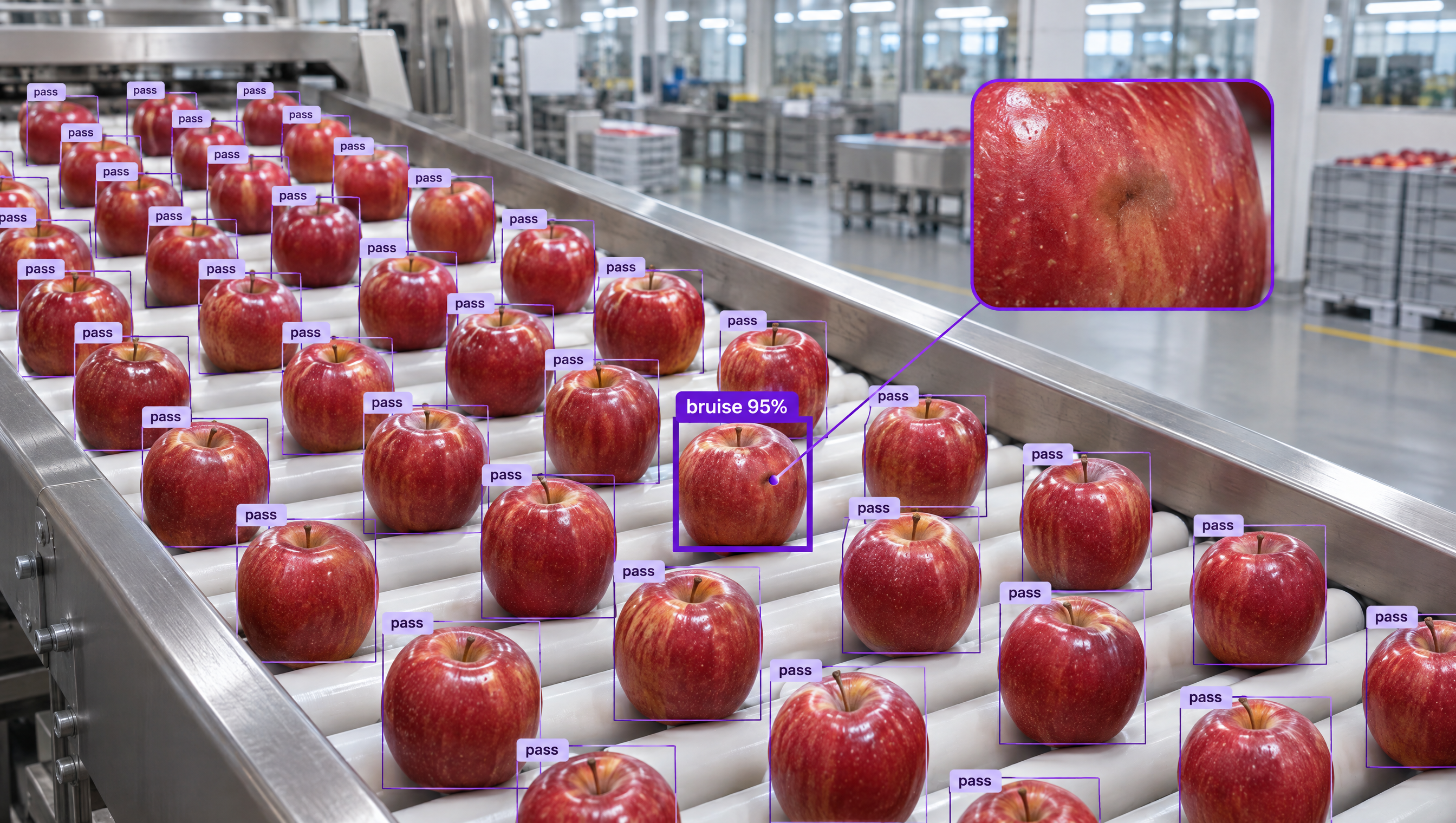
An automated quality control system inspecting red apples on a factory conveyor belt, labeling approved apples as "pass" and highlighting a bruised apple with an enlarged defect view.

Why are companies choosing Roboflow?

Roboflow is enterprise vision AI infrastructure, used by more than half of the Fortune 100, with SOC 2 Type II, HIPAA, and air-gapped deployment. Create datasets, train models, and deploy to production.

  • Built for Computer Vision

    Labeling, training, and deployment built around images and video, from the first box to a model in production.

  • Label the Whole Dataset

    Auto Label drafts annotations for your whole dataset from a text prompt, not one object at a time. Your domain experts review the results.

  • From Labels to Production

    Train a model on your dataset, then deploy it through a hosted API, in your VPC, or on edge devices, online or offline.

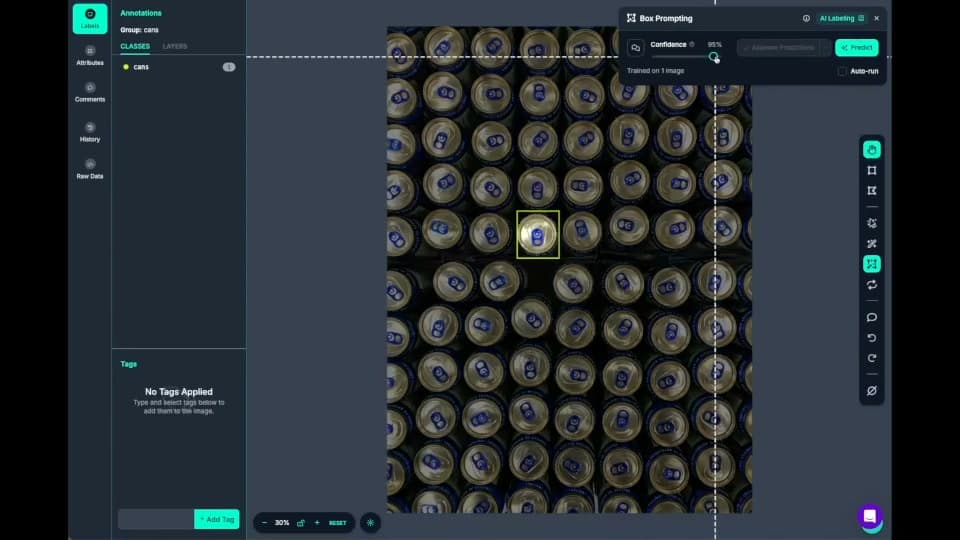
  • Roboflow Annotate labeling cans with AI box prompting

    Fast data labeling

    Label data quickly with a suite of AI-assisted annotation tools to augment human labeling or fully automate your data labeling pipeline.
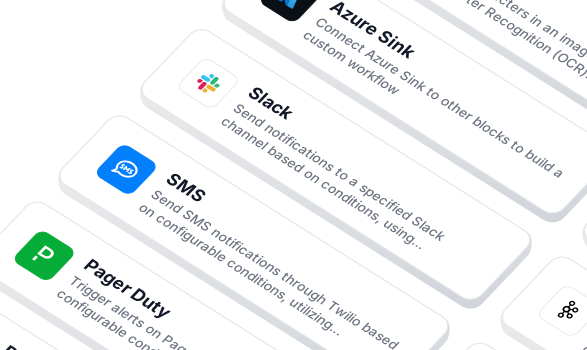
  • Workflow blocks for notifications and integrations

    Build vision AI applications with ease

    Use a low-code open source platform to simplify building and deploying vision AI applications.
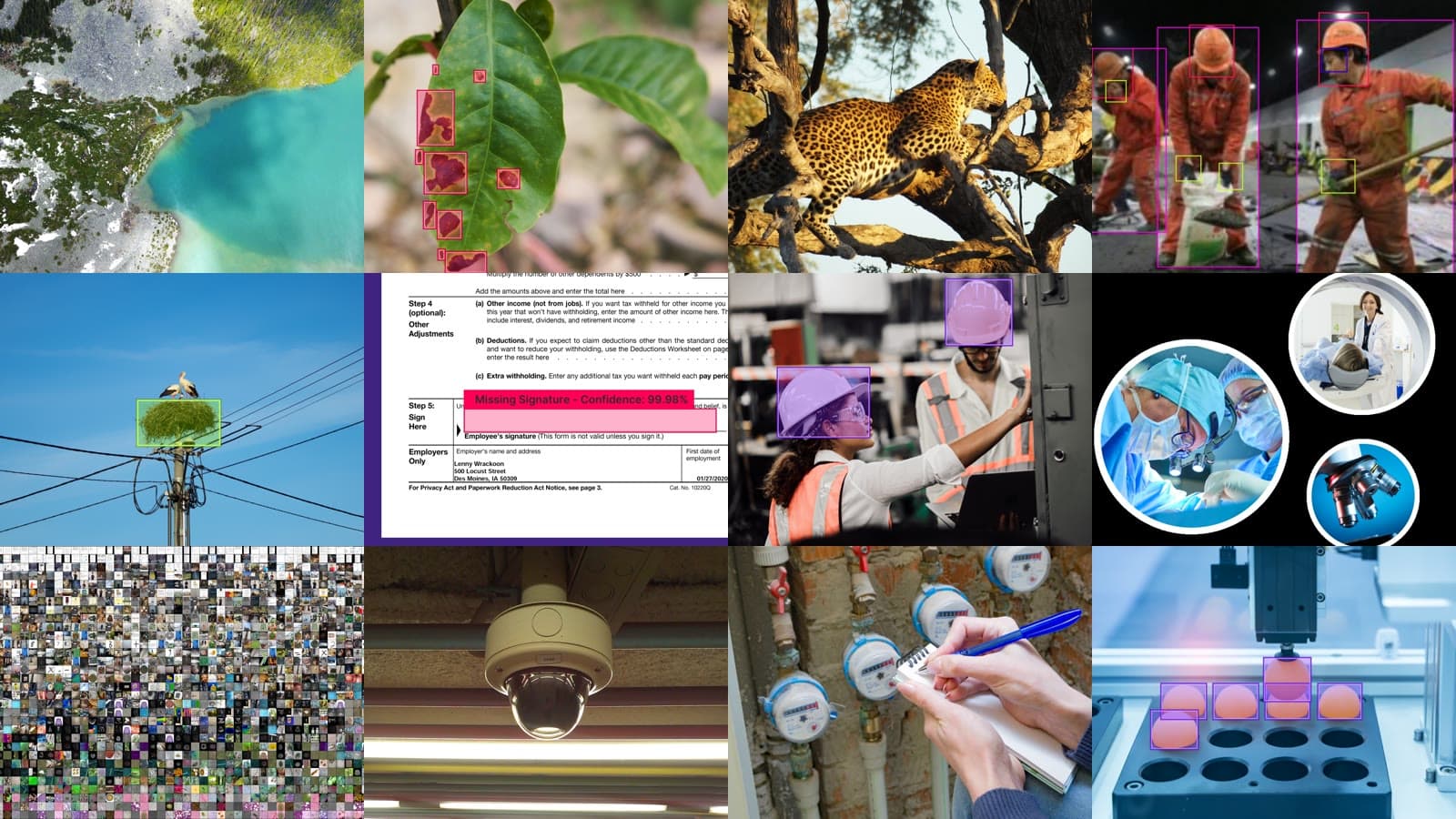
  • Photos from datasets across industries

    Datasets and models for every industry

    Access thousands of datasets and pre-trained models to kickstart your computer vision projects.
  • Logos of OpenAI, Microsoft, Meta, Anthropic, Google and Qwen

    Flexible model licensing

    Choose from a range of licensing options to fit your needs, whether for commercial use, private deployment, or collaboration across teams.

Switching from CVAT or SuperAnnotate?

  • Import images to Roboflow

    Upload the images and annotations you already have, in COCO, YOLO, or 40+ other formats, and keep labeling in Roboflow.

  • Deploy with Roboflow

    No matter where you train your model, use Roboflow's trusted deployment solutions.

  • Automate data labeling

    Use AI labeling in Roboflow to automate 90% of human labeling.

OK I’m ready, how do I use Roboflow?

Roboflow makes it easy to build, train, and deploy custom computer vision models, even if you’re not a machine learning expert.

Talk to a Vision AI engineer before you pick a labeling tool

Weighing CVAT and SuperAnnotate? Bring Roboflow your labeling project and we'll show you the path from labels to a deployed model on the first call.

Ask us about:

  • Import of your existing labels in COCO, YOLO, or 40+ other formats
  • A live demo of Auto Label on your own images, reviewed by your team
  • Training and deployment in one platform: cloud, VPC, on-prem, edge, or air-gapped
  • Your trained model served over MCP, so frontier models can call it

Over 80,000 organizations build with Roboflow.

  • Rivian
  • Pella
  • Chobani
  • USG Corporation
  • BNSF Railway
  • American Woodmark
Start where you are

Compare CVAT, SuperAnnotate and Roboflow

CVAT, SuperAnnotate, and Roboflow are AI data platforms, but they serve different needs.

CVAT is an open-source annotation tool for images and video that teams can self-host for free or use as CVAT Online, with paid plans from $23 per user a month billed yearly. SuperAnnotate is AI data infrastructure built for production, pairing an annotation platform with a vetted expert workforce, with a strong focus on training data for LLM and generative AI teams; its pricing is by quote. Roboflow is an end-to-end computer vision platform that enables developers and enterprises to build, train, evaluate, and deploy production vision AI applications without managing separate tools for each stage, that starts with a free plan.

Unlike CVAT and SuperAnnotate, which primarily focus on data annotation and preparation, Roboflow supports the complete computer vision lifecycle, combining AI-assisted image and video annotation, dataset management, model training, model evaluation, and production inference in one platform. T

Teams can use Roboflow Auto Label to generate annotations from text prompts, review predictions with engineers and domain experts, and create versioned datasets ready for training. Developers can then train models such as RF-DETR (opens in a new tab), Roboflow's open-source object detection, segmentation, and keypoint model released under the Apache 2.0 license for commercial use.

With Roboflow Workflows, teams can combine computer vision models, multimodal AI, and business logic into production applications without building custom infrastructure for every step. Applications can run through hosted APIs, on-premises infrastructure, or edge devices such as NVIDIA Jetson, including fully offline deployments using Roboflow's open-source Inference server (opens in a new tab).

Teams can also use Roboflow MCP to build and manage computer vision applications directly from AI assistants like ChatGPT and Claude, or Roboflow Agent to get AI-powered guidance on selecting models, building Workflows, and deploying vision AI applications.

Roboflow offers a free starting point for the entire computer vision development process. Its free plan includes private projects, unlimited seats, 10 monthly credits, supported model weight downloads, and self-hosted inference without credit consumption. Roboflow's free plan supports labeling, model training, and deployment, allowing teams to build and test computer vision applications before committing to an enterprise agreement.

For organizations building production computer vision applications in manufacturing, logistics, robotics, healthcare, or retail, Roboflow offers a more complete training-to-deployment solution.

CVAT vs SuperAnnotate vs Roboflow: Feature by Feature

FeatureRoboflowCVATSuperAnnotate
Main focusComputer vision; labeling, training, and deployment for images and videoAnnotation; open-source image and video labeling with self-hosted and cloud optionsAI data; annotation platform plus expert workforce, with a strong focus on LLM and generative AI training data
Data and task typesObject detection, instance and semantic segmentation, classification, keypoints, OCR, depth estimation, and multimodal tasksObject detection, instance segmentation, keypoints, classification, and 3D cuboidsMultimodal: image, video, text, audio, and LLM and generative AI data, including RLHF and evaluation tasks
Open sourceYes, open-source supervision and inference libraries that run alongside the Roboflow platformYes (MIT license)SDK only; open-source superannotate-python-sdk; the platform itself is proprietary
AI-assisted labelingYes, built in; Auto Label labels the classes you describe in a text prompt; Smart Polygon powered by Meta AI's Segment Anything; Label Assist pre-annotates with your own trained modelsPaid tiers; SAM click and box prompts, plus Hugging Face, Roboflow-hosted, or your own modelsYes; Magic Select (Segment Anything), Magic Polygon, and Magic Box OCR, plus outside models through Agent Hub
Labeling team workflowYes, Admin, Labeler, and Reviewer roles with assignment tracking; annotation history with version revertYes, shared workspace, assignments, reviews, and role-based access on the Team planYes, custom workflows and statuses, with up to 200 custom roles on top of Annotator and QA
Export formats40+ formats, including COCO, YOLO, and Pascal VOC24 formats, including COCO, VOC, YOLO, CVAT XML, MOT, and KITTISuperAnnotate JSON, JSONL, and CSV; the SDK converts COCO, VOC, and YOLO on import and COCO on export
Train your own vision modelYes, RF-DETR, YOLO (v8 / v11 / v26), Detectron2, and moreNo; no native model training or model registryFor pre-labeling; segmentation, keypoint, and detection models feed Smart Prediction; architecture choice not documented
Model deploymentYes, hosted APIs with autoscaling, plus NVIDIA Jetson, GPU servers, Raspberry Pi, x86, or Roboflow AI1, online or fully offlineNoNot documented
Application builderYes, Roboflow Workflows chains detection, classification, OCR, counting, and PLC output without codeNoOrchestrate pipelines; event-driven automation for data and annotation work, not vision inference
Self-hosted inference serverYes, open-source inference server for custom and foundation modelsNo; the SDK covers tasks, jobs, and annotations, not model servingNot documented; the SDK is oriented to data and annotation operations
SDKs and APIsYes, Python SDK, REST API, MCP server, public docs; open-source inference server and supervision libraryYes, cvat-sdk and cvat-cli on PyPI, plus a REST API and webhooksYes, open-source superannotate-python-sdk plus a REST API
ComplianceSOC 2 Type II, HIPAA with BAAs, PCI DSSNo SOC 2 or ISO 27001 certification, per CVAT's enterprise pageSOC 2 Type II, ISO/IEC 27001:2022; GDPR and CCPA privacy programs
PricingPublished plans; every plan, including Free, includes self-hosted inference, model weights download, and a private workspaceFree to self-host; CVAT Online Free (1 project, 3 tasks), Solo and Team from $23 per user a month billed yearly; Enterprise by quoteNot published; Starter, Pro, and Enterprise by quote, with SSO from Pro

Which One Should You Choose?

  • Choose CVAT if you want a free, open-source tool to self-host for image and video annotation, and you'll train and deploy models somewhere else.
  • Choose SuperAnnotate if you need annotation across text, audio, and LLM data alongside images, with a managed expert workforce.
  • Choose Roboflow if you're building computer vision and want labeling, training, and deployment in one place, with your own experts reviewing the labels.

More Comparisons