Sports Analytics and Player Tracking AI
Track every player and the ball from the footage you already have, map it to the field, and own the data.
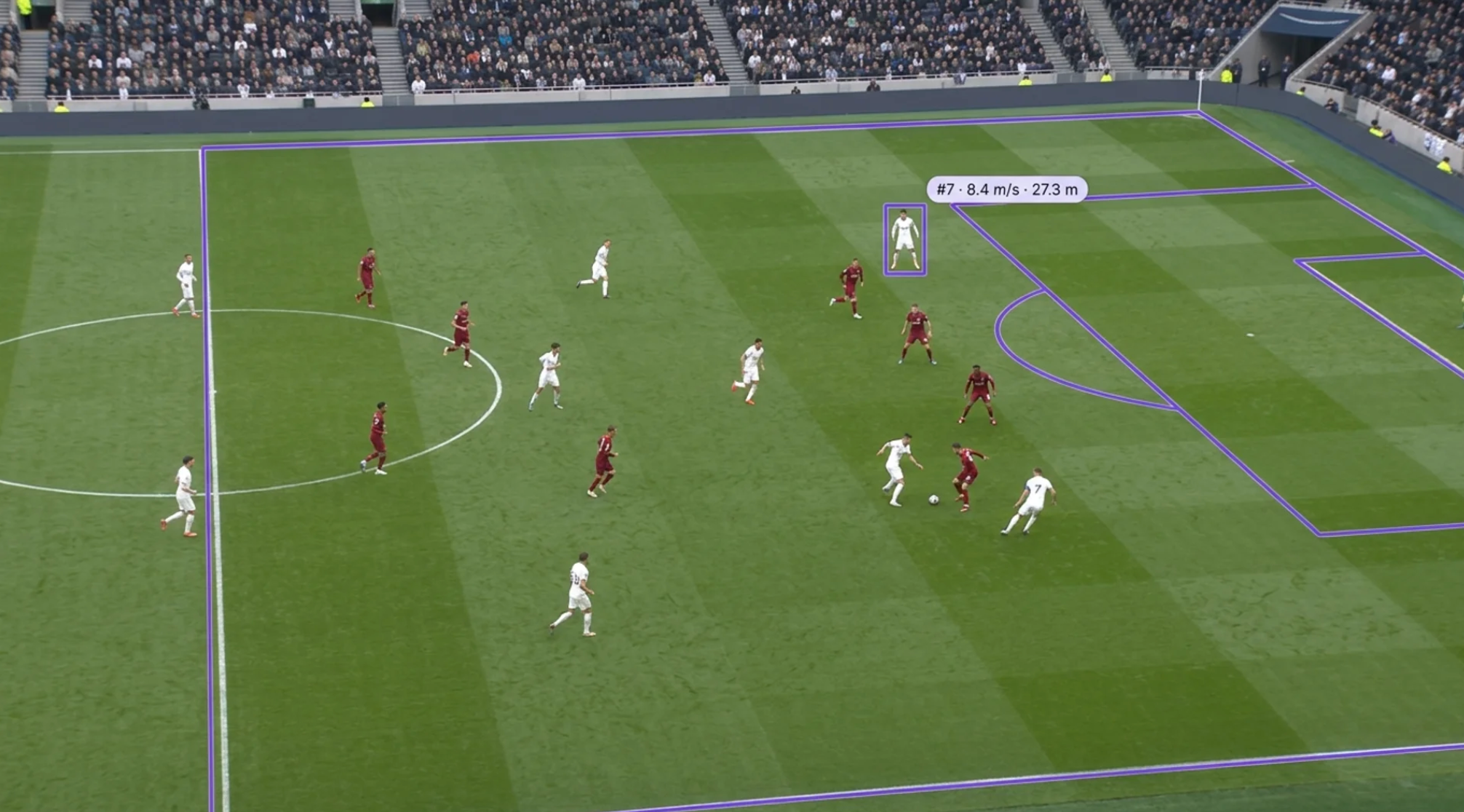
Sports Analytics AI Across Broadcast, Tactical, and Venue Cameras in Every Sport
Deploy Anywhere, Run Everywhere
Run sports analytics and player tracking in the cloud, in your VPC, on-prem against broadcast archives and live feeds, at the edge in the venue, or via API, wherever your footage and your analysts are.
One Platform, Full Adoption
Tools every sports organization can adopt, from performance analysts and coaches to data scientists, broadcast production, and product teams, no separate ML team required to ship and own tracking models.
Secure, Compliant, and Audit-Ready
Data stays safe with SOC 2 Type II compliance, encrypted data, and an uptime SLA, with positional data and events in open formats you control, and player data handling that supports league, union, and privacy requirements.
- Player, Ball & Official Tracking
- Jersey Number & Team Identification
- Camera-to-Field Calibration
- Speed, Distance & Heatmaps
- Formation, Spacing & Pressing Metrics
- Automated Event & Possession Detection
“RF-DETR performs better during scrums and face-offs where you have players on top of each other. It even detects players reliably through netting and occlusion, so no matter what footage you give us, we know where they are on the ice.”
Tanner Manett
Co-Founder and CTO, Statsyuk
Talk to a Vision AI engineer who's shipped player tracking on real broadcast footage.
Bring us your toughest sports analytics problem and we'll map a working solution.
Ask us about:
- Solution architecture for clubs and leagues, college and academy programs, broadcasters, data providers, and sports technology products, across broadcast, tactical, and venue cameras
- Live demo on your match or practice footage, in your sport, with the metrics your analysts and coaches ask for
- Deployment options: cloud, VPC, or on-prem for broadcast archives and live feeds, edge at the venue, with integration into performance, video, and data platforms
- ROI modeling against tracking data licensing, manual coding hours, coverage of games and programs without optical tracking, and new data and media products
Over 16,000 organizations build with Roboflow.
- Rivian
- Pella
- Chobani
- USG Corporation
- BNSF Railway
- American Woodmark
Vision AI is transforming businesses
Customers across the board are solving complex challenges and driving meaningful impact.
- Automotive customer
$10 million
Saved by automatically detecting defects on the production line
- Logistics & freight company
90%
Less time spent manually tracking shipping inventory
- Building materials supplier
60%
Lower customer return rate with improved product quality