Inbound Scanning AI

Verify every truck, every pallet, and every case that hits your receiving dock against the ASN and PO in real time, catch damage and discrepancies before signoff, and route to put-away without a receiving replay, on the cameras and dock infrastructure your facility already runs.
Shipping container with OCR output

Inbound Scanning AI Across Truck-Gate Arrival, Unload, Cross-Dock, and Put-Away

Deploy Anywhere, Run Everywhere

Run inbound scanning on truck-gate arrival cameras, inbound dock arch scanners, unload zone cameras, forklift-mounted cameras, cross-dock inbound lanes, put-away robot handoff cameras, mobile handhelds, drone imagery, the edge, on-prem, in your VPC, or via API. Camera-agnostic, no proprietary receiving hardware required.

One Platform, Full Adoption

Tools every receiving and dock team can adopt, from receiving clerks and forklift operators to dock supervisors, receiving engineers, IT, and operations leaders at 3PL fulfillment sites, CPG distribution centers, food and beverage distributors, pharma contract packagers, medical device manufacturers, e-commerce warehouses, and industrial shippers. No separate ML team required.

Built for Supplier and Retailer Compliance

Update inspection logic in minutes when supplier ASN formats, receiving rules, or hazmat requirements change, with audit-ready records that support GS1-128 and SSCC, ISO/IEC 15415 and 15416 barcode print quality, DOT 49 CFR hazmat, IATA DGR, IMDG, FDA UDI for medical devices, DSCSA aggregation for pharma inbound, EU FMD, ASN and EDI standards (X12 856 DESADV, EDIFACT DESADV), C-TPAT supply chain security, FSMA, and supplier-specific PO acceptance criteria. SOC 2 Type II, encrypted data, HIPAA, and an uptime SLA on every deployment.
Truck-Gate Arrival & ASN Match
Case, Pallet & Container Verification
PO Match & Quantity Reconciliation
Damage & Non-Conforming Unit Detection
Cross-Dock Inbound Routing
Put-Away Location Verification
Truck-Gate Arrival & ASN Match
Case, Pallet & Container Verification
PO Match & Quantity Reconciliation
Damage & Non-Conforming Unit Detection
Cross-Dock Inbound Routing
Put-Away Location Verification
Truck-Gate Arrival & ASN Match
Case, Pallet & Container Verification
PO Match & Quantity Reconciliation
Damage & Non-Conforming Unit Detection
Cross-Dock Inbound Routing
Put-Away Location Verification
Truck-Gate Arrival & ASN Match
Case, Pallet & Container Verification
PO Match & Quantity Reconciliation
Damage & Non-Conforming Unit Detection
Cross-Dock Inbound Routing
Put-Away Location Verification

Talk to a Vision AI engineer who's shipped inbound scanning at high-throughput receiving docks.

A single unread SSCC on an inbound pallet, an ASN-to-actual mismatch on a case count, or a damaged pallet accepted at the dock can mean a receiving discrepancy that stalls put-away for a full shift, a supplier chargeback dispute that ties up finance for weeks, a DSCSA aggregation break on an inbound pharma load, or a carrier claim that takes months to resolve. Bring us your toughest inbound scanning problem and we'll map a working solution.
  • Solution architecture for GS1-128 and SSCC, ISO/IEC 15415/15416 barcode print quality, DOT 49 CFR hazmat, IATA DGR, IMDG, FDA UDI, DSCSA aggregation, EU FMD, ASN and EDI standards (X12 856 DESADV, EDIFACT DESADV), C-TPAT, FSMA, and supplier-specific PO acceptance criteria
  • Live demo on your truck-gate arrival footage, inbound dock arch video, unload zone imagery, or forklift-mounted camera capture, in your real receiving lighting
  • Deployment options: truck-gate arrival, inbound dock arch, unload zones, forklift-mounted, cross-dock inbound lanes, put-away robot handoff, drone, edge, on-prem, or VPC, with integration into WMS, YMS, ASN and EDI systems, receiving control, and put-away automation
  • ROI modeling against receiving discrepancies, supplier chargeback disputes, damaged-inbound claims, put-away replay labor, DSCSA aggregation breaks, and hardware refresh on aging inbound scanners
We will connect you with an AI subject matter expert on our team based on your answers.
What challenges would you like to solve with vision AI?
Where will you run vision AI?
Are you replacing a current solution with AI or will this be a new solution?
How many detections do you anticipate per month?
Describe the business problem you would like to solve.
Oops! Something went wrong while submitting the form.

Over 16,000 organizations build with Roboflow.

“Roboflow has been instrumental in accelerating our learning and deployment of innovative AI solutions”
Travis Turnbull Vice President & CIO, Pella Corporation
See customer stories
Trusted by top manufacturers

Verify Every Inbound Unit at the Dock, from Truck-Gate Arrival to Put-Away, with Vision AI

Add a real-time scanning layer to every inbound unit with Vision AI for inbound scanning. Built for the operations where one unread SSCC on an inbound pallet, an ASN-to-actual case-count mismatch, a damaged pallet accepted at the dock, a mixed-load discrepancy on a full trailer, or a mis-routed cross-dock inbound can mean a receiving discrepancy that stalls put-away for a full shift, a supplier chargeback dispute that ties up finance for weeks, a DSCSA aggregation break on an inbound pharma load, a hazmat manifest gap that triggers a DOT event, or a carrier claim that takes months to resolve without documented evidence. Whether you're scanning at truck-gate arrival, inbound dock arch scanners, unload zones, forklift-mounted cameras, cross-dock inbound lanes, put-away robot handoff cameras, or mobile handhelds across 3PL fulfillment sites, CPG distribution centers, food and beverage distributors, pharma contract packagers, medical device manufacturers, e-commerce warehouses, and industrial shippers, Roboflow extends inbound coverage to every unit that crosses the receiving threshold, on the cameras and dock infrastructure your inbound stations already run.

Every Inbound Unit at Every Dock Door:

  • Verify truck-gate arrivals against the ASN and yard management system: match trailer number, carrier, driver ID, and appointment window before the truck backs to the dock
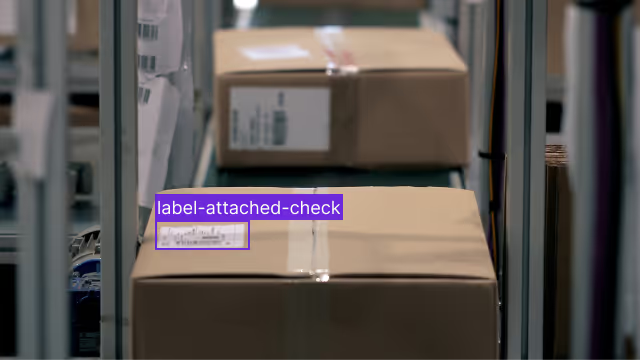
  • Read SSCC pallet labels, case IDs, GS1-128 identifiers, and carrier tracking barcodes on every inbound unit at the dock arch and unload zone, reconciling the actual load against the ASN case-count and SKU manifest in real time
  • Handle damaged, wrap-obscured, tape-covered, and low-contrast inbound labels that arrived through a rough carrier chain and would return no-reads on fixed inbound scanners

Discrepancy, Damage, and Compliance Detection:

  • Detect over-ships, under-ships, wrong-SKU cases on mixed pallets, and mixed-load discrepancies at the moment of receipt, catching supplier errors before signoff so the discrepancy is documented on the carrier's watch
  • Detect visible damage on inbound pallets, cases, and drums (crushed corners, tears, wet-damage, spilled contents, broken bands), flagging pallets for photo capture and carrier-claim documentation before the receiver signs
  • Verify DOT 49 CFR hazmat placards, IATA DGR labels, IMDG marks, UN numbers, and lithium battery labels on inbound loads to catch hazmat manifest gaps before the load enters the facility

Cross-Dock Routing, Put-Away, and Audit Records:

  • Route cross-dock inbounds in real time by destination lane, retailer, or carrier without a manual receiving-to-outbound handoff, and confirm cross-dock lane assignment against the outbound wave
  • Verify put-away location assignment against the WMS master, catching mis-put-aways at the storage location handoff before the pallet leaves the receiver
  • Maintain validated inspection records that support GS1-128, ISO/IEC 15415/15416, DSCSA aggregation, FDA UDI, DOT 49 CFR, IATA DGR, IMDG, EU FMD, ASN and EDI standards (X12 856, EDIFACT DESADV), C-TPAT supply chain security, FSMA, and supplier-specific PO audits

Bring intelligence to every inbound unit today. Stop ASN mismatches, damaged inbounds, and mis-put-aways from becoming receiving discrepancies, supplier chargeback disputes, DSCSA aggregation breaks, DOT events, or carrier claim disputes.

More About Inbound Scanning

What is inbound scanning with Vision AI?

Inbound scanning with Vision AI uses computer vision models to verify every inbound unit at every stage of the receiving dock, from the moment a truck arrives at the yard gate to the moment the pallet reaches its put-away storage location. Coverage spans the full inbound flow: truck-gate arrival verification against yard management and ASN, inbound dock arch scanning, unload zone verification, forklift-mounted reads, cross-dock inbound routing, put-away robot handoff, and mobile handheld receiving. The system reads SSCC pallet labels, GS1-128 case IDs, carrier tracking barcodes, and GS1 DataMatrix codes on every inbound unit, verifies barcode print quality per ISO/IEC 15415 and 15416, reconciles actual load against the ASN case-count and SKU manifest in real time, detects damage on inbound pallets and cases with photo capture for carrier-claim documentation, verifies DOT hazmat placards and IATA DGR labels, and confirms cross-dock routing and put-away location assignments against the WMS master. 3PL fulfillment sites, CPG distribution centers, food and beverage distributors, pharma contract packagers, medical device manufacturers, e-commerce warehouses, and industrial shippers use it to prevent receiving discrepancies, avoid supplier chargeback disputes, defend against DSCSA aggregation breaks on inbound pharma, prevent DOT hazmat events, document carrier claims with evidence, and document compliance under GS1-128 and SSCC, ISO/IEC 15415/15416, DOT 49 CFR, IATA DGR, IMDG, FDA UDI, DSCSA, EU FMD, ASN and EDI standards, C-TPAT, and FSMA.

Can Vision AI catch ASN-to-actual mismatches and damaged inbound pallets that fixed receiving scanners miss?

Yes. ASN-to-actual mismatches (over-ships, under-ships, wrong-SKU on mixed pallets), inbound damage that only shows on the receiver's face of the pallet, and hazmat manifest gaps on borderline loads are exactly where rule-based inbound scanning feels the most pressure. Fixed inbound scanners excel at reading a clean SSCC on a leading face at a fixed belt speed, but struggle when the ASN reports 48 cases and the trailer actually holds 47 cases with two swapped SKUs on a mixed pallet, when a pallet arrives with a torn corner and dented cases that need to be documented before signoff, when a hazmat placard was applied to the wrong face at the shipper, and when an inbound pallet has been wrapped and rewrapped during transit so the SSCC sits under multiple layers of stretch film. Roboflow models are trained on your actual truck-gate footage, your real inbound damage patterns, and your dock lighting, and co-pilot existing fixed inbound scanners by adding a second-look layer that catches ASN mismatches, damage, and hazmat gaps before the receiver signs, so the discrepancy is documented on the carrier's watch instead of the receiver's watch.

Does inbound scanning support GS1-128 SSCC, ASN and EDI (X12 856 DESADV), DSCSA aggregation, and FDA UDI?

Yes. Roboflow models can be trained against GS1-128 barcode symbology, SSCC (Serial Shipping Container Code), GS1 DataMatrix, GTINs, ANSI/UCC barcode specifications, ISO/IEC 15415 (2D barcode print quality), ISO/IEC 15416 (1D barcode print quality), ASN and EDI standards (X12 856 Advance Ship Notice DESADV, EDIFACT DESADV, EDI 943 Warehouse Stock Transfer Shipment Advice), DSCSA serialization and aggregation for pharma inbound receipt (parent-child reconciliation on inbound), EU FMD 2D data matrix, FDA UDI for medical device receipt, DOT 49 CFR hazardous materials transportation regulations, IATA DGR labels for inbound air freight, IMDG Code for inbound ocean freight, UN numbering, ORM-D and Limited Quantity marks, lithium battery labels (UN3480, UN3481), C-TPAT (Customs-Trade Partnership Against Terrorism) supply chain security, FSMA (traceability, sanitary transportation), and supplier-specific PO acceptance criteria for named suppliers and interline transfer partners. The system applies the pass/fail logic your receiving and compliance teams already use and produces validated inspection records that support supplier audits, retailer scorecards (Walmart OTIF reverse acceptance, Amazon PARP receipt), DSCSA inbound aggregation audits, DOT compliance reviews, and C-TPAT membership.

Can it integrate with our WMS, YMS, ASN and EDI systems, and put-away automation?

Yes. Roboflow Inference exposes a standard API supporting common inbound and receiving protocols. Customers integrate with WMS platforms (Manhattan Associates, Blue Yonder, SAP EWM, Oracle WMS, Körber HighJump, Softeon), YMS platforms (Manhattan YMS, Blue Yonder YMS, PINC Solutions, Trimble Coretex, C3 Solutions), ASN and EDI translation (SPS Commerce, TrueCommerce, Cleo Integration Cloud, IBM Sterling B2B Integrator), receiving and dock control (Rockwell, Siemens, Beckhoff PLCs), put-away automation (AS/RS from Dematic, Vanderlande, Beumer, Swisslog, Symbotic, Kardex Remstar), forklift-mounted terminals (Zebra, Honeywell, Datalogic), existing fixed inbound scanners (co-pilot mode on borderline reads), and ERP (SAP, Oracle, NetSuite, Infor) through REST, MQTT, OPC UA, EDI, and direct database writes. Models support real-time ASN reconciliation callbacks, PLC-level pass/fail on inbound divert gates, andon and station-release triggers, put-away location verification, damage photo capture for carrier claims, audit trails, and inspection results that pass supplier audits, DSCSA aggregation audits, DOT compliance reviews, and C-TPAT audits.
Stay Connected

Get the Latest in Computer Vision First

Thank you for subscribing!
Oops! Something went wrong!.
Unsubscribe at any time. Review our Privacy Policy.

Additional resources

Vision AI is transforming every industry. Let’s transform yours.