Use Smart Glasses as an AI Camera for Operator Guidance
Industrial smart glasses from Vuzix and RealWear put a 12 to 50 MP camera where the operator is looking. Train a model in Roboflow on footage from the glasses, then run it on the device or stream to Roboflow for live pass/fail feedback in the display.
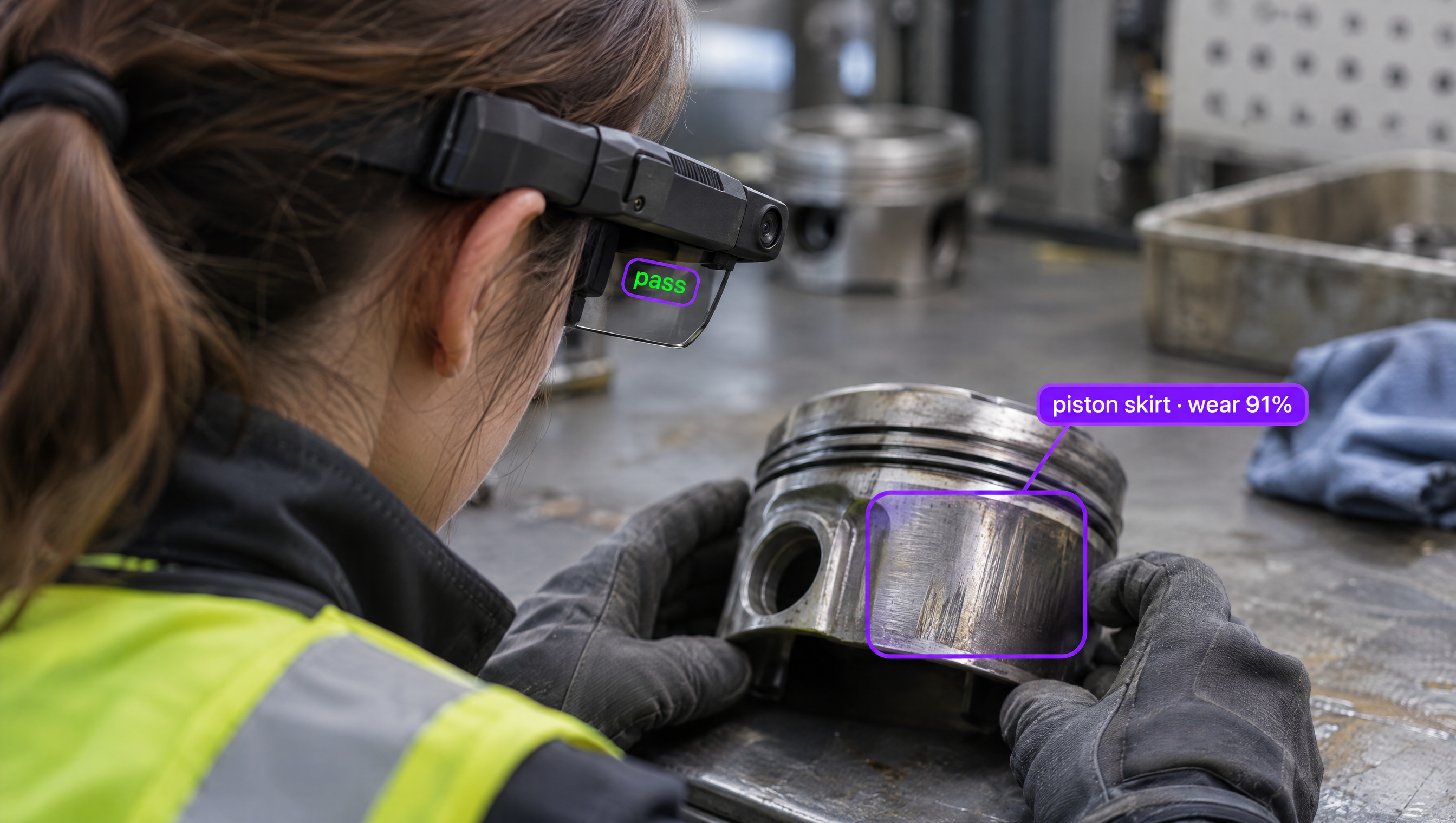
Run vision models on Roboflow hardware
Roboflow Edge computers and the AI1 Smart Camera arrive ready to run your models. Each one ships with RoboflowOS, the operating system we build and maintain, so fixes and security patches reach your devices over the air without a site visit.
Roboflow Edge computers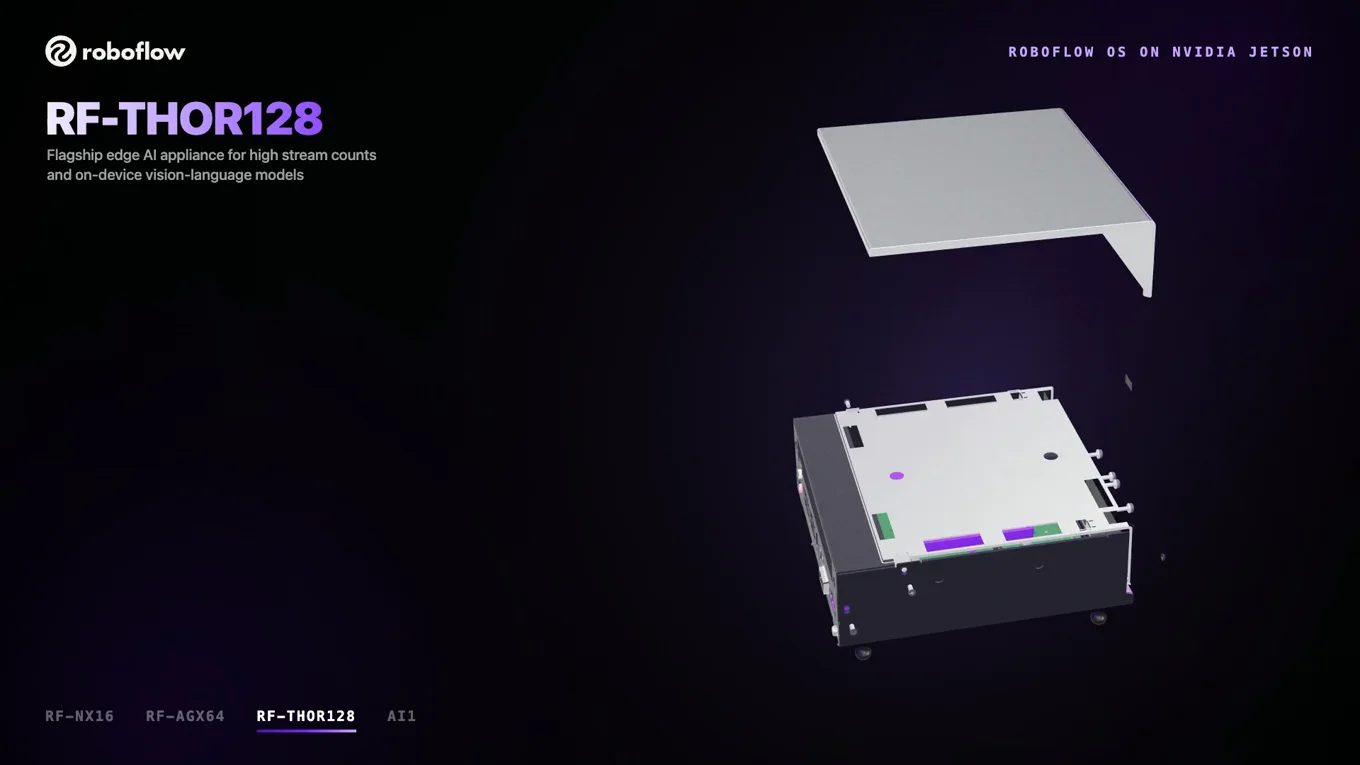
Settings that survive a restart
RoboflowOS rebuilds static addresses, gateway, DNS and camera-port tuning from a persistent store each time the device starts.
Updates over the air
Security patches, camera driver fixes and NVIDIA platform upgrades come in from the Roboflow platform, separate from your models and Workflows.
Tested on the hardware you get
We build the inference runtime too, so we test every OS image against it on the same boards we ship.
Locked down by default
The OS image is read-only and ships without SSH, a desktop or a local login. Your team reads logs, checks streams and views telemetry in Deployment Manager, the Roboflow tool for managing devices remotely.
Five years of updates included
Every appliance comes with five years of RoboflowOS updates from the purchase date, plus a one-year hardware warranty.
RoboflowOS on NVIDIA Jetson
- Smart Camera
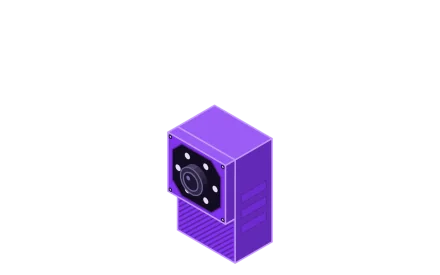
AI1
The AI1 puts a camera, a light and a computer in one housing. It pairs an 8 MP (3840 x 2160) camera and LED ring with an NVIDIA Jetson Orin NX 8GB. Teams use it to prove out an edge vision project on a fixed inspection view, counting parts a few inches away or spotting defects dozens of feet away.
- Memory
- 8 GB
- Cameras and networking
- Integrated 8 MP camera and LED ring1 x GbE
1 stream - Roboflow Edge
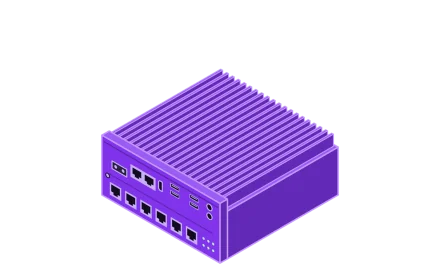
RF-NX16
The RF-NX16 handles stations with several cameras. It has six PoE ports on a shared 150 W budget, two more GbE ports and an NVIDIA Jetson Orin NX 16GB.
- Memory
- 16 GB
- Cameras and networking
- 6 x GbE PoE with a 150 W total budget2 x GbE
1–4 streamsRF-NX16 Spec Sheet - Roboflow Edge
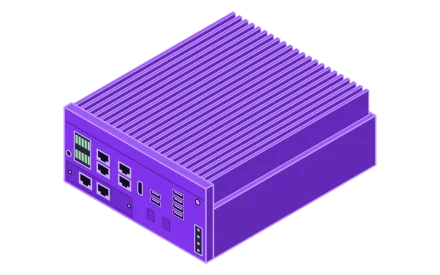
RF-AGX64
The RF-AGX64 runs higher-resolution cameras and bigger models. It has 64 GB of memory on an NVIDIA Jetson AGX Orin, four PoE ports and two 10 GbE ports.
- Memory
- 64 GB
- Cameras and networking
- 4 x GbE PoE2 x 10 GbE
4+ streams, line scanRF-AGX64 Spec Sheet - Roboflow Edge
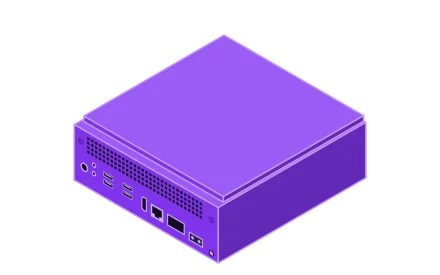
RF-THOR128
The RF-THOR128 is our most powerful appliance and runs on the NVIDIA Jetson T5000 with 128 GB of memory. It has one 5 GbE port and a 100 GbE QSFP28 port that breaks out to four 25 GbE links, and its cameras connect through a PoE switch.
- Memory
- 128 GB
- Cameras and networking
- 1 x 5 GbE and 1 x 100 GbE QSFP28Breaks out to 4 x 25 GbE
8+ streams, edge VLM inferenceRF-THOR128 Spec Sheet
One GbE PoE camera port
Not sure which one fits your line?
Send us your cameras, Workflow and line rate, and we’ll create a recommendation for you.
AI for Smart Glasses Workflows
Running vision models on smart glasses? Explore Workflows you can get started with to create computer vision apps in minutes. Publish the glasses' camera to Roboflow Cloud Streaming over RTMP or WHIP, run the top open and closed source models on live video, then train a custom model in Roboflow and send pass/fail results back to the operator's display.
How to Setup Smart Glasses with AI
Export a trained RF-DETR model to TFLite, ONNX or ExecuTorch and run it in your Android app on the glasses, or publish the camera over RTMP or WHIP to Cloud Streaming or a Roboflow Inference server and return Workflow results to the display. Train the model in Roboflow on footage recorded from the same glasses.
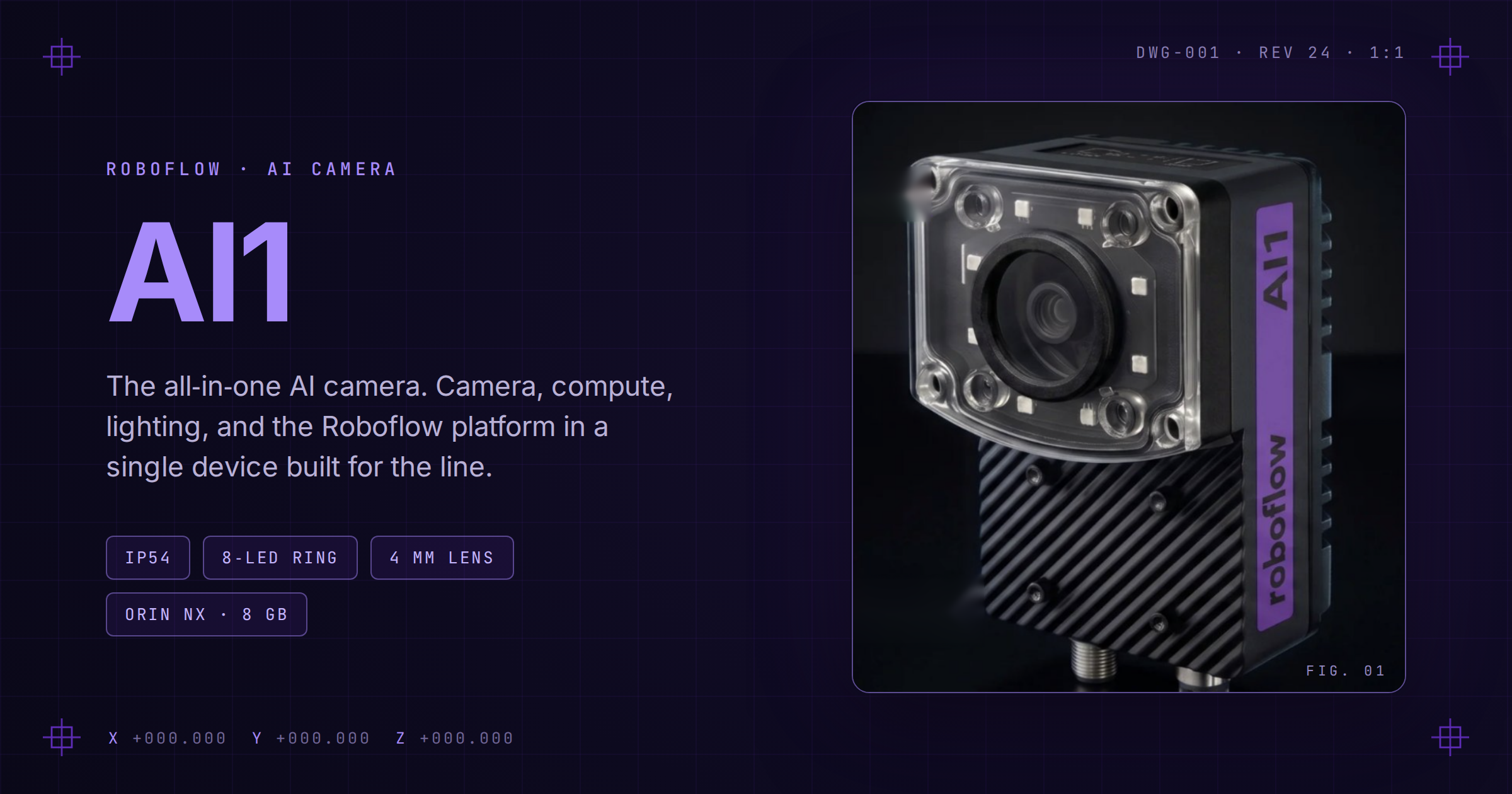
Meet Roboflow AI1
AI1 packages onboard AI compute, integrated lighting, and an industrial camera into one plug-and-play vision system.
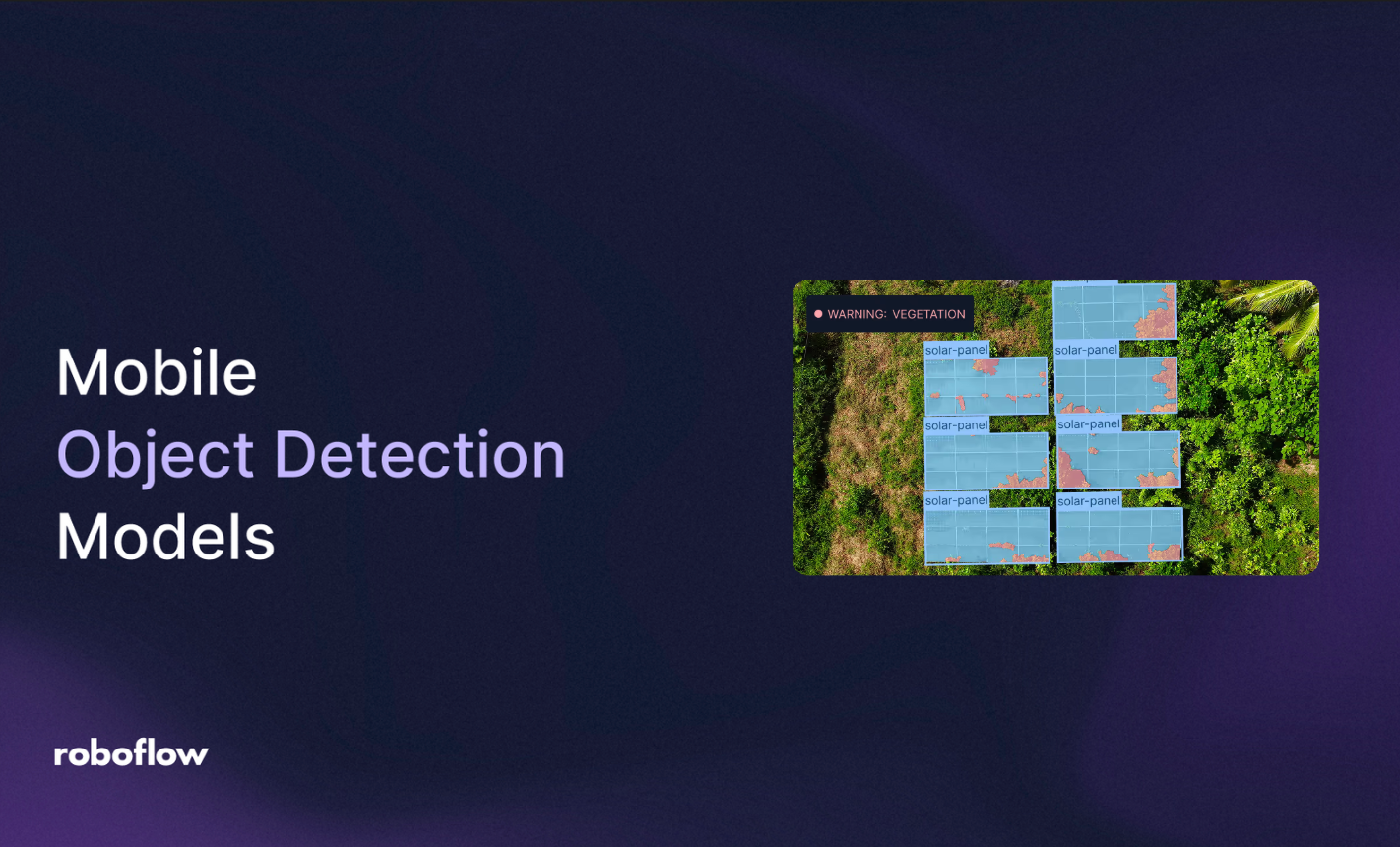
Best Mobile Object Detection Models
Compare on-device options for Android and iOS, including TFLite and ONNX, and see how RF-DETR runs on camera frames.
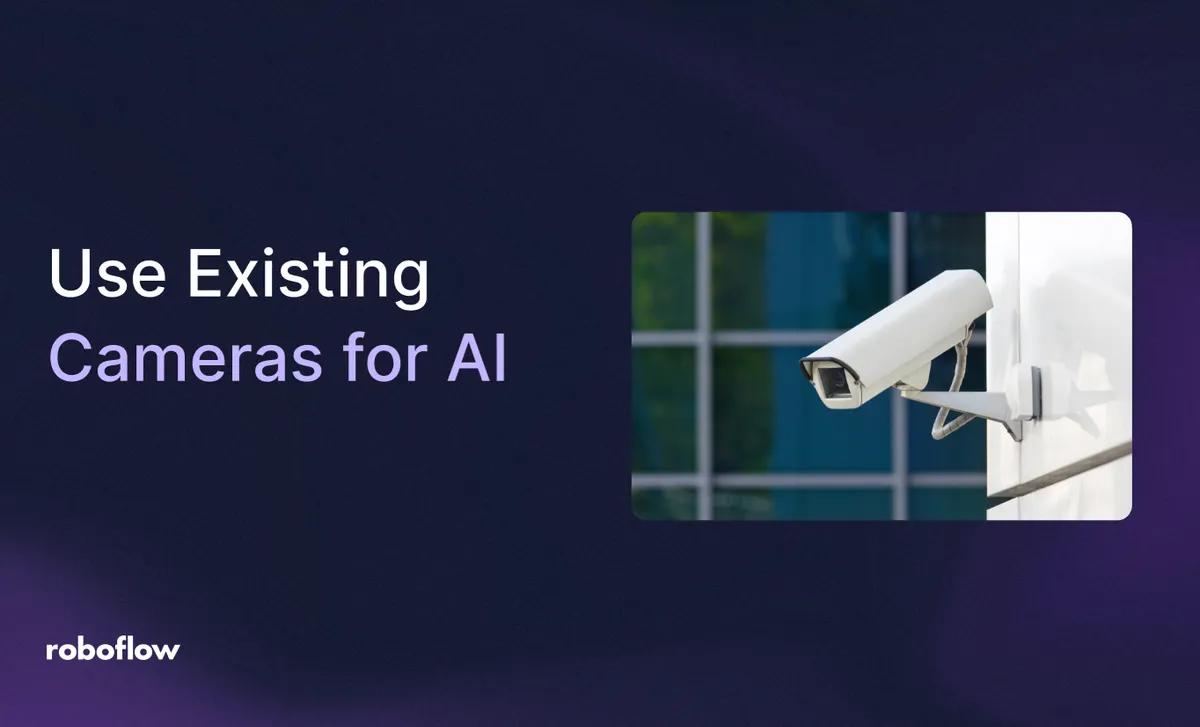
Use the Cameras You Already Have
Learn how to connect existing cameras and streams to Roboflow Workflows without new hardware.
“The vision AI solutions we developed with Roboflow have been a core component of connecting our teams and unlocking their ability to collaborate.”
Lou Stocco
Director of Manufacturing Advanced Analytics, USG
Speak with an AI expert
Our team will help you start solving business problems on the first call.
Ask us about:
- Solution architecting
- Live demonstration
- Pricing and specifications
- Feasibility assessment
Over 80,000 organizations build with Roboflow.
- Rivian
- Pella
- Chobani
- USG Corporation
- BNSF Railway
- American Woodmark
Additional resources
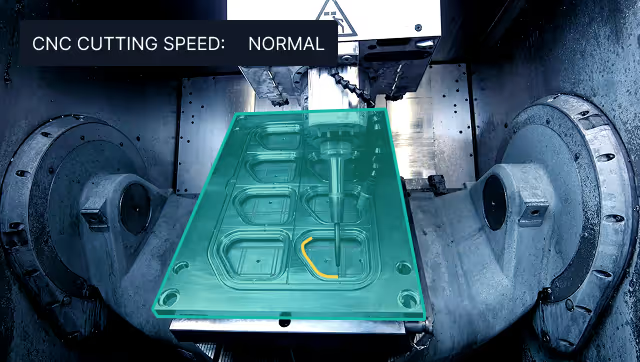
Vision AI in Industrial Manufacturing
Learn how manufacturers deploy Vision AI for quality control, worker safety, and process automation at scale.
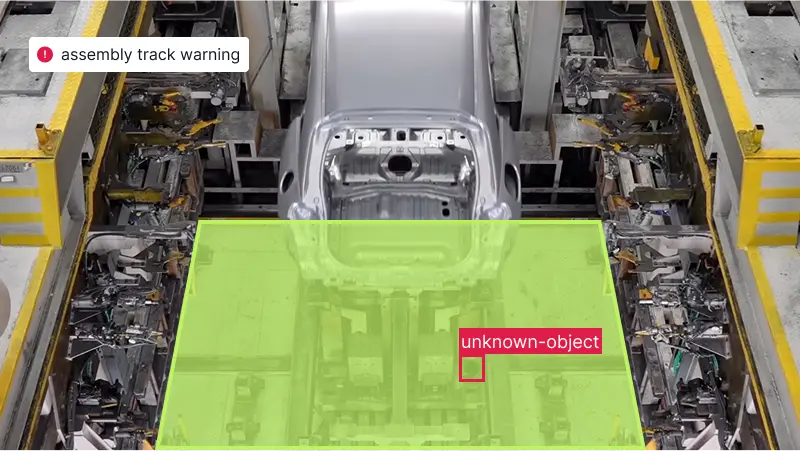
Vision AI in Automotive Manufacturing
See how automotive teams use Vision AI for assembly verification, defect detection, and safety monitoring on the line.
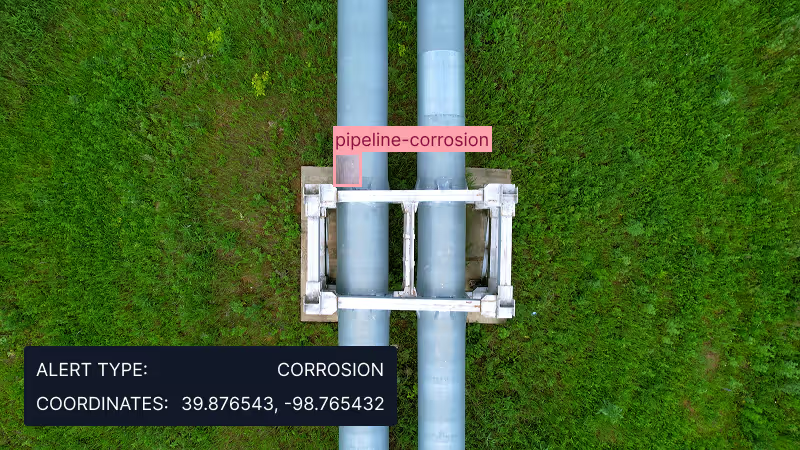
Vision AI for Energy and Utilities
See how energy and utility teams use Vision AI for inspections, safety, and site operations.