Visual Intelligence Summit: Oct 22 in San Francisco Get your ticket

Labellerr is a data annotation platform, Roboflow is a complete computer vision platform

Labellerr alternatives? Over 2 million engineers create datasets, train models, and deploy to production with Roboflow.
Why are companies choosing Roboflow?

The turnkey solution for vision AI. Create datasets, train models, and deploy to production.

  • End-to-End Vision, One Platform

    From labeling to deployment - build, train, and launch with ease.

  • Built for Builders, Ready for Anything

    Interoperable infrastructure for developers to create custom vision solutions.

  • AI at the Edge, Without Limits

    Deploy seamlessly to any edge device and power real-time vision AI.

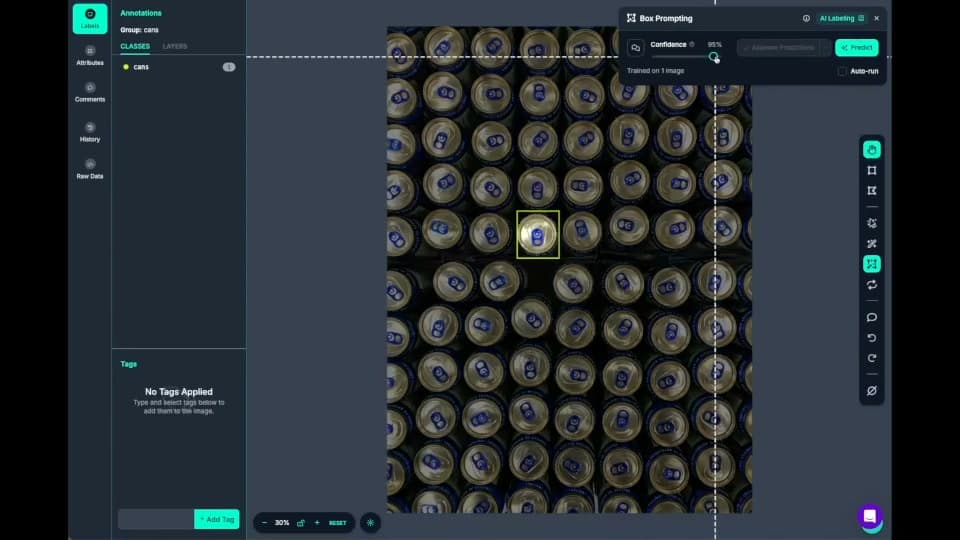
  • Roboflow Annotate labeling cans with AI box prompting

    Fast data labeling

    Label data quickly with a suite of AI-assisted annotation tools to augment human labeling or fully automate your data labeling pipeline.
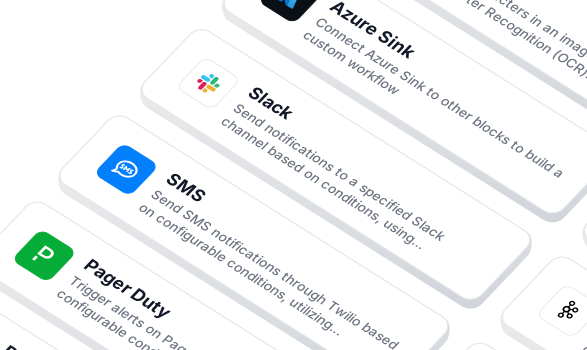
  • Workflow blocks for notifications and integrations

    Build vision AI applications with ease

    Use a low-code open source platform to simplify building and deploying vision AI applications.
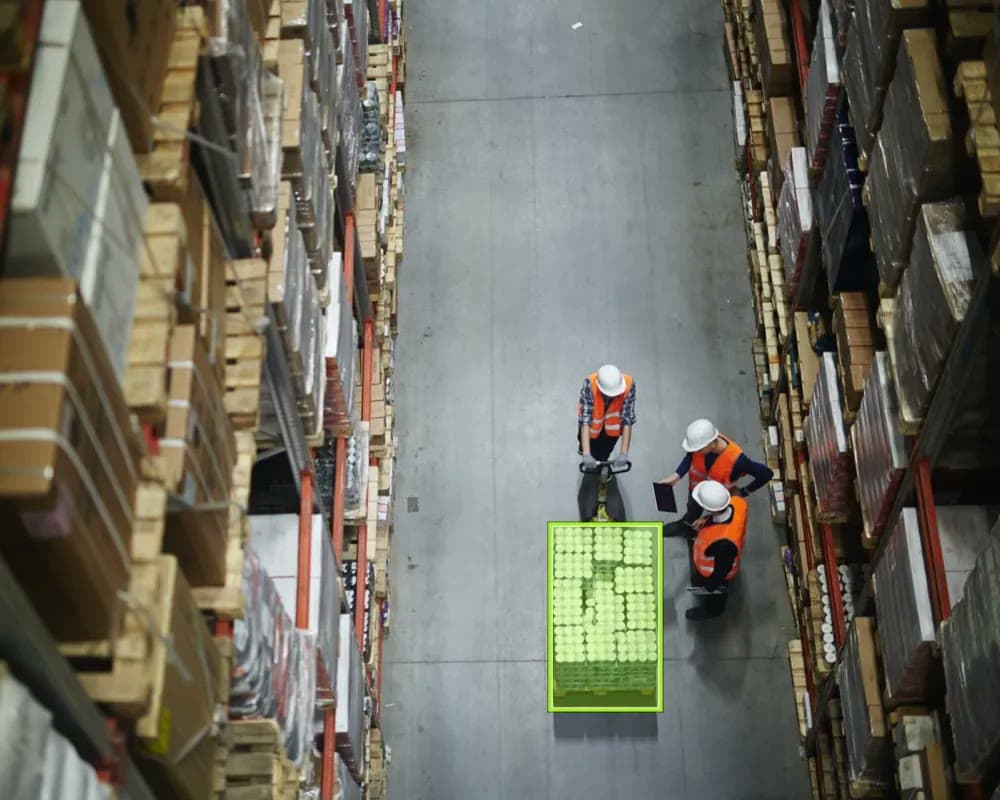
  • A team reviewing a detected pallet in a warehouse aisle

    Machine learning expertise, always

    Work with account-dedicated AI specialists and Field Engineers to accelerate development and optimize performance.
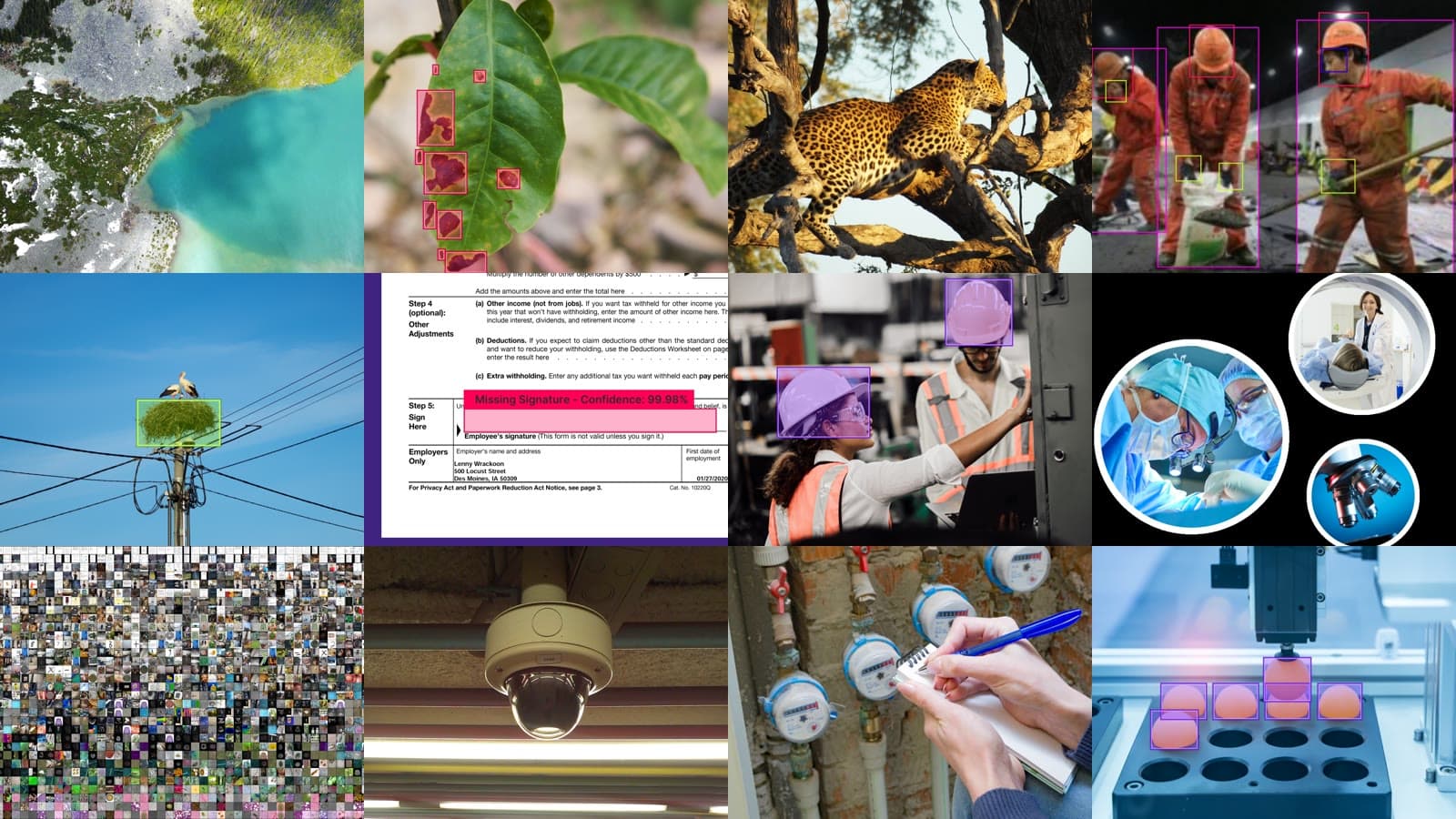
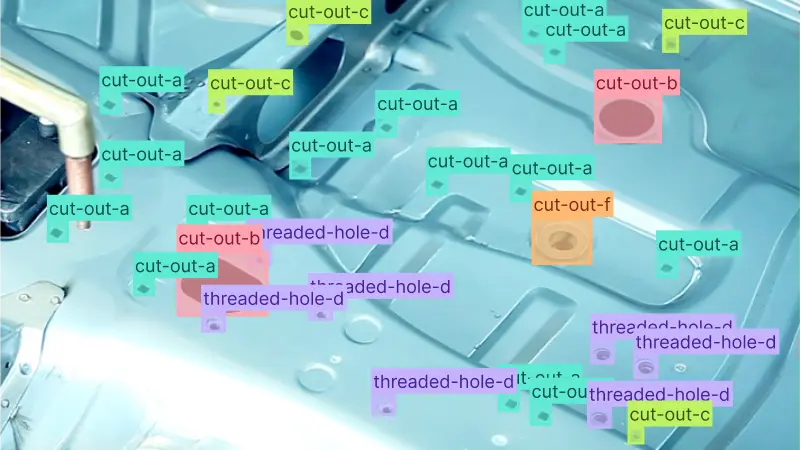
  • Photos from datasets across industries

    Datasets and models for every industry

    Access thousands of datasets and pre-trained models to kickstart your computer vision projects.
  • Logos of OpenAI, Microsoft, Meta, Anthropic, Google and Qwen

    Flexible model licensing

    Choose from a range of licensing options to fit your needs, whether for commercial use, private deployment, or collaboration across teams.

Want to use Labellerr and Roboflow?

  • Import images to Roboflow

    Bring COCO, YOLO, or Pascal VOC exports from Labellerr into Roboflow for model training.

  • Deploy with Roboflow

    No matter where you train your model, use Roboflow's trusted deployment solutions.

  • Automate data labeling

    Use AI labeling in Roboflow to automate 90% of human labeling.

OK I’m ready, how do I use Roboflow?

Roboflow makes it easy to build, train, and deploy custom computer vision models, even if you’re not a machine learning expert.

Speak with an AI expert

Our team will help you start solving business problems on the first call.

Ask us about:

  • Solution architecting
  • Live demonstration
  • Pricing and specifications
  • Feasibility assessment

Over 16,000 organizations build with Roboflow.

  • Rivian
  • Pella
  • Chobani
  • USG Corporation
  • BNSF Railway
  • American Woodmark
Start where you are
Stay connected

Get the Latest in Computer Vision First

Unsubscribe at any time. Review our Privacy Policy.

Compare Labellerr and Roboflow

Labellerr is a multimodal annotation platform from Tensor Matics that covers images, video, text, audio, PDF, and DICOM, with SAM-based auto-labeling and an optional managed annotation workforce. GPT-6 Astra is the first foundation model that sees well enough to label production data, and Roboflow puts it to work. Roboflow Annotate is a fast labeling tool. Auto Label runs GPT-6 Astra and Gemini over your images from a text prompt and labels 1,000 images in under ten minutes, Label Assist pre-annotates with your own trained model, and Smart Polygon turns one click into a mask. Then the labels keep working. Roboflow trains a specialized vision model on them, deploys it, and exposes it over MCP, so GPT-6 Astra and Gemini can call your model as a vision sub-agent whenever they need to see something precisely. Enterprises and engineers choose Roboflow because it labels faster today and turns the dataset into a tool a frontier model can use tomorrow, without handing anything off to another platform.

Labellerr vs Roboflow Annotate: feature by feature

Both tools cover the core vision tasks: object detection, segmentation, classification, and keypoints. Roboflow labels quickly, with frontier models doing the first pass and your own trained model doing the second, and the labeled data becomes a specialized vision sub-agent that frontier models can call over MCP. Labellerr stops at the export.

FeatureRoboflow AnnotateLabellerr
Supported labeling tasksObject detection, segmentation, classification, keypoint, multimodalObject detection, polygon and polyline, semantic and instance segmentation, classification, keypoints, OCR, captioning, plus text, audio, PDF, and DICOM
Video labelingYesYes, SAM 2 object tracking and event tagging
Running environmentWeb browser, no installWeb browser, hosted cloud
Free tierYes, no credit cap on labelingLimited, Researcher tier with 2,500 data credits and one seat
Open sourceClosed source platform; open-source supervision and inference librariesNo; GitHub holds tutorials and SAM forks, not the platform
Hosted labeling environmentYesYes
AI auto labelingYes, Auto Label runs GPT-6 Astra and Gemini from a text prompt; 1,000 images in under ten minutesYes, SAM 3 text prompts, LabelGPT zero-shot prompting, and active-learning auto-label jobs (Pro and above)
Label assist with foundation modelsYes, Smart Polygon powered by Segment AnythingYes, SAM, SAM 2, and SAM 3
Label assist with custom modelsYes, Label Assist pre-annotates with any model trained or uploaded to Roboflow, so labeling gets faster every training runPartial, upload pre-annotations from your own model; no hosted custom-model assistant
Dataset managementYes, versioning, train/valid/test splits, health check, preprocessingBasic, datasets and projects with S3 and GCS connectors
Semantic dataset searchYesAttribute-based filtering (added May 2026)
Dataset analyticsYesLimited
Labeling analyticsYesYes, annotator productivity and review dashboards
Labeling historyYesReview and accept/reject workflow; full version history not documented
Image augmentationYesNo
Export formats40+ formatsJSON, COCO, YOLO, Pascal VOC, CSV, custom schemas
Role-based access controlYesYes
SSOYesEnterprise only
Python SDK / APIYes, SDK on PyPI plus REST APIYes, REST API with OpenAPI spec; SDK installs from GitHub rather than PyPI
Model trainingYes, RF-DETR, YOLO (v8 / v11 / v26), and more, trained from the labeled dataset in one stepNo
Model deploymentYes, hosted, edge, or self-hostedNo
Vision sub-agents for frontier models (MCP)Yes, trained models are exposed over MCP so GPT-6 Astra and Gemini can call them as specialized vision toolsNo
Application builderYes, Roboflow WorkflowsNo
Managed labeling workforceVia Roboflow partnersYes, from $6 per hour
Purchase mechanismOnline and salesOnline (Pro at $9,999 per year) and sales

The key differences

Labellerr is a capable annotation tool with broad data-type coverage, current SAM models, and a managed workforce. Roboflow Annotate is the faster annotation tool, and the labels it produces feed a loop that ends with a specialized vision model a frontier model can call.

  • Annotation speed: Roboflow's Auto Label runs GPT-6 Astra and Gemini over a dataset from a text prompt, Smart Polygon makes masks in one click, and Label Assist pre-annotates with your own trained model, so each training run makes the next labeling pass faster. Labellerr's automation is SAM-based and credit-metered.
  • Dataset tooling: Roboflow adds versioning, train/valid/test splits, health checks, augmentation, and semantic search on top of labeling. Labellerr's dataset layer is projects, credits, and cloud connectors.
  • From labels to a trained model: In Roboflow the labeled dataset trains RF-DETR or YOLO in the same place, then deploys to the cloud, the edge, or your own hardware. Labellerr stops at the export, and its own tutorials end by training somewhere else.
  • From a model to a sub-agent: Roboflow exposes your trained model over MCP, so GPT-6 Astra or Gemini can hand off precise visual tasks to a model that knows your parts, your defects, or your shelf. The same frontier models that labeled the data end up calling the model it produced. Labellerr has no equivalent.

Labellerr fits teams that want a multimodal annotation tool with an outsourced labeling option. Roboflow Annotate fits teams that want the fastest path from raw images to a trained vision model, and then to a vision sub-agent their frontier models can use inside integrated vision workflows.

Roboflow

End-to-end computer vision platform (annotate, train, deploy)

Labellerr

Multimodal data annotation platform with SAM auto-labeling and managed annotation services (Tensor Matics)

Scale & Ecosystem

Roboflow

  • 2,000,000+ developers on the platform
  • 1,000,000+ public datasets on Roboflow Universe
  • 100,000+ pre-trained models hosted publicly
  • 25,000+ organizations building with the platform, including more than half of the Fortune 100 (publicly cited: Rivian, Chobani, USG, Pella)
  • Self-serve sign-up; teams can begin annotating, training, and deploying without a services contract

Labellerr

  • Publicly disclosed funding of roughly $166K across two 2022 pre-seed rounds (MeitY, Upekkha); no priced seed or Series A is documented
  • Delaware entity with offices in San Francisco and Chandigarh, India
  • Case-study customers include Volvo, Coupang, Stanford University, Spot AI, Deep Sentinel, Intuition Robotics, and Aftershoot
  • Member of Microsoft for Startups and NVIDIA Inception
  • No public catalog of community-contributed datasets or pre-trained models; the datasets page lists four entries, three of which link to external datasets

Product Capabilities (Computer Vision)

Roboflow

  • End-to-end platform: dataset management, annotation, model training, hosted inference, and deployment
  • Auto Label uses foundation models (GPT-6 Astra, Gemini) to label images for classes you define in a text prompt; label 1,000 images in under ten minutes
  • Label Assist pre-annotates new images with your own trained models, and Smart Polygon creates one-click polygon annotations powered by Meta AI's Segment Anything
  • Native support for object detection, instance and semantic segmentation, image classification, keypoint detection, OCR, depth estimation, and multimodal tasks
  • Trained models are exposed over MCP as specialized vision sub-agents that GPT-6 Astra and Gemini can call; Roboflow Workflows chains detection, classification, OCR, and business logic into a single pipeline
  • Active model registry covering RF-DETR, YOLO (v8 / v11 / v26), Detectron2, and other current architectures

Labellerr

  • Data types: images, video, text, audio, PDF, and DICOM/NIfTI medical volumes; no LiDAR or 3D point-cloud annotation documented
  • Annotation types: bounding boxes, polygons and polylines, semantic and instance segmentation, classification, keypoints (hand, body pose, and face mesh templates), video event tagging, captioning, and OCR
  • AI-assisted labeling with SAM, SAM 2 video tracking, and SAM 3 visual and text prompts (added June 2026); LabelGPT zero-shot prompting and active-learning auto-label jobs
  • No documented native model training, hosted inference, or deployment; Labellerr's own object detection tutorial ends at exporting data to train externally
  • Managed annotation services from $6 per hour with a stated 1,000+ annotators; human-in-the-loop services bundled in the Pro tier

Developer Experience

Roboflow

  • Open-source supervision library - model-agnostic utilities for detections, tracking, annotation, and evaluation
  • Open-source inference server - self-hostable HTTP inference for custom and foundation models
  • Trained models are served over MCP so frontier models can call them as tools
  • Native integrations with Hugging Face Transformers, MMDetection, and the broader open-source CV stack
  • Python SDK plus REST/HTTP APIs; standardized I/O lets teams swap model weights without changing application code

Labellerr

  • Python SDK installed directly from GitHub rather than PyPI; covers datasets, projects, templates, exports, and S3/GCS connectors
  • REST API with a published OpenAPI specification
  • No open-source platform or major library; the GitHub organization holds tutorials and forks of SAM 2 and SAM 3 inference code
  • Exports to JSON, COCO, YOLO, Pascal VOC, and CSV, locally or to AWS S3
  • Data connectors for AWS S3 and Google Cloud Storage; no documented webhooks, MLflow, Hugging Face, Databricks, or MCP integrations

Enterprise & Security

Roboflow

  • SOC 2 Type II compliant
  • HIPAA-compliant infrastructure with BAAs available
  • PCI DSS (SAQ A and AOC) compliance
  • Deployment options: managed cloud, customer VPC, on-premises, and fully air-gapped / offline (Docker-based) for firewalled environments
  • Training and inference can run on customer-owned bare metal or in the customer's own cloud account

Labellerr

  • SOC 2 Type II and GDPR compliance claimed on the pricing page
  • HIPAA is not claimed, including on the DICOM annotation page; ISO 27001 is not documented; no public trust center (the security URL returns a 404)
  • Documented controls: AES-256 encryption at rest, TLS 1.2 or higher, SSO enforcement, and IP allowlisting on Enterprise
  • Deployment options: multi-tenant cloud by default, customer-owned buckets via signed URLs, and private cloud or on-premises as an Enterprise add-on
  • Pricing: free Researcher tier (2,500 credits, one seat); Pro at $9,999 per year for companies under 200 employees (100,000 credits plus $29 per additional user per month); Enterprise custom; extra credits $10 per 1,000 and do not roll over

Sources: roboflow.com, docs.roboflow.com, security.roboflow.com, universe.roboflow.com, github.com/roboflow, labellerr.com, docs.labellerr.com, github.com/Labellerr, g2.com, wellfound.com, cbinsights.com. Figures reflect publicly available information as of September 2026.