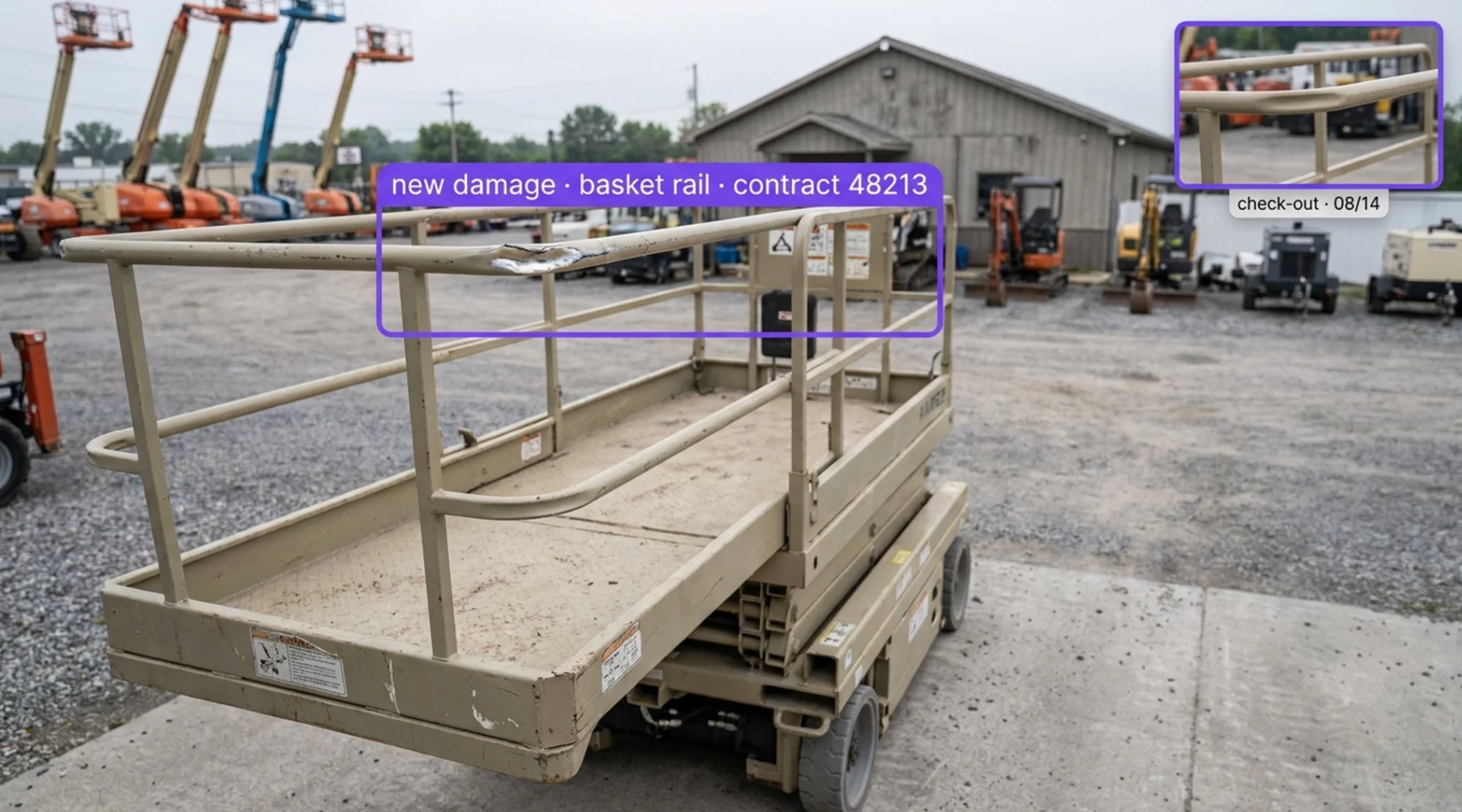
Add a real-time condition record to every check-out and check-in with vision AI for rental equipment damage inspection. Built for the branches where a boom lift goes out with a scuffed basket and comes back with a bent rail and nobody can prove which one the customer did, the yard tech walks around forty machines before lunch and stops noticing cracked mirrors by the tenth, and the damage bill goes out three weeks later with a photo that could be any Tuesday. Roboflow reads the walkaround video and yard camera footage, finds and locates every dent, crack, leak, and missing part, and compares check-in to check-out so the damage that happened on rent is documented, timestamped, and billable, on the phones and gate cameras your branches already use.
Damage Detection on Check-In:
- Detect dents, scratches, gouges, cracks, and broken glass, lights, and mirrors on cabs, booms, buckets, panels, and bodies from a phone walkaround or a drive-through gate camera
- Flag tire and track damage, cuts, and wear, bent rails and guards, and damaged attachments, so the machine that needs shop time goes there instead of back on rent
- Detect hydraulic and fluid leaks, missing parts, keys, and attachments, and dashboard warning states, before the next customer finds them
Check-Out to Check-In Comparison:
- Capture a complete condition record at check-out and match every panel and component to the same view at check-in, so new damage is separated from pre-existing damage automatically
- Attribute each new finding to the rental contract with the image, location on the machine, timestamp, and the check-out image beside it, so the damage bill carries proof instead of a description
- Grade severity so cosmetic wear stays cosmetic and structural or safety damage gets escalated, with thresholds your branch and fleet teams set
Branches, Fleet, and Systems Integration:
- Run the same inspection at every branch, yard, and delivery drop from phones, tablets, and fixed gate cameras, so condition records look the same in every location and dispute
- Trend damage by machine class, customer, branch, and job site, so the account that returns every machine dented and the model that keeps breaking the same guard show up as patterns
- Push findings, photos, and damage charges into your rental ERP, fleet, and billing systems through API integration, and tie them to ANSI A92 pre-delivery and frequent inspection records for aerial work platforms
Bring intelligence to every check-in today. Stop the unproven damage bill, the missed cracked mirror, and the machine that went back out with a leak from becoming written-off damage, a customer dispute you lose, or a safety incident on the next job site.
More About Rental Equipment Damage Inspection
What is rental equipment damage inspection with Vision AI?
Rental equipment damage inspection with vision AI uses computer vision models on phone walkaround video, tablet photos, and fixed yard and gate cameras to detect and locate damage on rental equipment and vehicles at check-out and check-in: dents, scratches, cracks, broken glass and lights, tire and track damage, bent guards and rails, leaks, and missing parts and attachments. The system captures a complete condition record at check-out, compares check-in to it panel by panel to separate new damage from pre-existing, grades severity, and attributes each finding to the rental contract with images and timestamps, so damage charges carry proof, machines that need repair are routed to the shop, and records support ANSI A92 inspection requirements for aerial work platforms.
Does this help with damage disputes and ANSI A92 inspection records?
Yes, and disputes are usually where the value shows up first. A damage charge with a timestamped check-out image, a timestamped check-in image, and the new finding located on the machine is a charge the customer can see, which means fewer disputes, faster collection, and less written-off damage. For aerial work platforms, ANSI A92 (the standard covering pre-delivery, frequent, and annual inspections of mobile elevating work platforms) and OSHA pre-use inspection expectations require documented condition checks, and the per-rental image record supports those inspections and the maintenance history behind them. Roboflow supplies the detection and the record; your branch, fleet, and damage teams own the charge policy, the severity thresholds, and the inspection program.
Can it integrate with our rental ERP, fleet telematics, and billing?
Yes. Roboflow Inference (opens in a new tab) exposes a standard API and webhooks, so inspection findings flow into your existing systems: rental management and ERP platforms like Point of Rental, Wynne RentalMan, Texada, and RentalResult for contracts, condition records, and damage charges, fleet telematics from Trackunit and others for machine identity and hours, dealer and vehicle systems for car and truck rental, and alerting into Slack and Microsoft Teams, through REST, webhooks, and direct database writes. A new finding at check-in becomes a damage line on the contract with images attached, a safety-grade finding becomes a shop work order before the machine goes back on rent, and every event carries the machine or vehicle ID, contract, branch, capture source, timestamp, and the check-out and check-in images, with a full record behind every charge.