Planogram Compliance AI
Check every shelf against the planogram, from field rep phones and store cameras, not a quarterly audit.
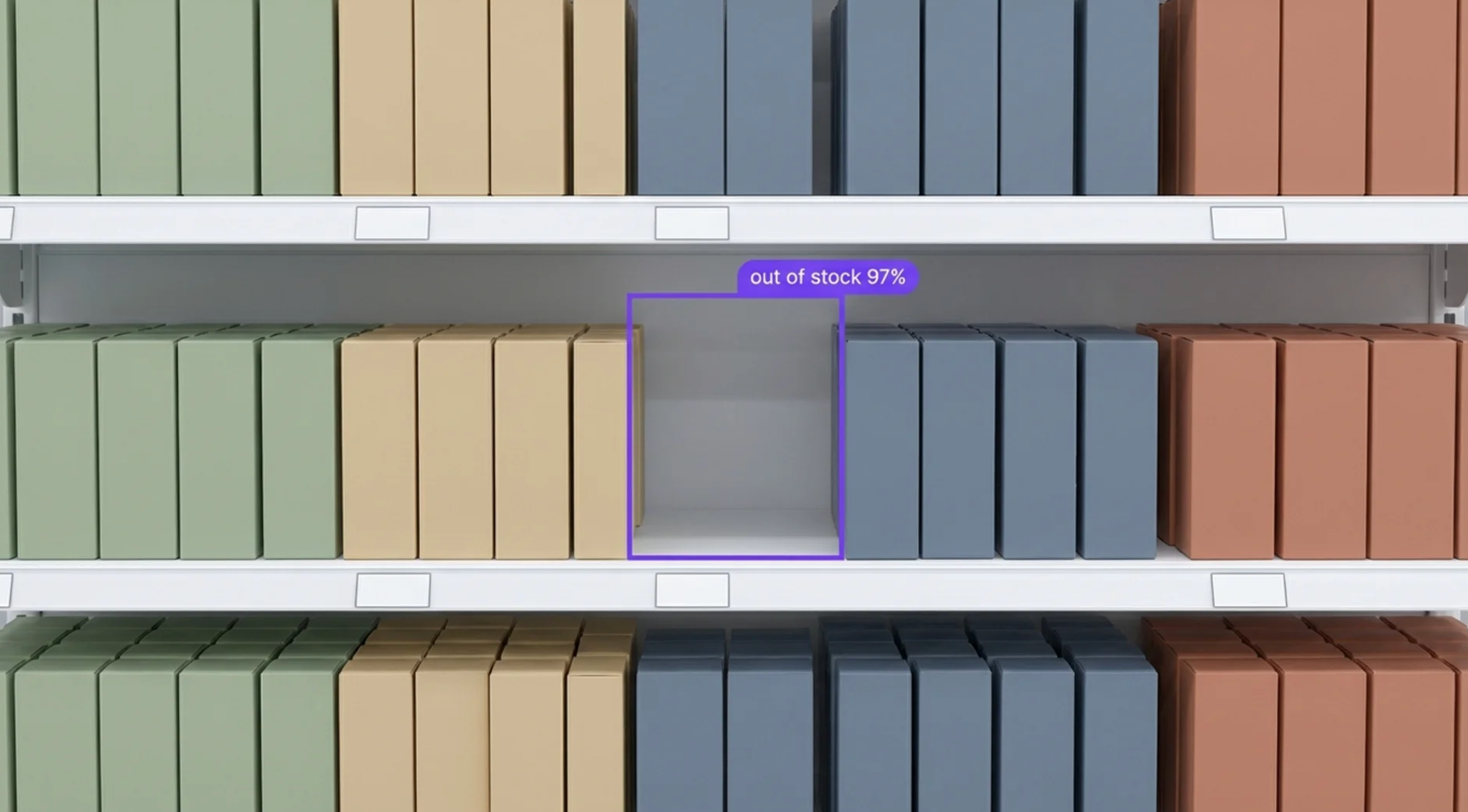
Planogram Compliance AI Across Facings, Availability, Pricing, and Displays
Deploy Anywhere, Run Everywhere
Run planogram compliance on field rep phones, fixed shelf cameras, existing store cameras, and shelf robots, on-device, at the store edge, in the cloud, or via API, wherever your stores and field teams need it.
One Platform, Full Adoption
Tools every retail and CPG team can adopt, from store associates and field reps to category managers, merchandising leads, and store operations, no separate ML team required to ship and own compliance models.
Secure, Compliant, and Audit-Ready
Data stays safe with SOC 2 Type II compliance, encrypted data, and an uptime SLA, with timestamped, annotated shelf records that support retailer-supplier agreements, trade spend audits, and category reset verification.
- SKU Placement & Facing Counts
- Out-of-Stock & Shelf Gap Detection
- Competitor & Misplaced Product Flags
- Shelf Label & Price Verification
- Endcap & Display Execution
- Store & Category Compliance Scores
Talk to a vision AI engineer who's shipped shelf compliance in retail.
A single reset that never got finished, competitor SKU sitting in the facings your trade spend paid for, or out-of-stock on the top seller that goes unnoticed through the weekend can mean lost sales on the highest-velocity items, a compliance dispute at the next retailer review, and a category that underperforms the plan for reasons nobody can see from headquarters. Bring us your toughest planogram compliance problem and we'll map a working solution.
Ask us about:
- Solution architecture for multi-banner retailers, CPG field teams, and retailer-supplier compliance reviews
- Live demo on your shelf photos, planogram files, or store camera footage
- Deployment options: on-device for field reps, edge at the store, cloud, or VPC, with integration into planogram, task management, and inventory systems
- ROI modeling against out-of-stock losses, trade spend disputes, reset labor, and manual audit hours
Over 16,000 organizations build with Roboflow.
- Rivian
- Pella
- Chobani
- USG Corporation
- BNSF Railway
- American Woodmark
Vision AI is transforming businesses
Customers across the board are solving complex challenges and driving meaningful impact.
- Automotive customer
$10 million
Saved by automatically detecting defects on the production line
- Logistics & freight company
90%
Less time spent manually tracking shipping inventory
- Building materials supplier
60%
Lower customer return rate with improved product quality