Counterfeit Detection with Computer Vision
Put your best examiner's eye on every phone, gate, and listing, and call genuine or fake in seconds, with the tell highlighted.
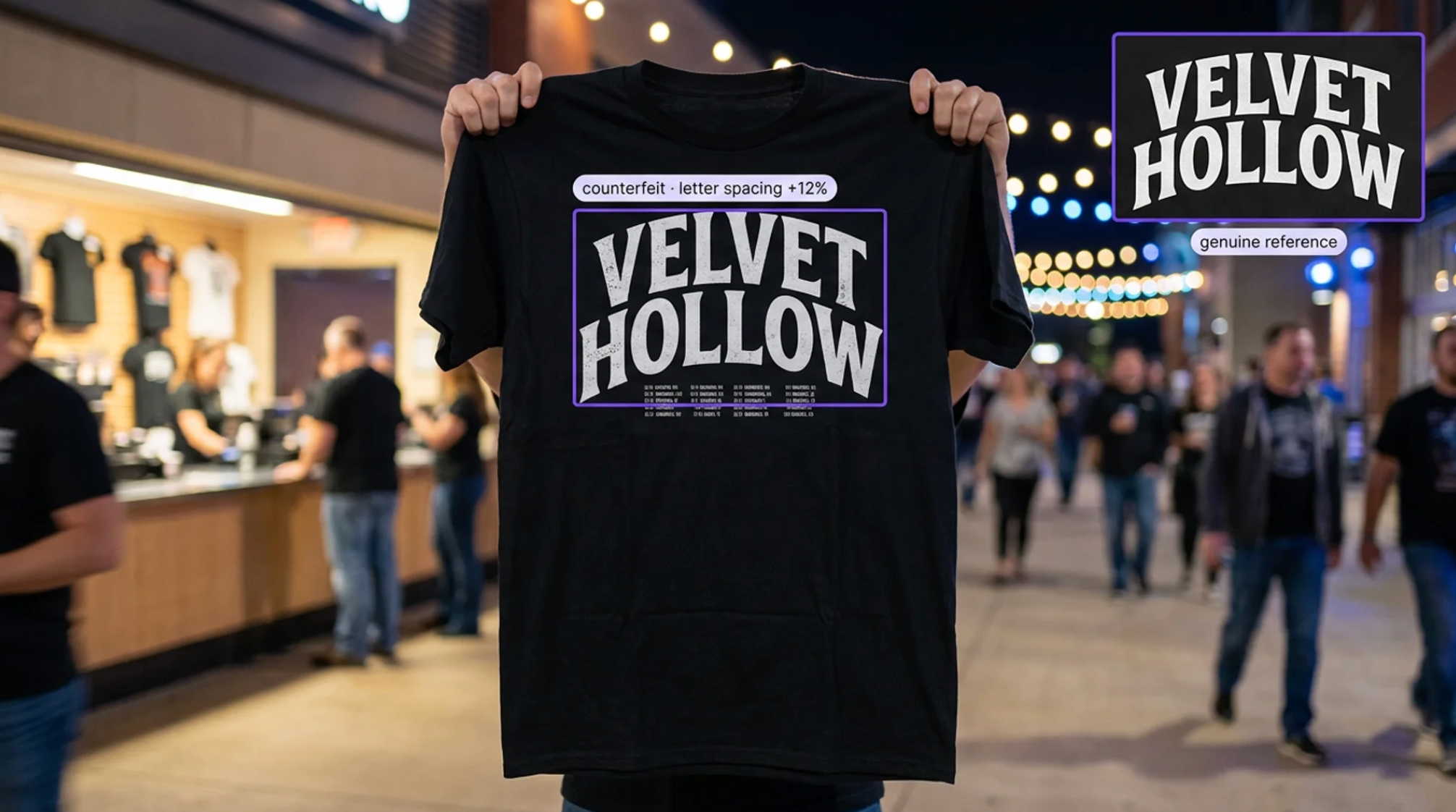
AI Counterfeit Product Detection Across Venues, Seizures, Marketplaces, and Returns
Deploy Anywhere, Run Everywhere
Run counterfeit detection on phones in the field, edge devices at gates and warehouse intake, in the cloud, in your VPC, or via API, wherever your brand protection, enforcement, and authentication work happens.
One Platform, Full Adoption
Tools every brand protection operation can adopt, from gate staff and field investigators to brand examiners, legal teams, and marketplace integrity, no separate ML team required to ship and own authentication models.
Secure, Compliant, and Audit-Ready
Data stays safe with SOC 2 Type II compliance, encrypted data, and an uptime SLA, with logged, image-backed authentication records that support seizures, takedowns, customs filings, and legal enforcement actions.
- Logo & Wordmark Authentication
- Stitching, Print & Construction Checks
- Tag, Label & Security Feature Verification
- Phone-Based Field & Gate Checks
- Seizure & Returns Triage at Volume
- Marketplace Listing Scans & Takedowns
“Roboflow has been instrumental in accelerating our deployment of innovative AI solutions.”
Travis Turnbull
Vice President & CIO, Pella Corporation
Talk to a Vision AI engineer who's shipped counterfeit detection in the field.
Bring us your toughest counterfeit detection problem and we'll map a working solution.
Ask us about:
- Solution architecture for brand protection teams, venues and events, customs and enforcement partners, marketplaces and resale platforms, and licensed merchandise producers
- Live demo on your genuine product imagery and seized fakes, or the product line, tour merch, footwear, accessories, or packaging, that counterfeiters hit hardest
- Deployment options: phone-based field checks, edge devices at gates and intake, cloud or VPC for marketplace scanning, with integration into brand protection and case management systems
- ROI modeling against lost merchandise revenue at events, seizure triage time, takedown volume and speed, returns fraud, and expert examiner hours
Over 16,000 organizations build with Roboflow.
- Rivian
- Pella
- Chobani
- USG Corporation
- BNSF Railway
- American Woodmark
Vision AI is transforming businesses
Customers across the board are solving complex challenges and driving meaningful impact.
- Automotive customer
$10 million
Saved by automatically detecting defects on the production line
- Logistics & freight company
90%
Less time spent manually tracking shipping inventory
- Building materials supplier
60%
Lower customer return rate with improved product quality
Authenticate Every Product, at Every Gate, Seizure, and Listing, with Vision AI
Add an authentication layer to every gate, warehouse, and marketplace with counterfeit detection with computer vision. Roboflow trains models on what your genuine product actually looks like, down to the details counterfeiters get wrong, and puts that examiner's eye on a phone, a warehouse camera, or an API, at the scale of every gate, every seizure, and every listing.
AI Counterfeit Product Detection:
- Verify logos, wordmarks, and brand elements for the proportion, placement, spacing, and color errors counterfeiters make, on product, tags, and packaging
- Inspect the construction details that separate genuine from fake, stitching patterns and density, print registration and screen quality, embroidery, hardware, holograms, and security features, from phone and camera imagery
- Verify tags, labels, care marks, and codes against the genuine article, reading fonts, layouts, and print methods that fakes reproduce imperfectly, and checking serials and codes against your records
Venues, Events, and Field Enforcement:
- Give gate staff, security, and enforcement teams a phone-based check: photograph the merchandise and get a genuine, counterfeit, or review call in seconds, with the differences highlighted on the image
- Detect unlicensed merchandise sales around venues and events from fixed and mobile cameras, so enforcement goes where the sellers are
- Triage seizures and raids at volume, so a pallet of mixed goods is sorted into genuine, counterfeit, and expert-review piles in an afternoon instead of a week
Brand Protection AI at Scale:
- Scan marketplace, social, and resale listings for counterfeit indicators in product imagery, so takedowns are built on what the photo shows rather than keyword matches alone
- Authenticate at intake for resale, returns, and warranty claims, so the fake coming back through the returns channel never re-enters stock
- Push authentication results, images, and evidence records into brand protection, enforcement, and case management systems through API integration, with an image-backed record behind every seizure, takedown, and claim
Bring intelligence to every authentication today.
More About Counterfeit Detection with Computer Vision
What is counterfeit detection with computer vision?
Counterfeit detection with computer vision uses deep-learning models trained on imagery of genuine products, and of known fakes where they exist, to spot the visual differences that separate authentic goods from counterfeits: logo proportion and placement errors, stitching and construction differences, print quality and registration, tag and label details, holograms and security features, and packaging construction. The models run wherever authentication happens, on a phone in a gate worker's hand, on cameras at a warehouse intake, or through an API scanning marketplace listings, and return a genuine, counterfeit, or review decision with the differences localized on the image. Roboflow has been used in the field this way, including spotting counterfeit merchandise at live events, where gate and security staff photographed suspect goods and got calls in seconds. For measuring where brand marks appear in media, see logo and sponsorship detection; for verifying your own labels in production, see packaging label inspection.
How can a model tell a good fake from the real thing?
The same way your best examiner does, by knowing the genuine article in detail, except the model never gets tired and can be everywhere at once. Counterfeiters reproduce the look; they rarely reproduce the manufacturing: the stitch count per inch, the exact logo geometry and spacing, the print method and its registration, the font cut on the care label, the weight and finish of hardware, the hologram's behavior. Models trained on your genuine product line, across angles, lighting, and wear, and on seized fakes where your team has them, learn those details as visual features, and flag deviations with the region marked on the image so a person can see what the model saw.
Can this work at a live event, on a phone, in real time?
Yes, and live events are where this has already worked. A venue's counterfeit problem is concentrated in hours: sellers around the gates before and after the show, moving product that was printed days earlier. Models run on a phone or a small edge device without needing the venue's connectivity, so a security or brand protection team photographs a shirt, a hat, or a tag and gets a call in seconds, with the tell highlighted, which turns a confrontation about opinion into a documented finding. The same phone workflow serves market sweeps, store checks, and field enforcement, and every check is logged with location, time, image, and result, which is the evidence trail enforcement actions and legal follow-ups need.
Can it integrate with our brand protection and enforcement systems?
Yes. Roboflow Inference runs on phones, edge devices, and in the cloud or your VPC, and exposes a standard API and webhooks, so authentication results flow into your existing systems: brand protection and case management platforms, marketplace takedown workflows, customs and enforcement documentation, warehouse and returns systems for intake authentication, serialization and track-and-trace databases, and alerting into Slack, Microsoft Teams, and email, through REST, webhooks, and direct database writes.