Shingle and Roofing Manufacturing Inspection AI
Catch the bare spot and the color streak on the web, not on somebody's roof three years from now.
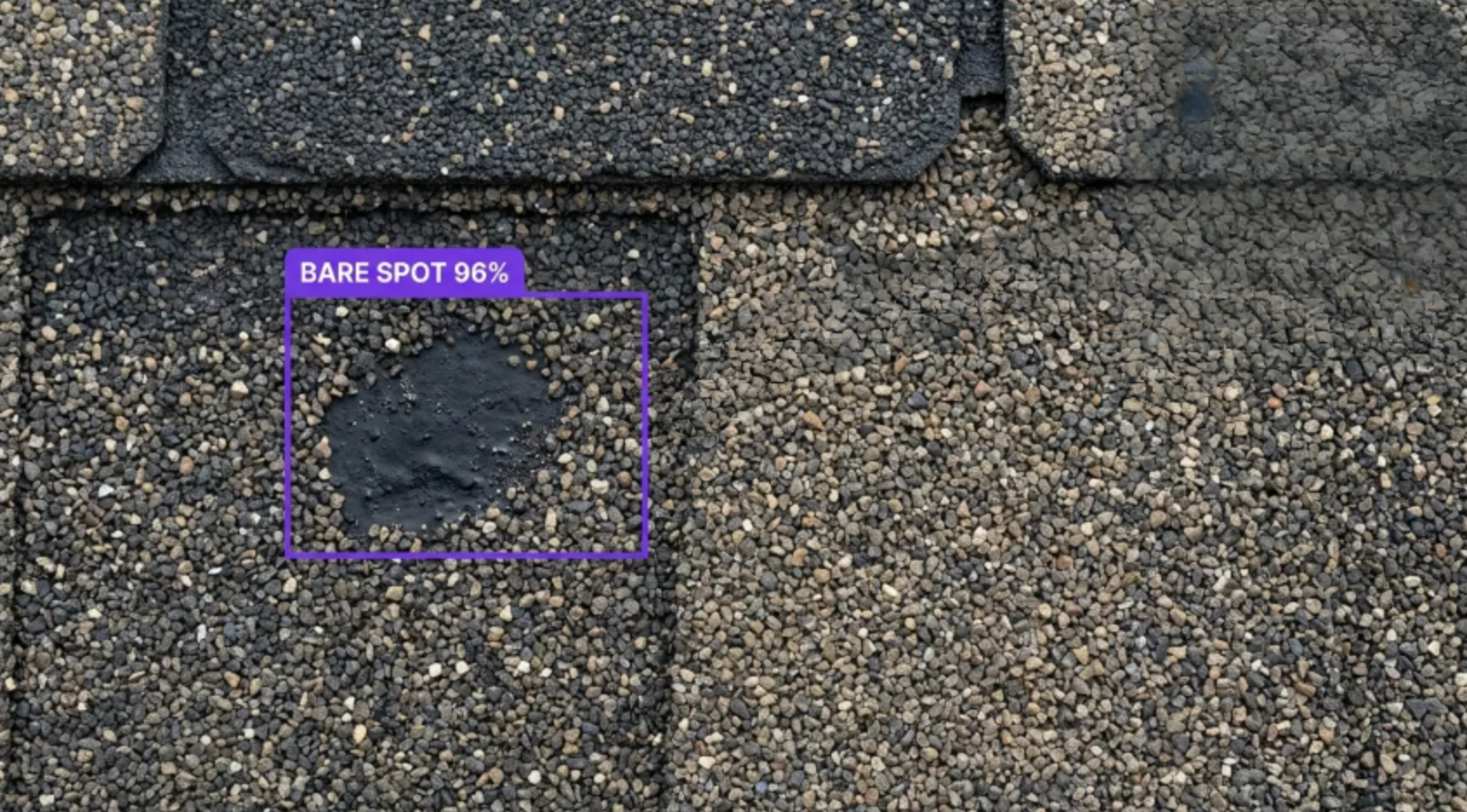
Roofing Manufacturing Inspection AI Across Shingle Lines, Laminators, and Bundling
Deploy Anywhere, Run Everywhere
Run roofing manufacturing inspection on line-scan cameras over the web, at the laminator and cutter, on bundling and palletizing stations, the edge, on-prem, in your VPC, or via API, wherever your shingle lines and finishing end need it.
One Platform, Full Adoption
Tools every manufacturing organization can adopt, from line operators and process engineers to quality leads, color and blend control, and the team defending a product approval, no separate ML team required to ship and own inspection models.
Secure, Compliant, and Audit-Ready
Data stays safe with SOC 2 Type II compliance, encrypted data, and an uptime SLA, with per-bundle records that support ASTM D3462 product standards, ASTM D3161 and D7158 wind classification, UL 790 and ASTM E108 fire ratings, ICC-ES evaluation reports, and ISO 9001 quality systems.
- Granule Coverage & Bare Spots
- Color Blend & Streaking
- Cut Accuracy & Tab Geometry
- Lamination & Adhesive Placement
- Sealant Strip & Release Tape
- Per-Bundle Inspection Records
“Roboflow has been instrumental in accelerating our deployment of innovative AI solutions.”
Travis Turnbull
Vice President & CIO, Pella Corporation
Talk to a vision AI engineer who's shipped web inspection at line speed.
A run of thin granule coverage that leaves asphalt open to UV, a dispenser drifting until one pallet is visibly a different shade from the next, or a sealant strip laid narrow on a bundle heading to a hurricane zone can mean a warranty claim that arrives with photographs of an entire roof, a distributor return on color match across a job, or a product approval you have to defend with data you did not collect. Bring us your toughest shingle inspection problem and we'll map a working solution.
Ask us about:
- Solution architecture for ASTM D3462, ASTM D3161 and D7158 wind classification, UL 790 and ASTM E108 fire ratings, ICC-ES and state product approval programs, and ISO 9001
- Live demo on your own web imagery, across your granule blends, product lines, laminated and three-tab profiles, and line speeds
- Deployment options: line-scan cameras over the web, laminator and cutter stations, bundling and palletizing cameras, edge, on-prem, air-gapped, or VPC, with integration into MES and line controls
- ROI modeling against off-spec production and downgrade, granule and asphalt consumption, color-match returns, and warranty claim exposure
Over 16,000 organizations build with Roboflow.
- Rivian
- Pella
- Chobani
- USG Corporation
- BNSF Railway
- American Woodmark
Vision AI is transforming businesses
Customers across the board are solving complex challenges and driving meaningful impact.
- Automotive customer
$10 million
Saved by automatically detecting defects on the production line
- Logistics & freight company
90%
Less time spent manually tracking shipping inventory
- Building materials supplier
60%
Lower customer return rate with improved product quality