Pinhole Inspection AI
Find the pinholes in films, foils, coatings, and sheet metal before they become leaks, corrosion, or spoiled product.
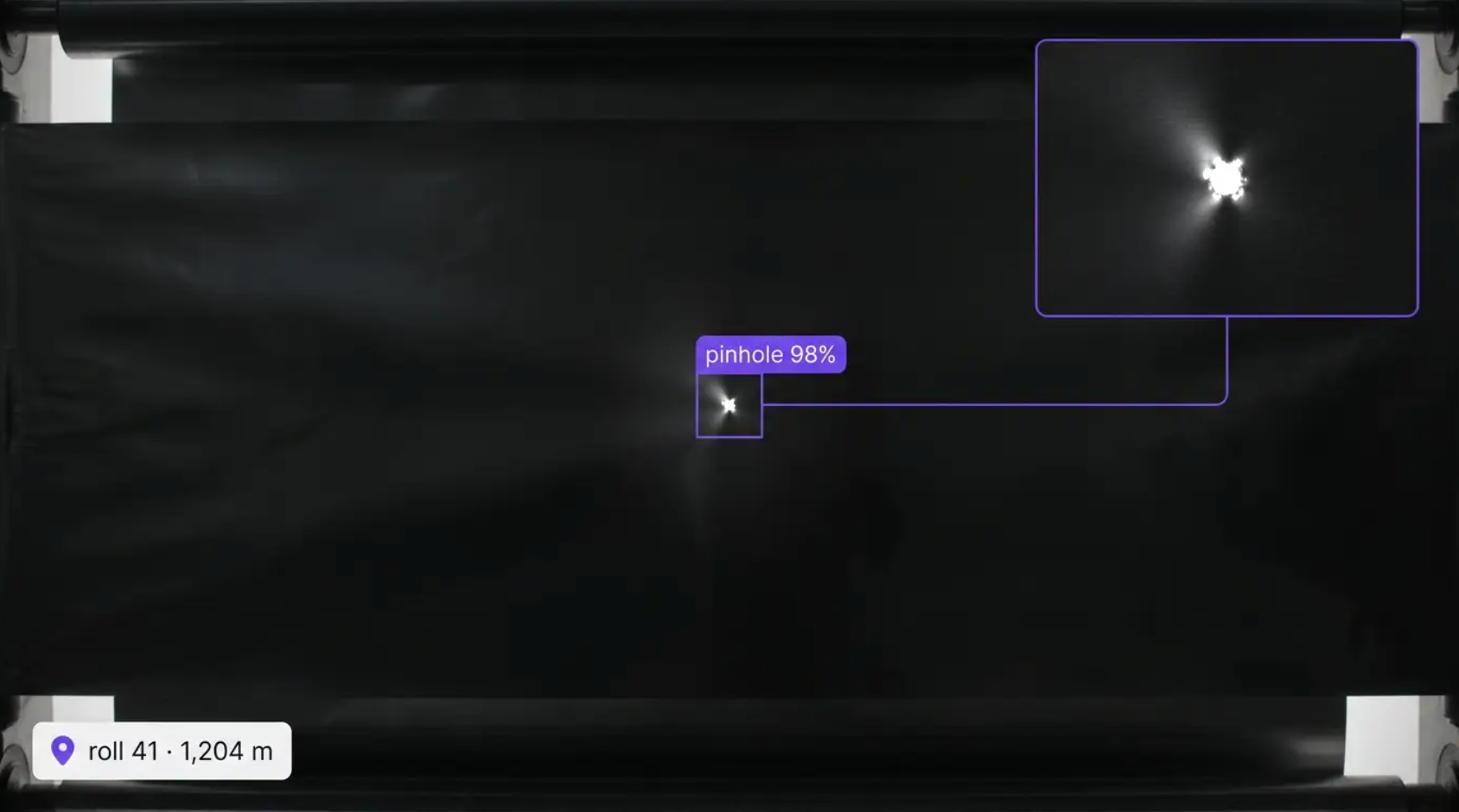
Pinhole Inspection AI Across Packaging Films, Coatings, and Metal Fabrication
Deploy Anywhere, Run Everywhere
Run pinhole inspection on the edge, on-prem, in your VPC, or via API, wherever your webs, coating lines, and fab shops need it.
One Platform, Full Adoption
Tools every production team can adopt, from web and converting operators to coating techs, fabricators, and quality engineers, no separate ML team required to ship and own inspection models.
Secure, Compliant, and Audit-Ready
Data stays safe with SOC 2 Type II compliance, encrypted data, and an uptime SLA, with inspection records that support HACCP and BRCGS packaging programs, coating specifications, and customer audits.
- Film & Foil Pinhole Detection
- Backlit Web Inspection
- Coating & Paint Pinhole Flags
- Sheet Metal & Weld Pinholes
- Pouch & Laminate Checks
- Roll, Lot & Position Records
“Roboflow has been instrumental in accelerating our deployment of innovative AI solutions.”
Travis Turnbull
Vice President & CIO, Pella Corporation
Talk to a vision AI engineer who's shipped pinhole detection on a running web.
A pinhole in barrier foil that lets oxygen at a product for three months before anyone opens the pouch, coating pinhole that becomes the rust spot a customer photographs, or weld pinhole that turns a sealed tank into a slow leak can mean a spoilage recall traced back to one roll, a warranty claim on a finished assembly, and a defect that cost nothing to make and everything to find. Bring us your toughest pinhole problem and we'll map a working solution.
Ask us about:
- Solution architecture for HACCP and BRCGS packaging programs, coating specs, and customer audit environments
- Live demo on your backlit web footage, coated part imagery, or foil and laminate samples
- Deployment options: edge, on-prem, air-gapped, or VPC, with integration into web lines, coaters, PLCs, and MES
- ROI modeling against spoilage claims, roll rejections, rework and recoat labor, and downstream leak discoveries
Over 16,000 organizations build with Roboflow.
- Rivian
- Pella
- Chobani
- USG Corporation
- BNSF Railway
- American Woodmark
Vision AI is transforming businesses
Customers across the board are solving complex challenges and driving meaningful impact.
- Automotive customer
$10 million
Saved by automatically detecting defects on the production line
- Logistics & freight company
90%
Less time spent manually tracking shipping inventory
- Building materials supplier
60%
Lower customer return rate with improved product quality